Showing posts with label Indian Grey Hornbill. Show all posts

08 June, 2014

2014 | 158 | 07 & 08 Jun14 | K Gudi & BR Hills

  • Road Condition : Nice. Mostly opt for 80-100 km speed, few places near villages are bumpy.
  • Travel Date : 07-08 June 2014
  • Route : 
  • Outbound : Bangalore > Kanakapura > Malavalli > Kollegal > Yelandur > Nagavalli > K gudi > BR Hills - 230 Km - Departed 04:20 AM Arrived 09:00 AM
  • Inbound : BR Hills > Kollegal > Somanathpura > Bannur > Malavalli > Kanakapura > Bangalore - 200 Km
  • Weather : Partly cloudy. Day 26 C, Night 18 C
  • To Do :
  •  Birding through the main road (A stretch of approx 50 km from Nagavalli to BR Hills, thick forest range),
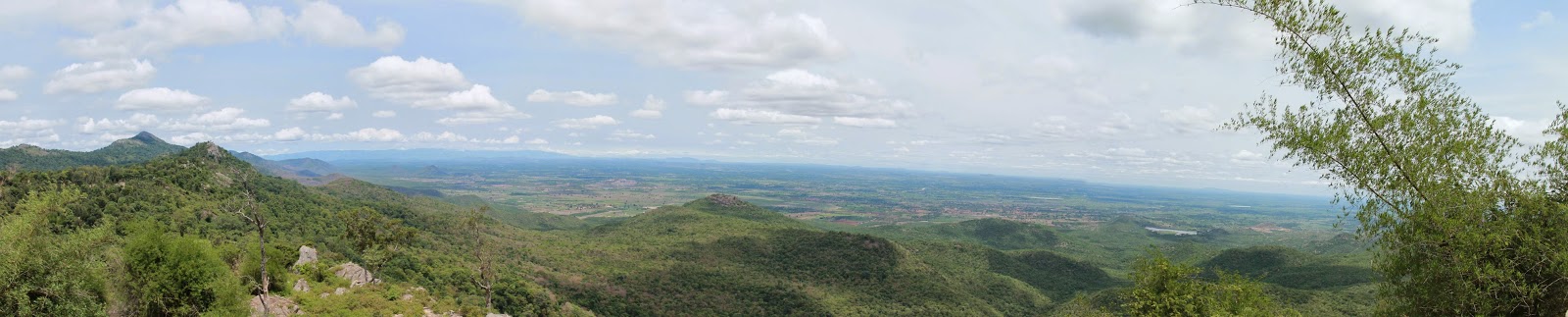
  • Enjoy Panoramic Scenic from Biligiriranga Hills,
  • Visit Ranganatha Tempe (Don't forget to check 1.9 feet long leather footwear),
  • Soliga Tribe Dance,

  • Stay:
  • Only Veg food served (Lunch, Dinner, Breakfast, Welcome Drink, Tea/Coffee),
  • Hotel arranged for evening Tribal Dance with bonfire,
  • Don't expect Star hotel service
  • Food quality is good,
  • Remember, there is no other hotel service available around 25 km surrounding,
  • Mini Cafe Coffee day counter available near the temple (Only coffee)
  • Champakaranya running a small eatery near the accommodation, this is the only eatery available in that location. 

:: Birds ::
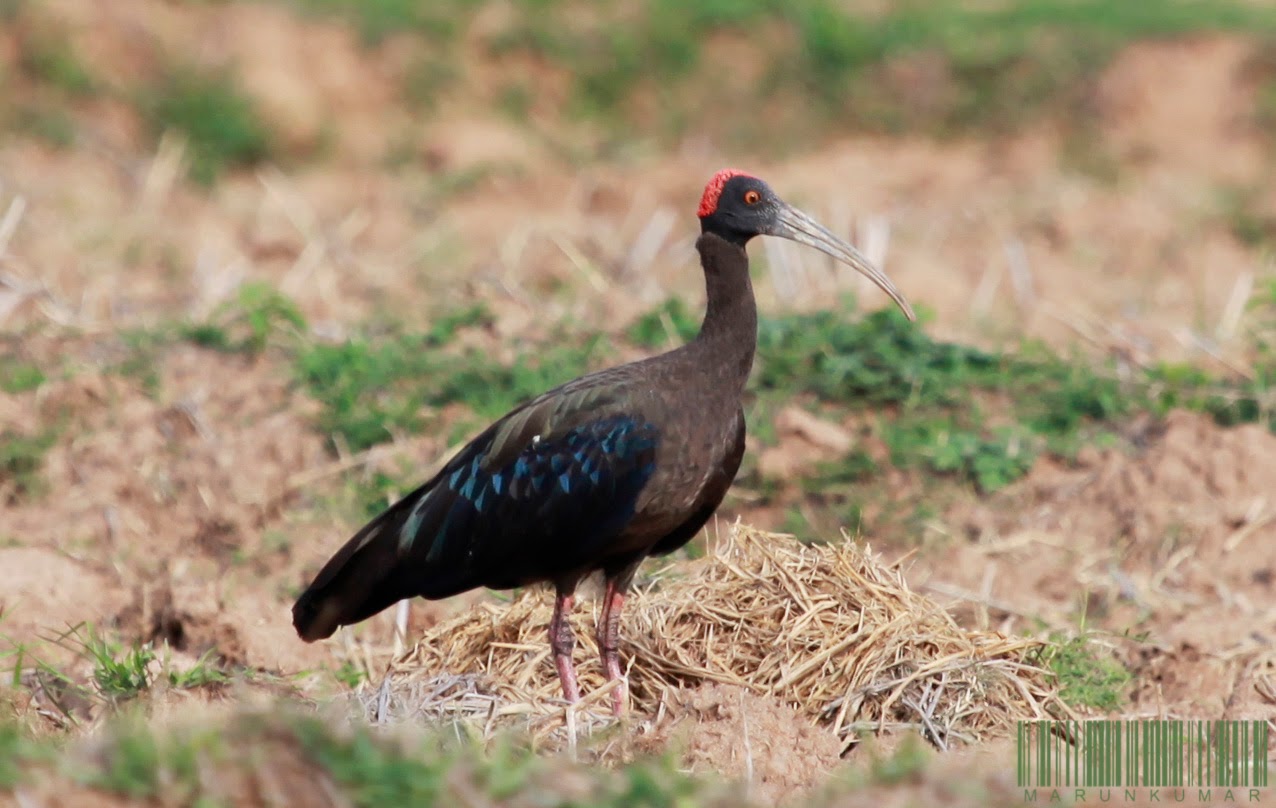
01. Red-naped Ibis (Pseudibis papillosa) - Adult - 68 cm
ID by  Richard Grimmett : Stocky, dark ibis with relatively stout down curved bill. Has white shoulder patch and reddish legs. Appears bulky and broad winged in flight, with only the feet extending beyond tail. Adult has naked black head with red nape, and is dark brown with green-and-purple gloss. Immature dark brown, including feathered head.
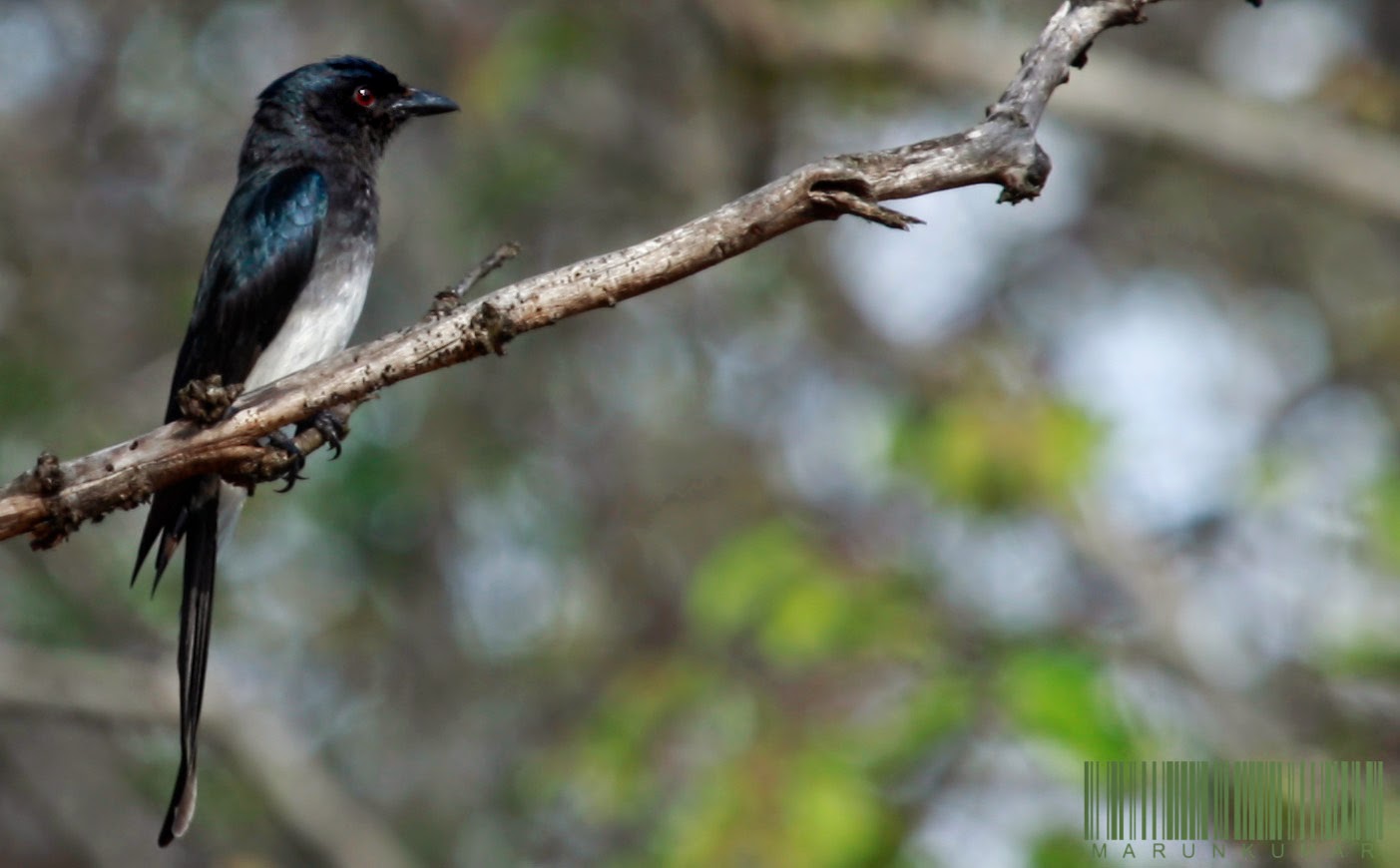
02. White-bellied Drongo (Dicrurus caerulescens) - Adult -  24 cm
ID by  Richard Grimmett : Whitish from belly downwards,Smaller than Black and Ashy, and tail is shorter and fork is typically shallower. Upper parts are glossy slate-grey, much as Ashy (and therefore less black than Black). Throat and breast are browner in first-winter compared with adult (except for leucopygialis) and border between breast and white belly is less clearly defined.
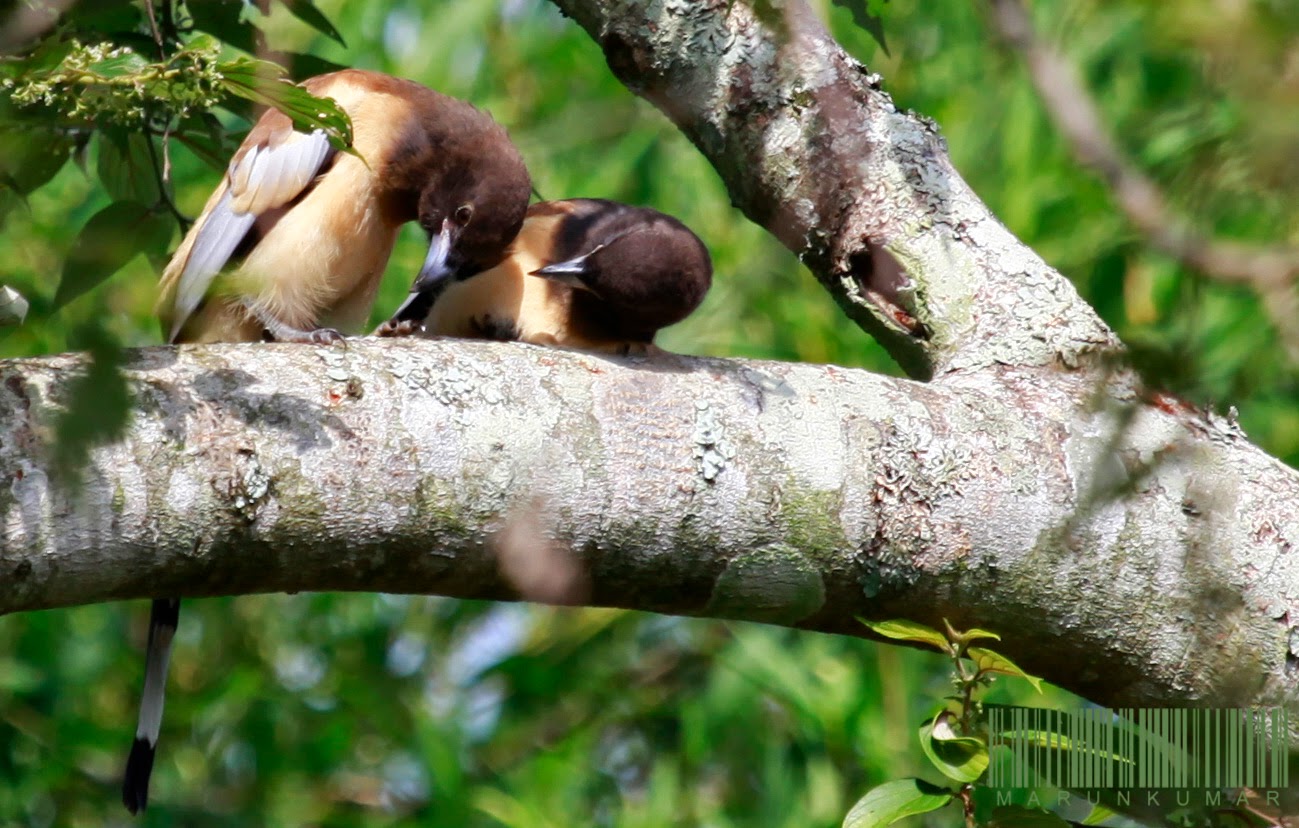
03. Rufous Treepie (Dendrocitta vagabunda) - Juvenile - 46-50 cm
ID by  Richard Grimmett : Adult from Grey by combination of uniform slate-grey hood (extending to breast), rufous-brown mantle and scapulars, pale grey wing-coverts and tertials contrasting with black of rest of wing, fulvous-buff underparts, and black-tipped silvergrey tail. In flight, pale grey wing panel, whitish subterminal tail-band, and rufous rump are useful features from Grey. Juv. similar to adult but has browner hood (less well demarcated from mantle), buffish wash to wing-coverts, and tail feathers have pale buffish tips. Five races in subcontinent; vary mainly in length of tail and richness of mantle and underpart colour.
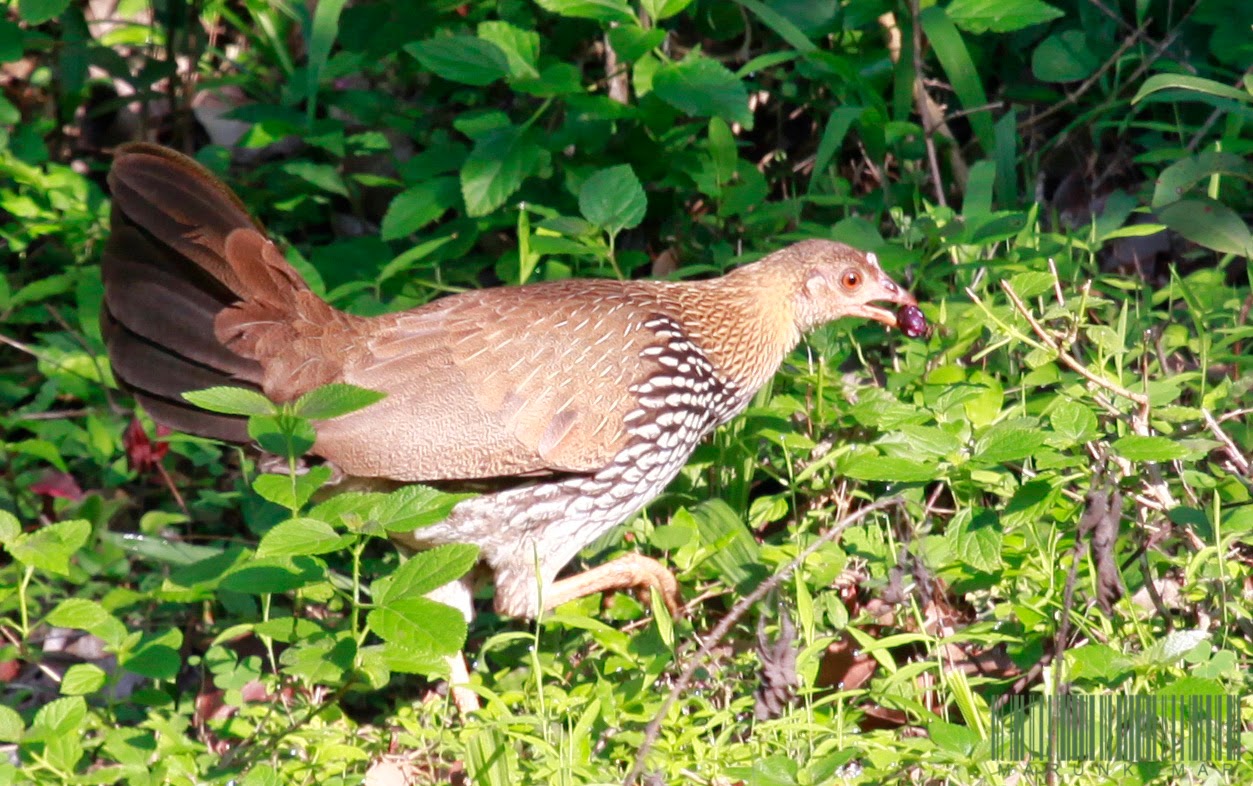
04. Grey Junglefowl (Gallus sonneratii) - Female - 38 cm
ID by  Richard Grimmett : Male has 'shawl' of white and pale golden-yellow spotting; band of golden-yellow spotting on scapulars, grey underparts, and long sickle-shaped, purplish-black tail. Eclipse male has shorter, brownish-black neck hackles, and shorter tail. Female is similar to Red Junglefowl, but has buffish face, bold white streaking on underparts, and yellowish (rather than greyish) legs. Immature male resembles adult male, but has much-reduced 'shawl' of yellowish white spotting, smaller comb and wattles, and has shorter tail.
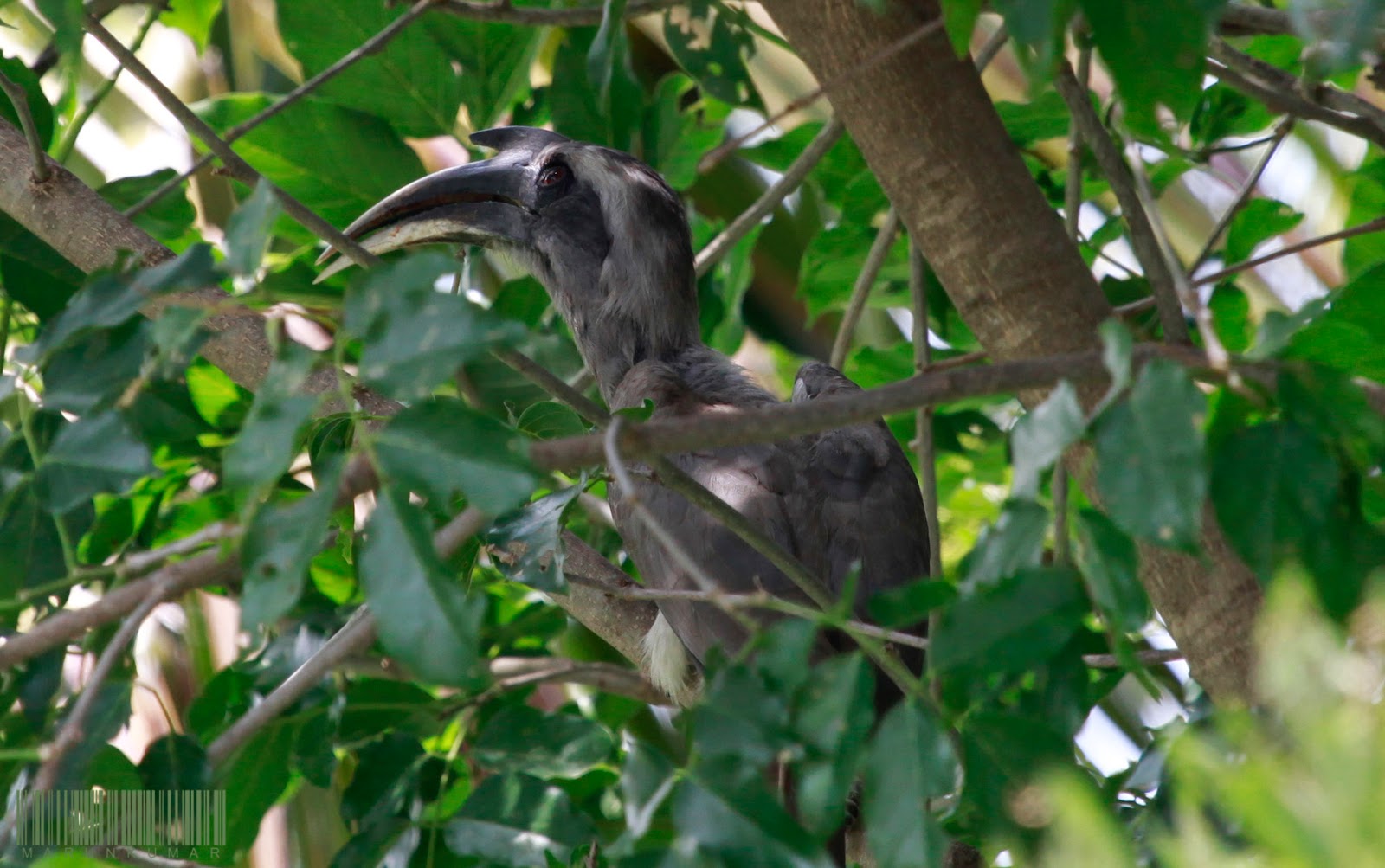
05.  Indian Grey Hornbill (Ocyceros birostris) - Adult - 50 cm
ID by  Richard Grimmett : Broad greyish-white supercilium with dark grey ear-coverts, white tips to primaries and secondaries, and white-tipped tail. Has prominent blackish casque, and more extensive black at base of bill compared with Malabar. Further, lacks pale streaking on head, neck and breast, has paler sandy brownish-grey coloration to upper parts, and white trailing edge to secondaries. Tail is also longer than on Malabar Grey, and paler brown with dark grey sub terminal band and elongated central feathers. Female is similar to male, but has smaller casque with less pronounced tip. Immature has bill as female's, but smaller and with smaller casque; lacks white wing-tips.
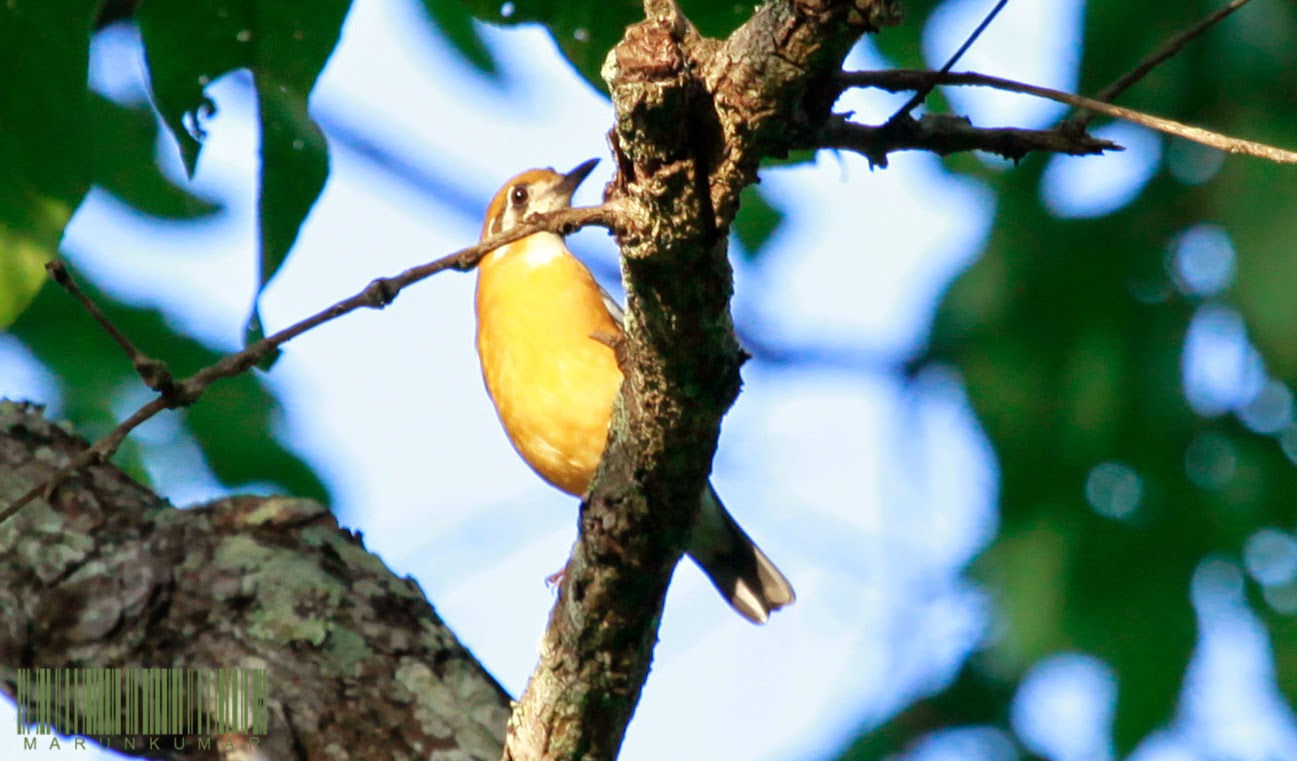
06.  Orange-headed (Thrush Zoothera citrina) - Adult - 21 cm
ID by  Richard Grimmett : Adult has orange head and underparts; male with blue-grey mantle, female with olivebrown wash to mantle. Juvenile has buffish-orange streaking on upperparts and mottled breast. Shows white banding on underwing in flight. Nominate (Himalayas and NE, wintering south to peninsula and Sri Lanka) has head entirely orange (although may show diffuse dark vertical bar at rear of ear-coverts). Z. c. cyanotus (peninsula) has vertical black stripes across white ear-coverts, and white throat. Z. c. andamanensis and Z. c. albogularis (Andaman and Nicobar Is) lack the white shoulder patch of the two continental races, have pale throat but lack black face stripes.

:: MAMMALS ::

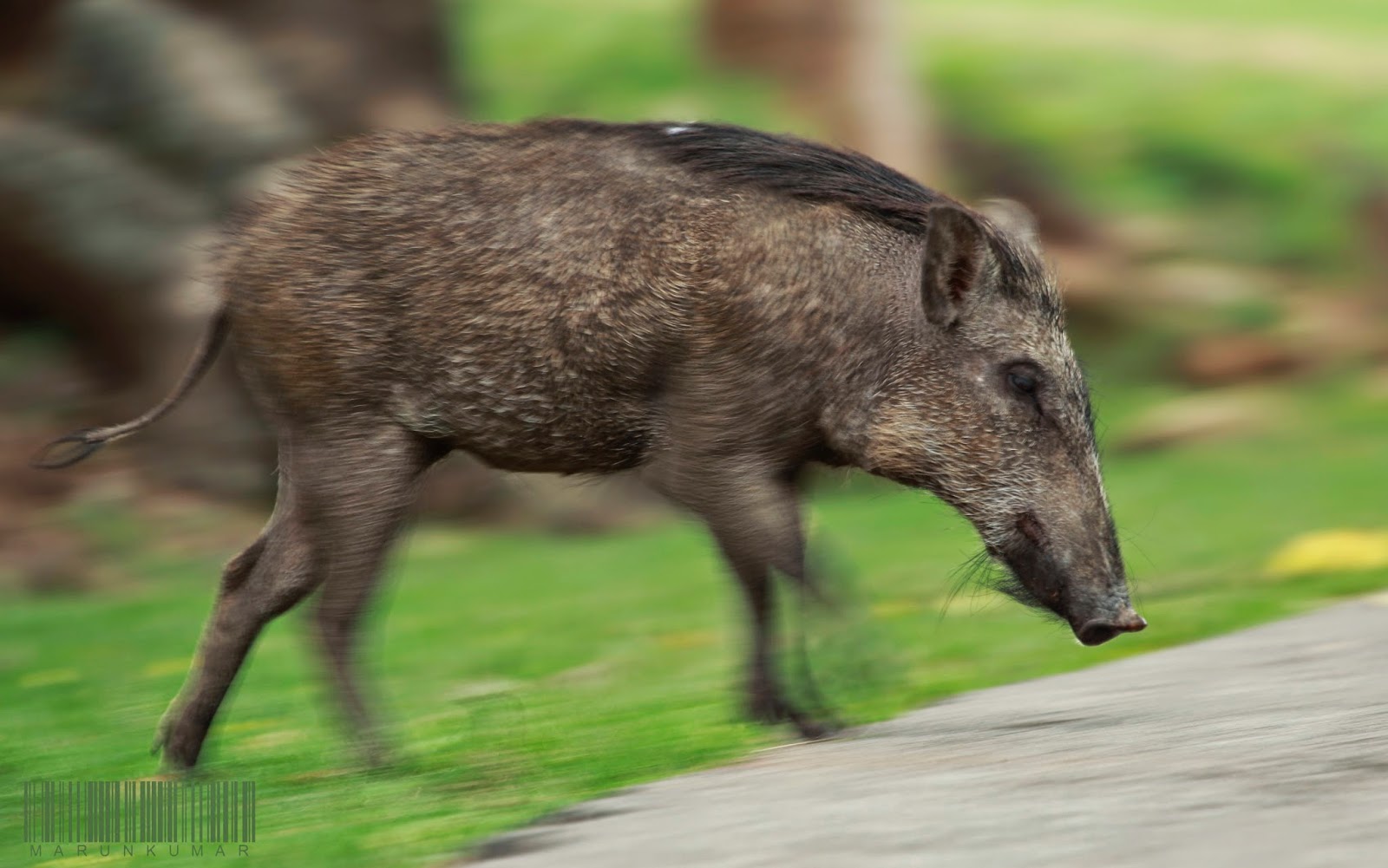
01. Wild boar (Sus scrofa) - Female - 90-200 cm
ID by  Wikipedia : The body of the wild boar is compact; the head is large, the legs relatively short. The fur consists of stiff bristles and usually finer fur. Southern India Boars weigh 44 kg. Adult males develop tusks, continuously growing teeth that protrude from the mouth, from their upper and lower canine teeth. The upper tusks are bent upwards in males, and are regularly ground against the lower ones to produce sharp edges. Females also have sharp canines, but they are smaller, and not protruding . Wild boar piglets are coloured differently from adults, having marbled chocolate and cream stripes lengthwise over their bodies.
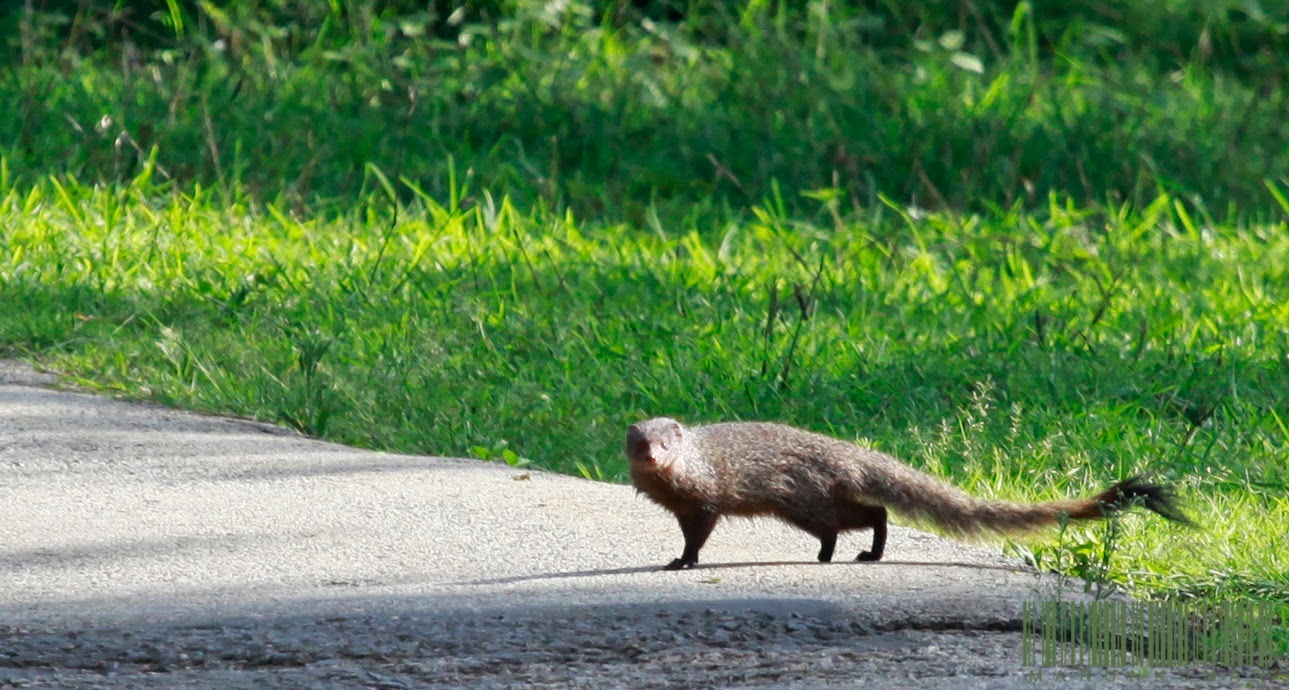
02. Stripe-necked mongoose (Herpestes vitticollis) - 25-41 cm
ID by  VIVEKMENON (Indian Mammals) : A stocky mongoose with an iron-grey head and varying reddish tints to its body. The tip of the nose, the bare skin around the eye and ears are rufous, and it always has a black stripe, thinly bordered with white, from ear to shoulder on both sides of the neck. The base pelage of the rest of the body is dark grizzled grey. The specimens of northern Karnataka do not have any red on the body (H.v. inornatus) while those in the southern parts of its range have an orangish red tint on the rear part of the body (H.v. vitticollis). This reddish colouration increases southwards and, for e.g., in the Anamalais, it is almost a reddish creature with a grey head, and dark legs, tip of tail and neck stripe. The legs are short and brownish black with five digits, and the tail is three-fifths of the head and body length, with a black tip that, like the Ruddy Mongoose, it carries with the tip pointing upwards.
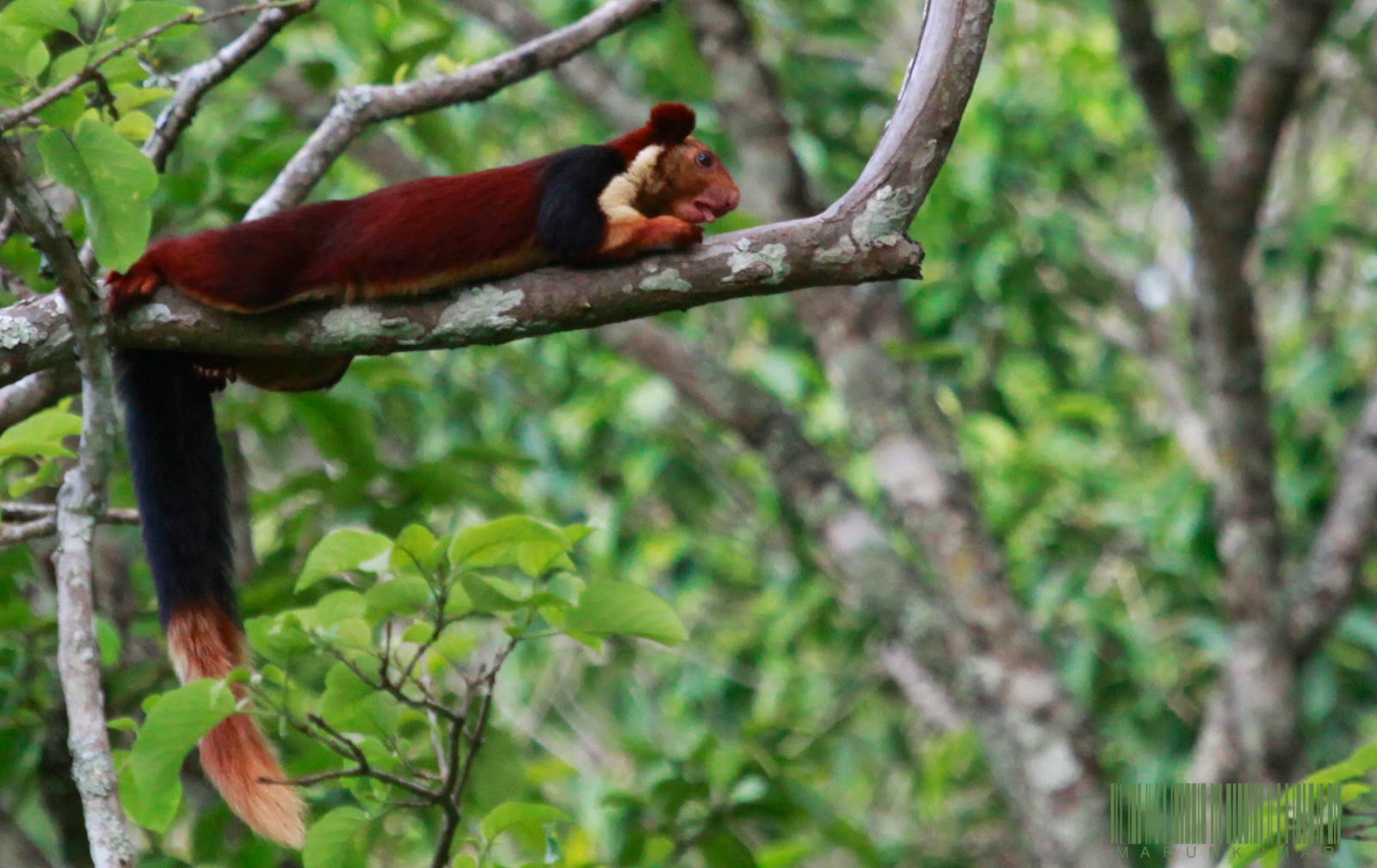
03. Indian giant squirrel (Ratufa indica) - 35-51 cm
ID by  Wikipedia & VIVEKMENON (Indian Mammals) : Has a conspicuous two-toned (and sometimes three-toned) color scheme.: Completely maroon on its back and ears with a pale cream venter, pale face and pale tail tip. It has black on the forelimbs and shoulders, and the tail is also black with a pale tip.
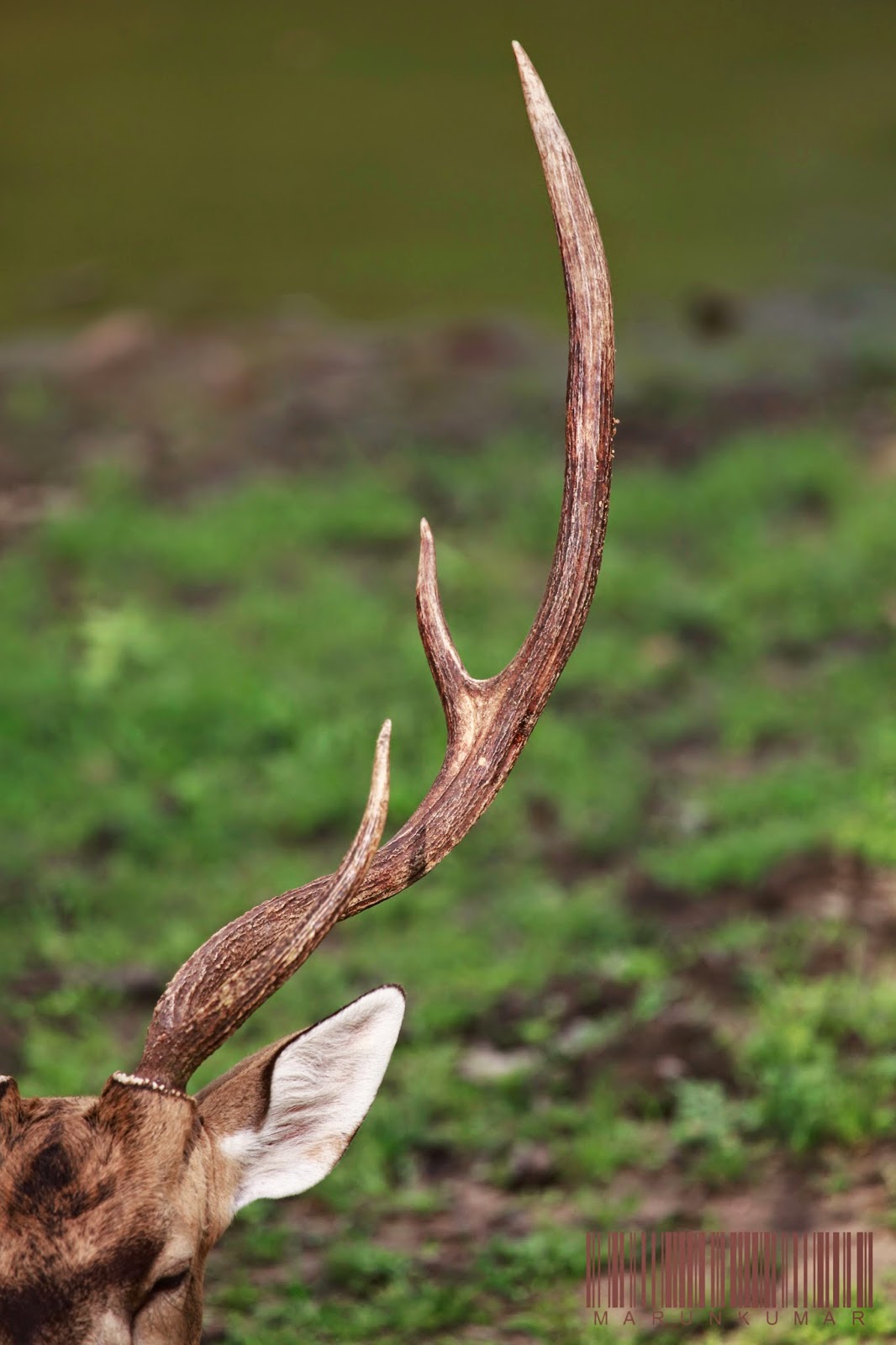
04. Chital (Axis axis) - 150-155 cm
ID by  VIVEKMENON (Indian Mammals) : Older males are darker and the fawns are lighter. It has white throat patch and undersides are complemented by a dark dorsal stripe, and in the case of old males, with a dark muzzle band and a dark pattern on the face. During the rut, the male necks become darker and more swollen.There is no neck ruff and the facial glands are less developed. Male antlers are lyre-shaped with three tines: a long brow tine (set at right angles to the beam) and two branch tines (inwardly oriented trez tine). Older males may have one or more false points where the brow joins the beam. The sexes are almost identical except for size (males are about 50 per cent heavier than females) and the presence of antlers in the male.

11 May, 2014

2014 | 131 | 11May14 | Mysore Lingabhudhi Lake

01. Common Hoopoe (Upupa Epops) - 31 cm
ID by  Richard Grimmett : Mainly rufous-orange to orange-buff, with striking black-and-white wings and tail, blacktipped fan-like crest which is usually held flat, and downcurved bill. Broad, rounded wings and like giant butterfly in flight.
02. Common lora (Aegithina tiphia) - Breeding Multicolor - 14 cm
ID by  Richard Grimmett : From Marshall's lora in all plumages by uniform black tail (male) or green tail (female). Very variable. Crown and mantle of breeding males vary from uniformly black (multicolor of S India and Sri Lanka), to black mixed with much yellow on mantle (e.g. humei of central peninsula), to mainly yellowish-green (e.g. tiphia of Himalayas and northeast). Females very similar to non-breeding males although tail is green.


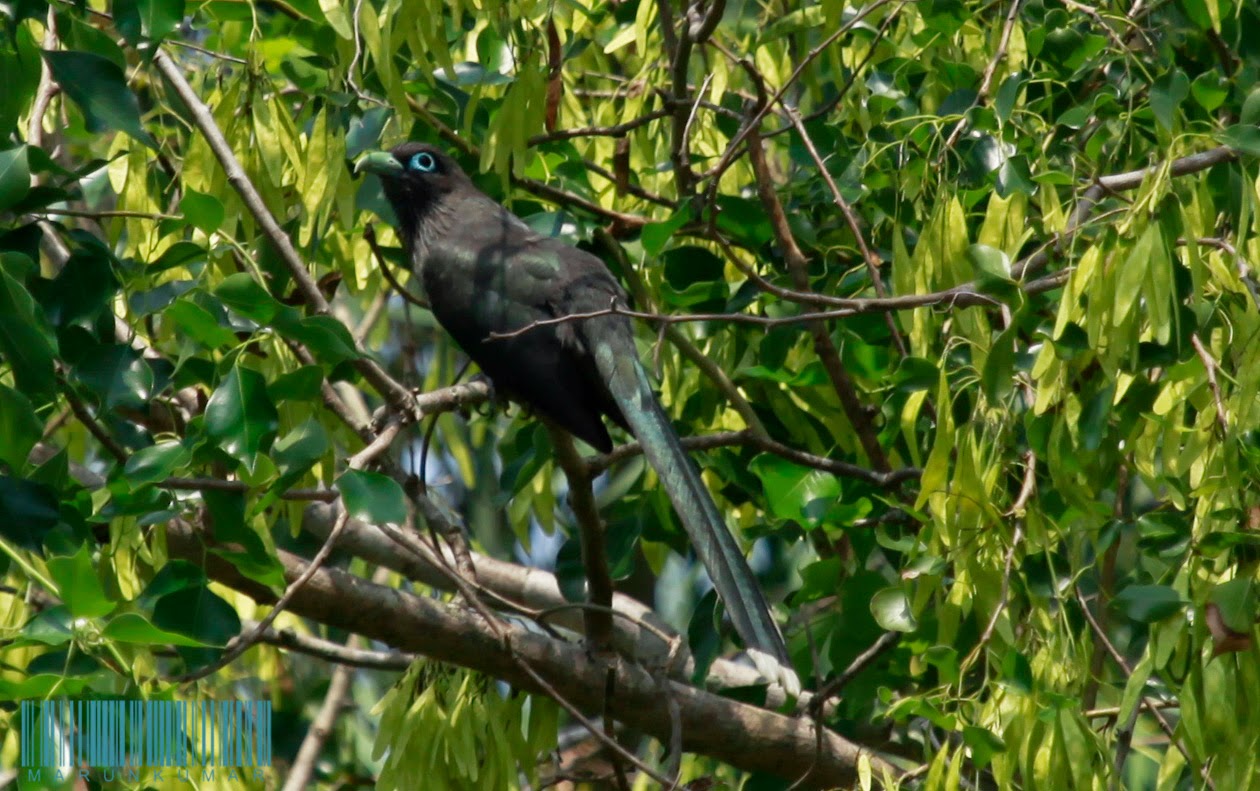
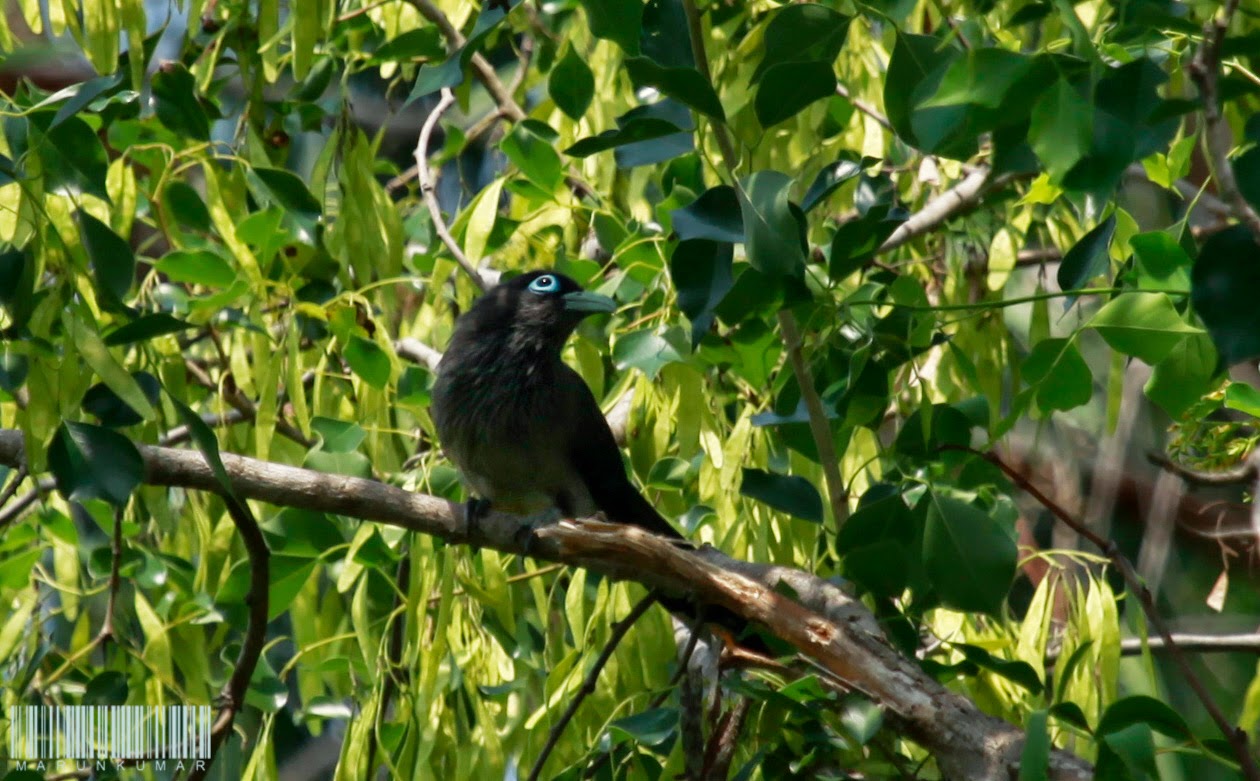
03. Blue-faced Malkoha (Rhopodytes Viridirostris) - 39 cm
ID by  Richard Grimmett : From the larger Green-billed Malkoha (which it replaces in S India and Sri Lanka) in having blue rather than redeye-patch, darker green coloration to head and nape (lacking pale-streaked supercilium), darker grey throat and breast with buffish streaking, distinctly buffish lower belly and vent, and broader white tips to tail feathers (especially apparent from below)


04. Yellow-billed Babbler (Turdoides Affinis) - 23 cm
ID by  Richard Grimmett : From Jungle in having creamy-white lores, forehead and crown, dark mottling on throat and breast (diffusely streaked on most similar Jungle races), pale grey panel on wings, and also (in some birds) pale bluish-white iris. In flight pale buff rump and base to tail contrasts with darker rest of tail. Paleness of head and extent of mottling on throat and breast varies. Juvenile has darker brownish-buff crown and nape, lacks prominent buff streaking on mantle and back, and lacks darker mottling; best told from Jungle by combination of paler crown and nape showing slight contrast with mantle, buff wing panel, and paler rump and base to tail which contrast with rest of tail. T. a. taprobanus (Sri Lanka) has more uniform greybrown upperparts and underparts, lacking whitish crown and nape and dark mottling on throat and breast. Extremely similar to Jungle (which does not occur in Sri Lanka); main difference is more striking greyish-white panel on wing.

05. Indian Grey Hornbill (Ocyceros Birostris) - Adult - 50 cm
ID by  Richard Grimmett : Has broad greyish-white supercilium with dark grey ear-coverts, white tips to primaries and secondaries, and white-tipped tail. Has prominent blackish casque, and more extensive black at base of bill compared with Malabar. Further, lacks pale streaking on head, neck and breast, has paler sandy brownish-grey coloration to upperparts, and white trailing edge to secondaries. Tail is also longer than on Malabar Grey, and paler brown with dark grey subterminal band and elongated central feathers. Female is similar to male, but has smaller casque with less pronounced tip. Immature has bill as female's, but smaller and with smaller casque; lacks white wing-tips.
06. Dragonfly in Flight

20 April, 2014

2014 | 110 | 20Apr14 | Hulimangala

Shikra Accipiter badius - Male
01. Shikra (Accipiter badius) - Male
ID by  Richard Grimmett : Under wing pale, with fine barring on remiges, and slightly darker wing-tips. Head
cuckoo-like compared with other Accipiter. Male has pale blue-grey upperparts with contrasting dark grey primaries, indistinct grey gular stripe, fine brownish-orange barring on underparts, unbarred white thighs, and unbarred or lightly barred central tail feathers.
Oriental Honey-buzzard, OHB, Pigeon Head, Raptor
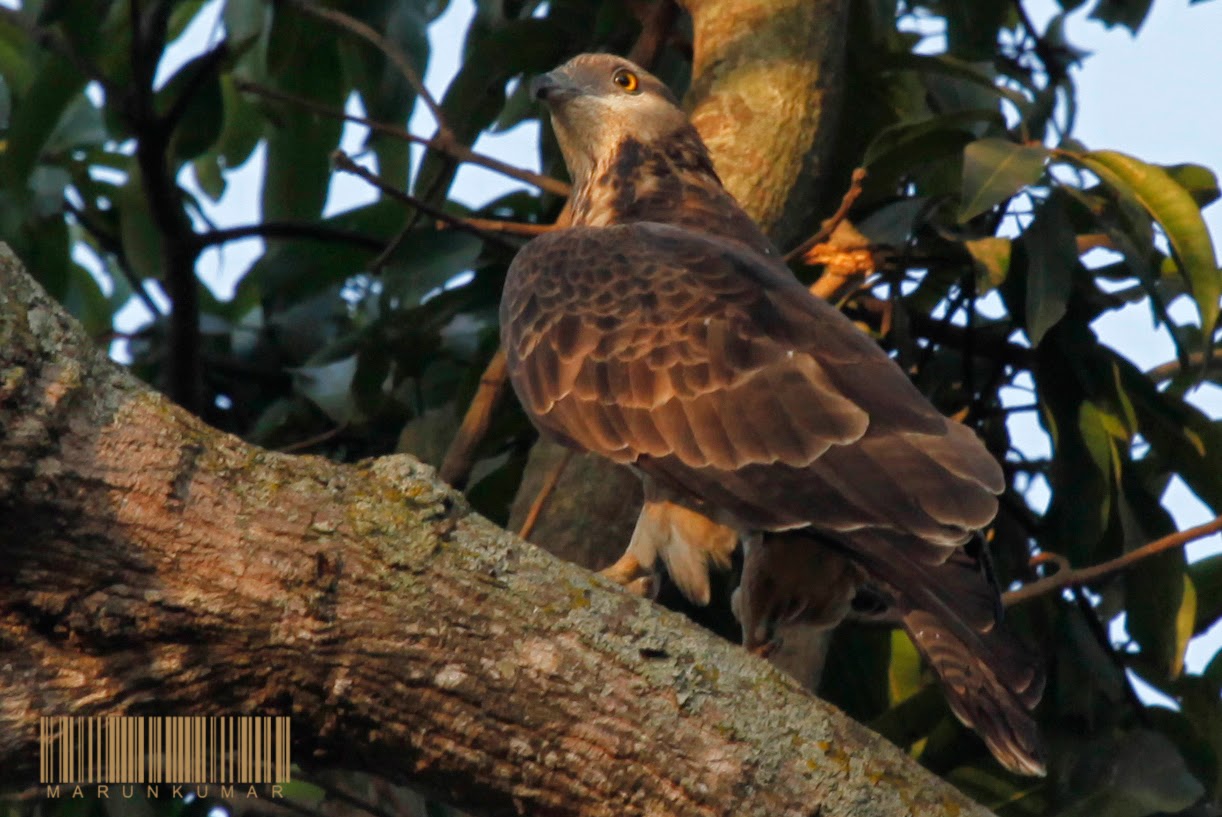
02. Oriental Honey-buzzard
(Perm's ptilorhynchus) - Female
ID by  Richard Grimmett : Tail long and broad, and has narrow neck, small head and bill, and short bare tarsi. Soars with wings flat. Has small crest. Underparts and underwing-coverts range from dark brown through rufous to white, and unmarked, streaked or barred; often shows dark moustachial stripe and gular stripe, and gorget of streaking across lower throat. Lacks dark carpal patch. Male has grey face, two black tail-bands, usually three black under wing bands, and brown iris. Female has browner face and upper parts, three black tail-bands, four narrower black under wing bands, and yellow iris. 
Paddyfield Pipit, Adult
03. Paddyfield Pipit (Anthus rufulus) - Adult
ID by  Richard Grimmett : Lores is often pale (but can be dark), and shows warm ginger buff wash
across breast and down flanks (underparts more uniform cream-white on Tawny)
Indian Grey Hornbill (Ocyceros birostris) - Adult
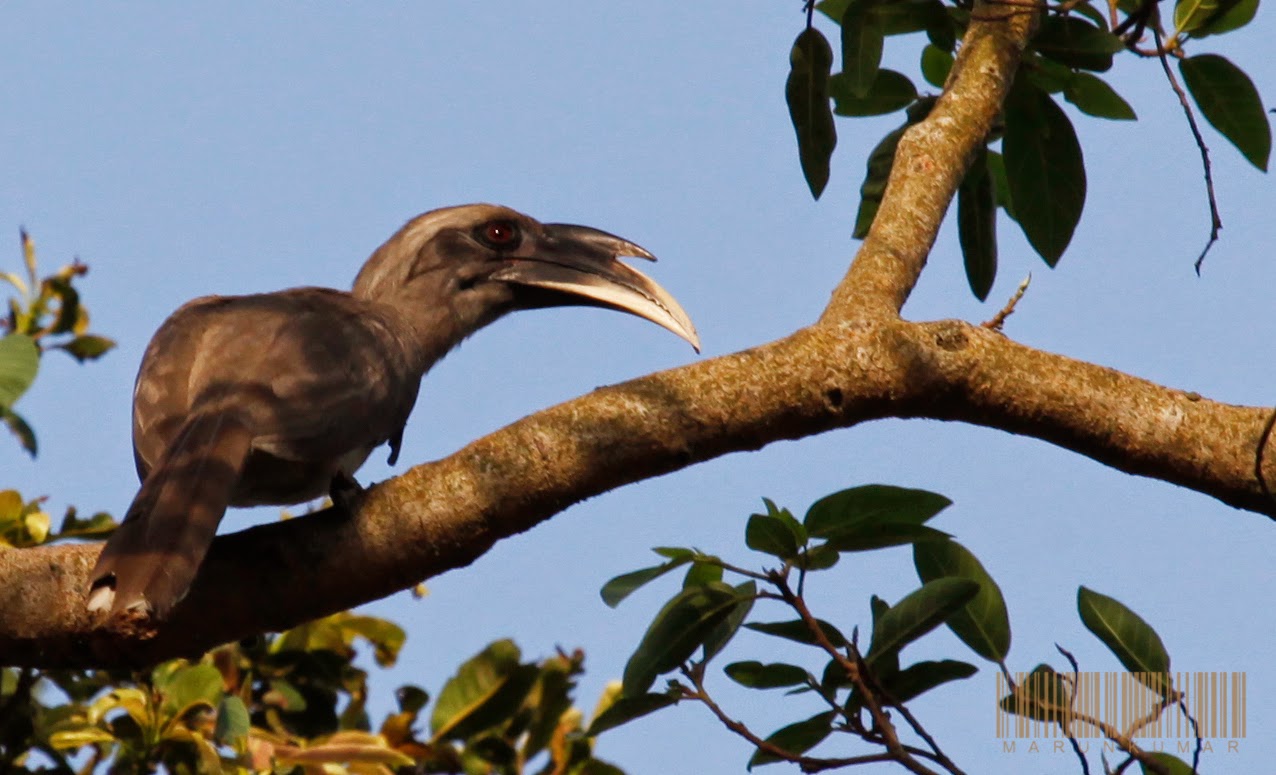
04.  Indian Grey Hornbill (Ocyceros birostris) - Adult
ID by  Richard Grimmett : Broad greyish-white supercilium with dark grey ear-coverts, white tips to primaries and secondaries, and white-tipped tail. Has prominent blackish casque, and more extensive black at base of bill compared with Malabar. Further, lacks pale streaking on head, neck and breast, has paler sandy brownish-grey coloration to upper parts, and white trailing edge to secondaries. Tail is also longer than on Malabar Grey, and paler brown with dark grey sub terminal band and elongated central feathers. Female is similar to male, but has smaller casque with less pronounced tip. Immature has bill as female's, but smaller and with smaller casque; lacks white wing-tips.
Painted Stork (Mycteria leucocephala) - Adult
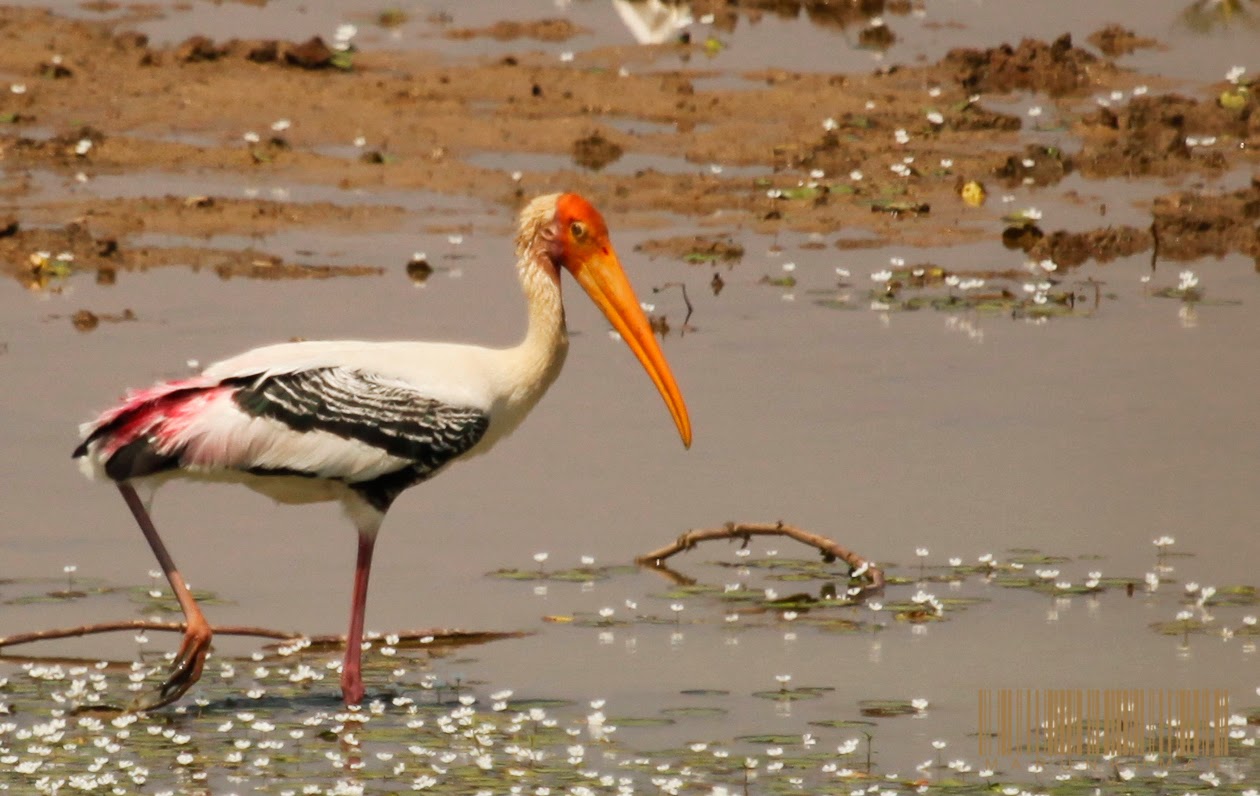
05.  Painted Stork (Mycteria leucocephala) - Adult
ID by  Richard Grimmett : Adult has downcurved yellow bill, bare orange head (redder in breeding season), and pinkish legs; white barring on mainly black upperwing-coverts, pinkish tertials, and black barring across breast. Juvenile dirty greyish-white, with grey-brown (feathered) head and neck and brown lesser coverts; bill and legs duller than adult's.
Yellow-billed Babbler (Turdoides affinis) - Adult
06.  Yellow-billed Babbler (Turdoides affinis) - Adult
ID by  Richard Grimmett : Have creamy-white lores, forehead and crown, dark mottling on throat and breast (diffusely streaked on most similar Jungle races), pale grey panel on wings, and also (in some birds) pale bluish-white iris.
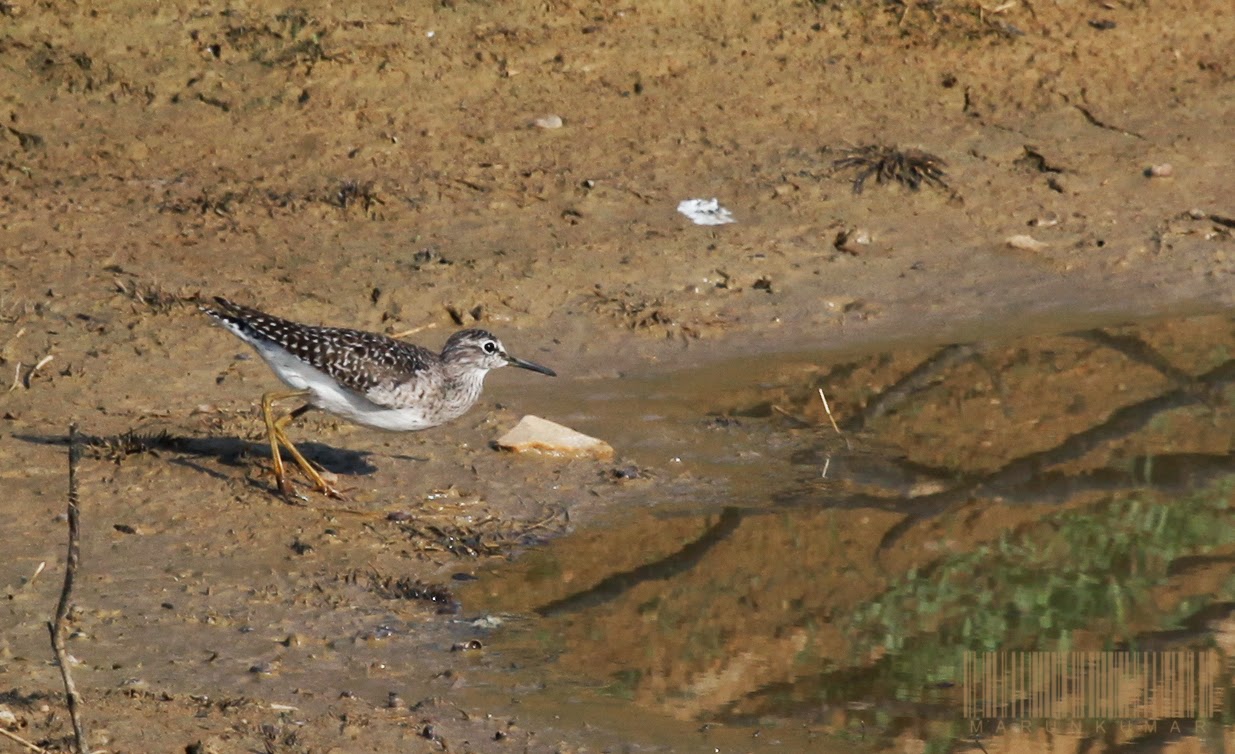
ID by Grimmett : From Green by longer, yellowish legs and slimmer appearance, heavily speckled upperparts, and prominent supercilium behind eye; in flight by call, slimmer body and narrower wings, toes projectingclearly beyondtail, paler underwing contrasting less with white underparts, and paler brown upperparts contrasting less with smaller white rump. Adult breeding has heavily streaked breast and barred flanks; upperparts barred and spotted pale grey-brown and white. Adult non-breeding has more uniform grey-brown upperparts, spotted whitish, and breast brownish and lightly streaked. Juvenile has warm brown upperparts speckled warm buff, and lightly streaked buff breast.
07. Wood Sandpiper (Tringa Glareola)
Adult Non-Breeding Plumage

 ID by  Richard Grimmett : From Green by longer, yellowish legs and slimmer appearance, heavily speckled upper parts, and prominent super-cilium behind eye. Adult breeding has heavily streaked breast and barred flanks; upper parts barred and spotted pale grey-brown and white. Adult non-breeding has more uniform grey-brown upper parts, spotted whitish, and breast brownish and lightly streaked. Juvenile has warm brown upper parts speckled warm buff, and lightly streaked buff breast.


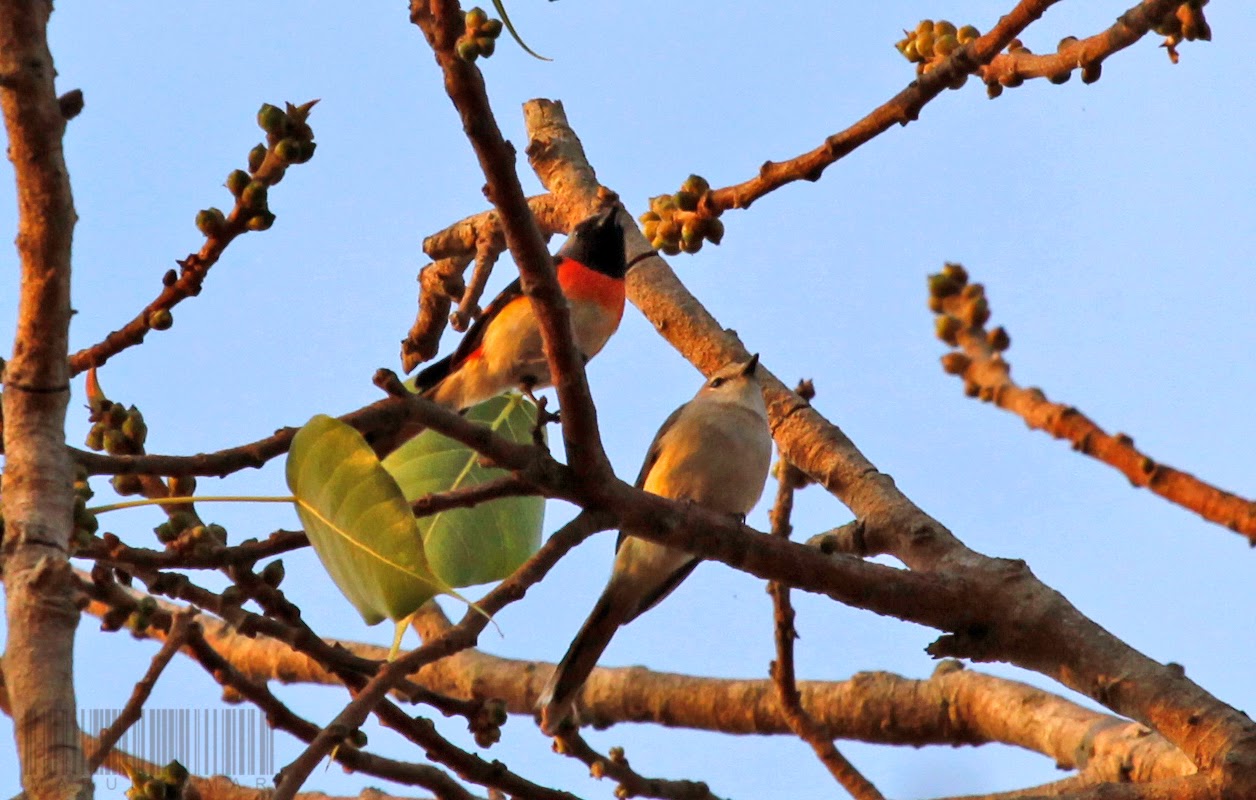
Small Minivet (Pericrocotus cinnamomeus) - Male & Female
08. Small Minivet (Pericrocotus cinnamomeus)
- Male & Female
ID by  Wikipedia : Strong dark beak and long wings. The male differs from most other common minivets by having grey, not glossy black, upper parts and head, and orange underparts, fading to yellow on the belly, orange tail edges, rump and wing patches. The female is grey above, with yellow underparts (including the face), tail edges, rump and wing patches.

Pied Bush Chat (Saxicola caprata) - Female
09. Pied Bush Chat (Saxicola caprata) - Female
ID by  Wikipedia : Similar to Siberian Stonechat dumpy structure and upright stance, but slightly smaller. The male is black except for a white rump, wing patch and lower belly. The iris is dark brown, the bill and legs black. The female is drab brown and slightly streaked. Juveniles have a scaly appearance on the underside but dark above like the females.

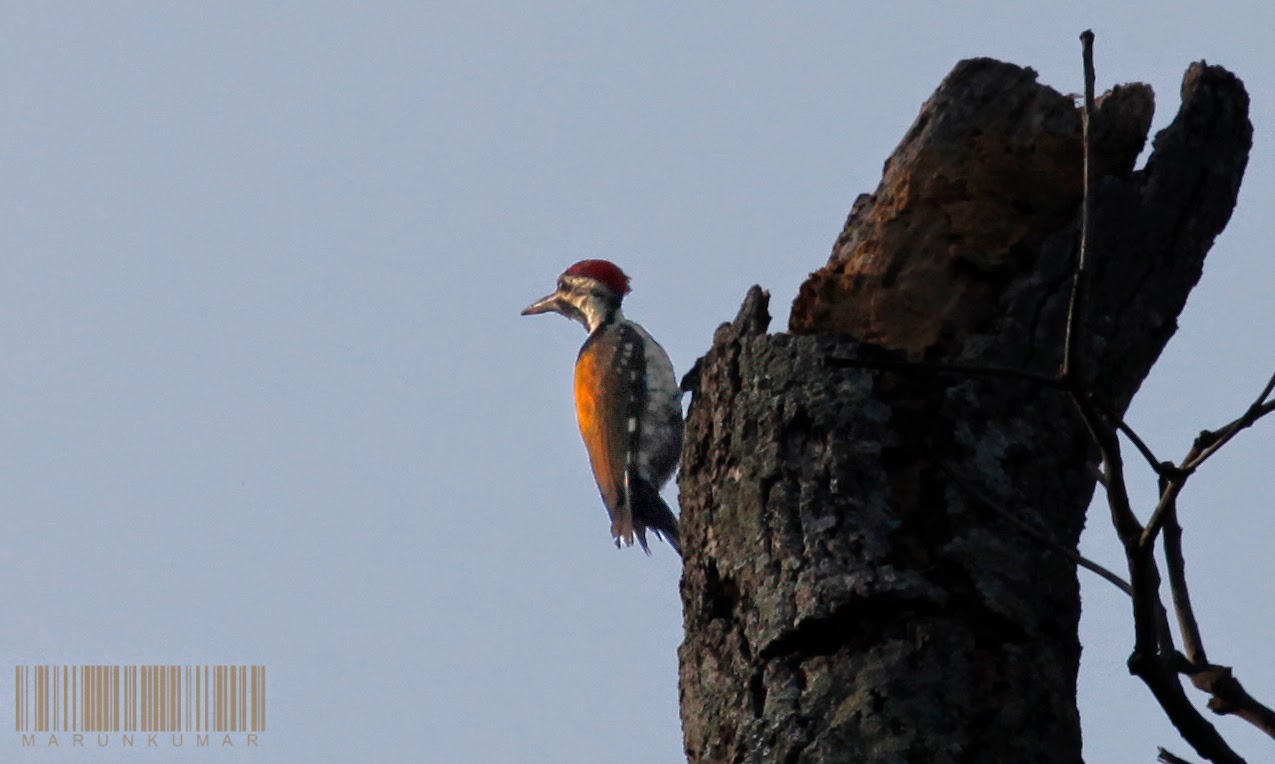
Black-rumped Flameback (Dinopium benghalense) - Male
10. Black-rumped Flameback
(Dinopium benghalense) - Male
ID by  Wikipedia : Typical woodpecker shape, and the golden yellow wing coverts are distinctive. The rump is black. The underparts are white with dark chevron markings. The black throat finely marked with white. The head is whitish with a black nape and throat, and there is a greyish eye patch. It has no dark moustachial stripes.The adult male has a red crown and crest. Females have a black forecrown spotted with white, with red only on the rear crest. Young birds are like the female, but duller.Has a straight pointed bill, a stiff tail to provide support against tree trunks, and zygodactyl feet, with two toes pointing forward, and two backward. The long tongue can be darted forward to capture insects.
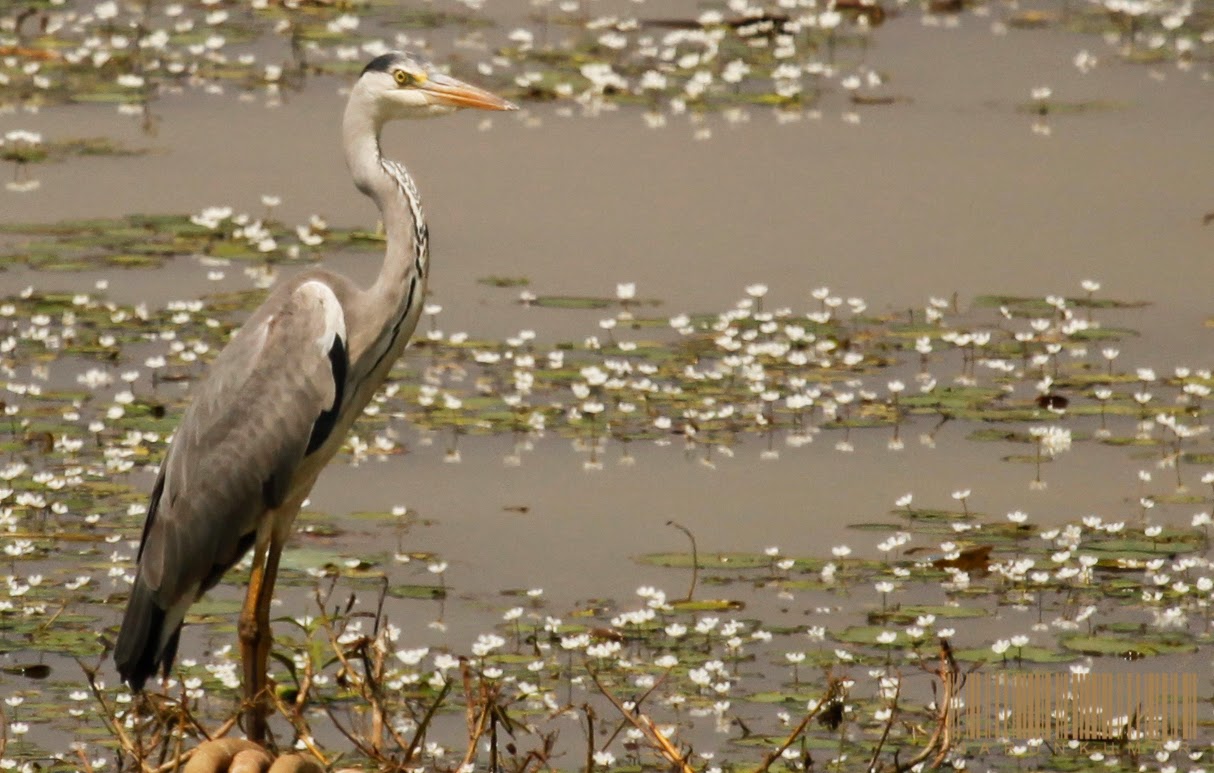
Grey Heron (Ardea cinerea) - Male
10. Grey Heron (Ardea cinerea) - Male
ID by  Wikipedia : Plumage is largely grey above, and off-white below. Adults have a white head with a broad black supercilium and slender crest, while immatures have a dull grey head. It has a powerful, pinkish-yellow bill, which is brighter in breeding adults. It has a slow flight, with its long neck retracted (S-shaped). This is characteristic of herons and bitterns, and distinguishes them from storks, cranes and spoonbills, which extend their necks.
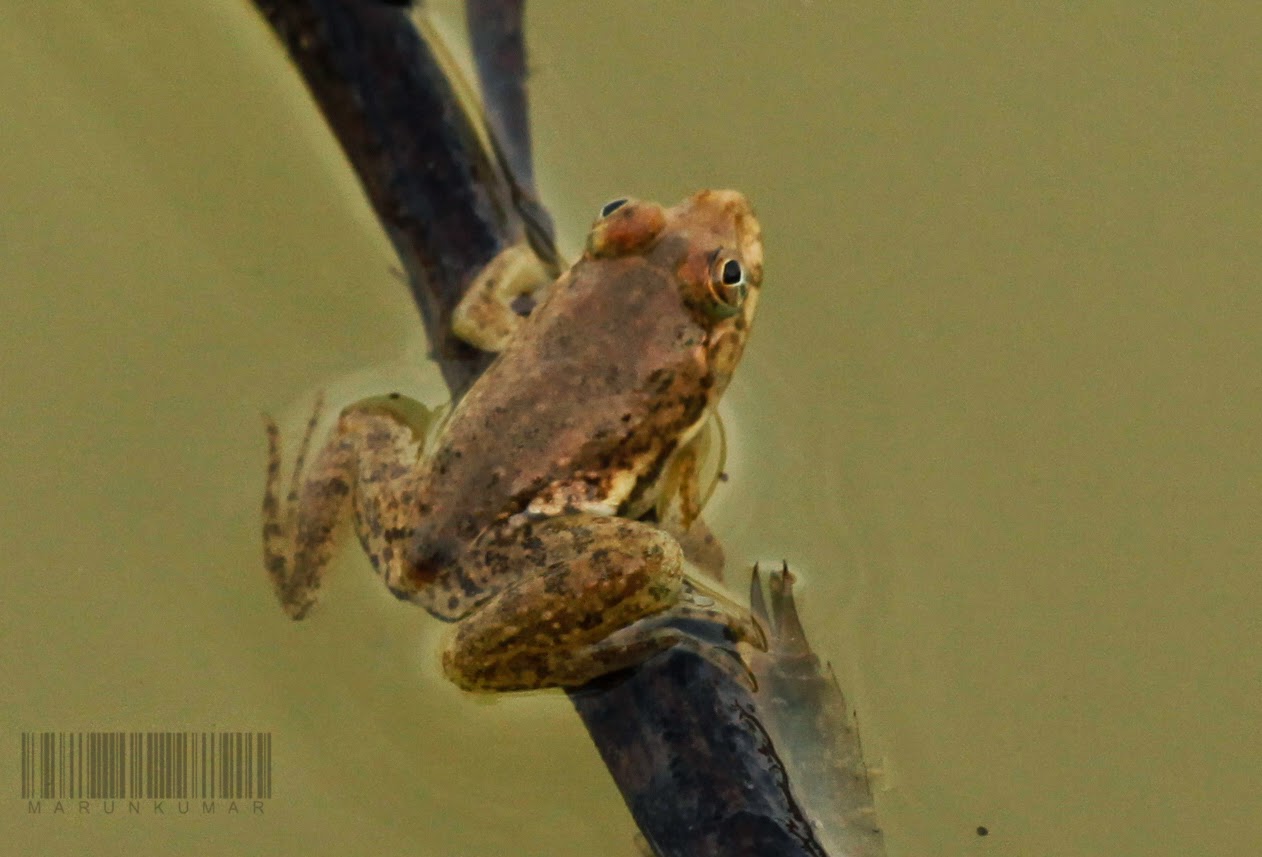
Common Skittering Frog - Euphlyctis Cyanophlyctis
11. Common Skittering Frog - Euphlyctis Cyanophlyctis
ID by  Wikipedia : This species have the remarkable ability to leap from a floating position out of the water.
12. Common Skittering Frog - Euphlyctis Cyanophlyctis
ID by  Wikipedia : This species have the remarkable ability to leap from a floating position out of the water.
13. Common Skittering Frog - Euphlyctis Cyanophlyctis
ID by  Wikipedia : This species have the remarkable ability to leap from a floating position out of the water.


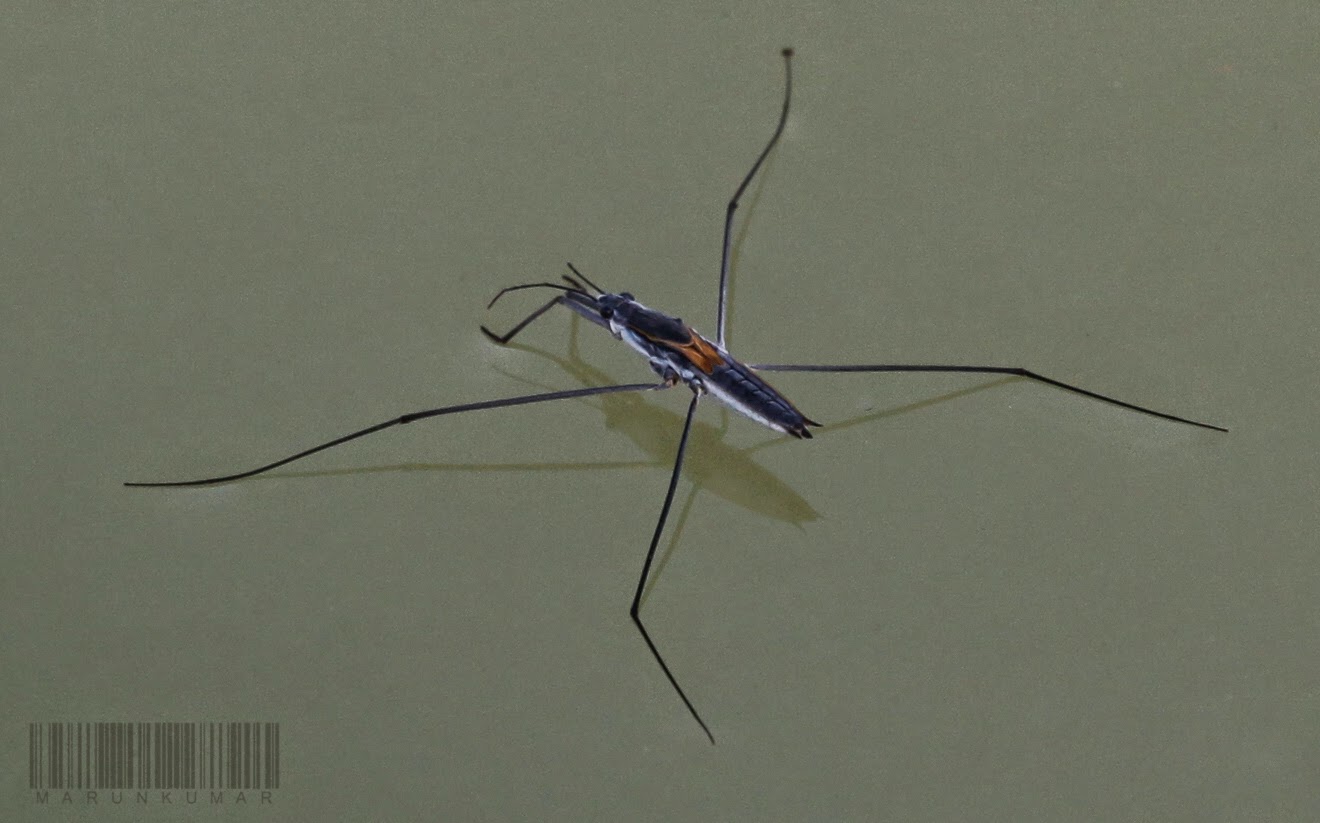
15. Pond skaters (Gerridae)