Showing posts with label Green Bee-eater. Show all posts

15 March, 2015

2015_074_15Mar15_Shivanahalli

Owl | Mottled Wood
Bee-eater | Green
Tailorbird | Common
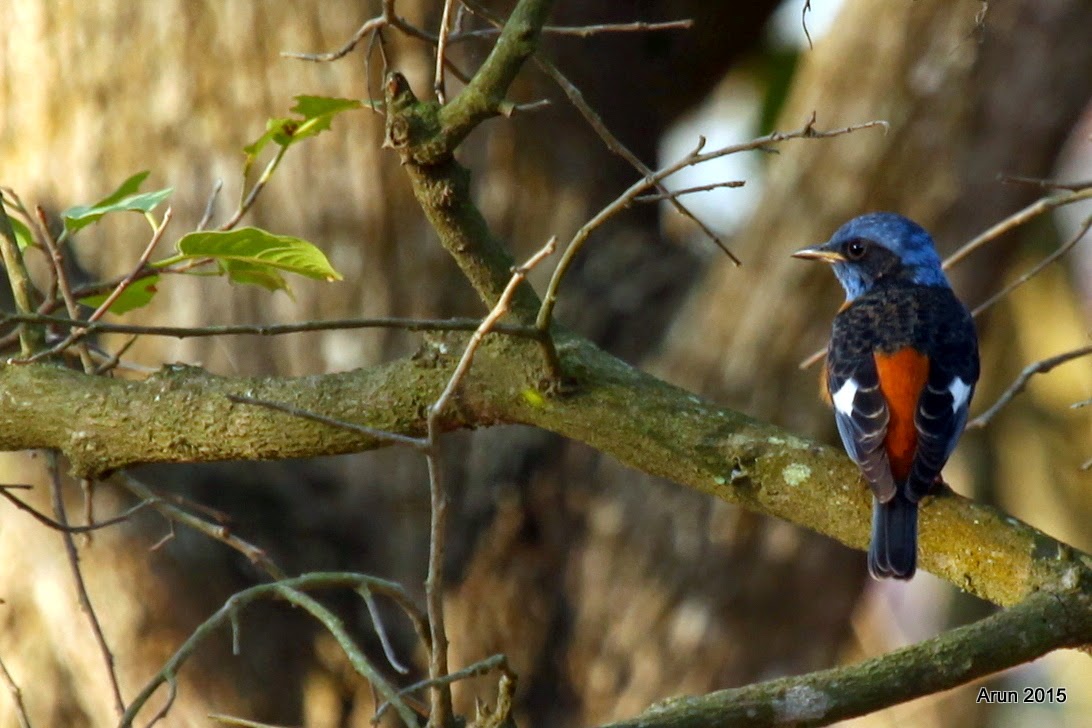
Rock Thrush | Blue-capped
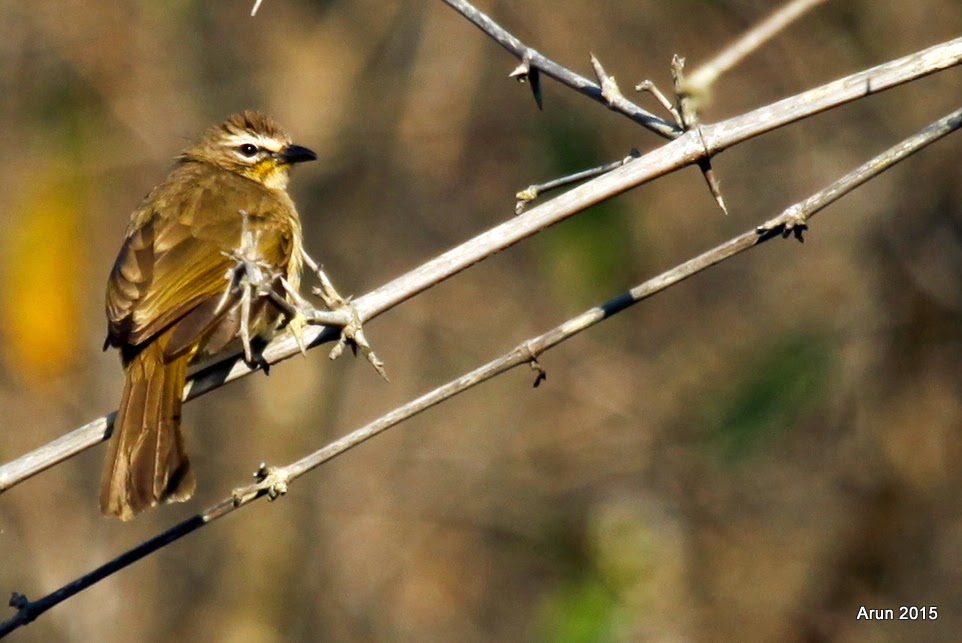
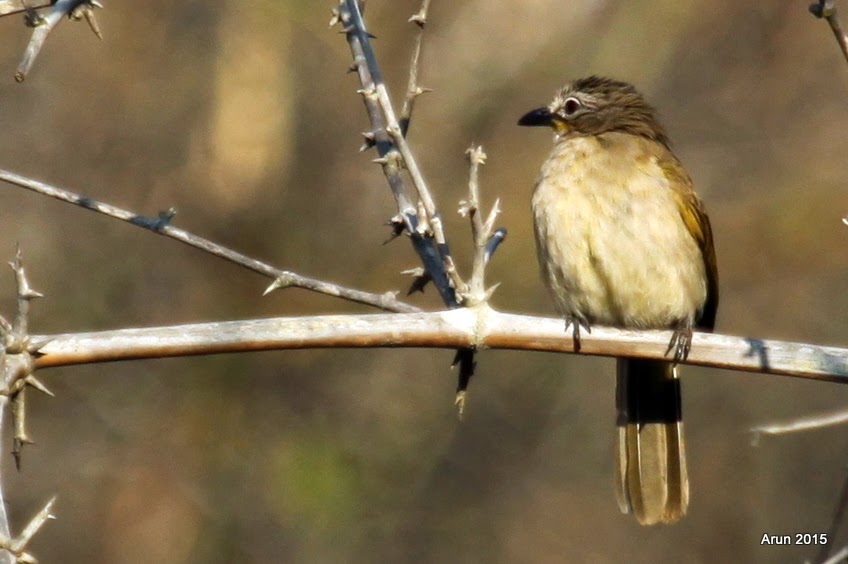
Bulbul | White-browed
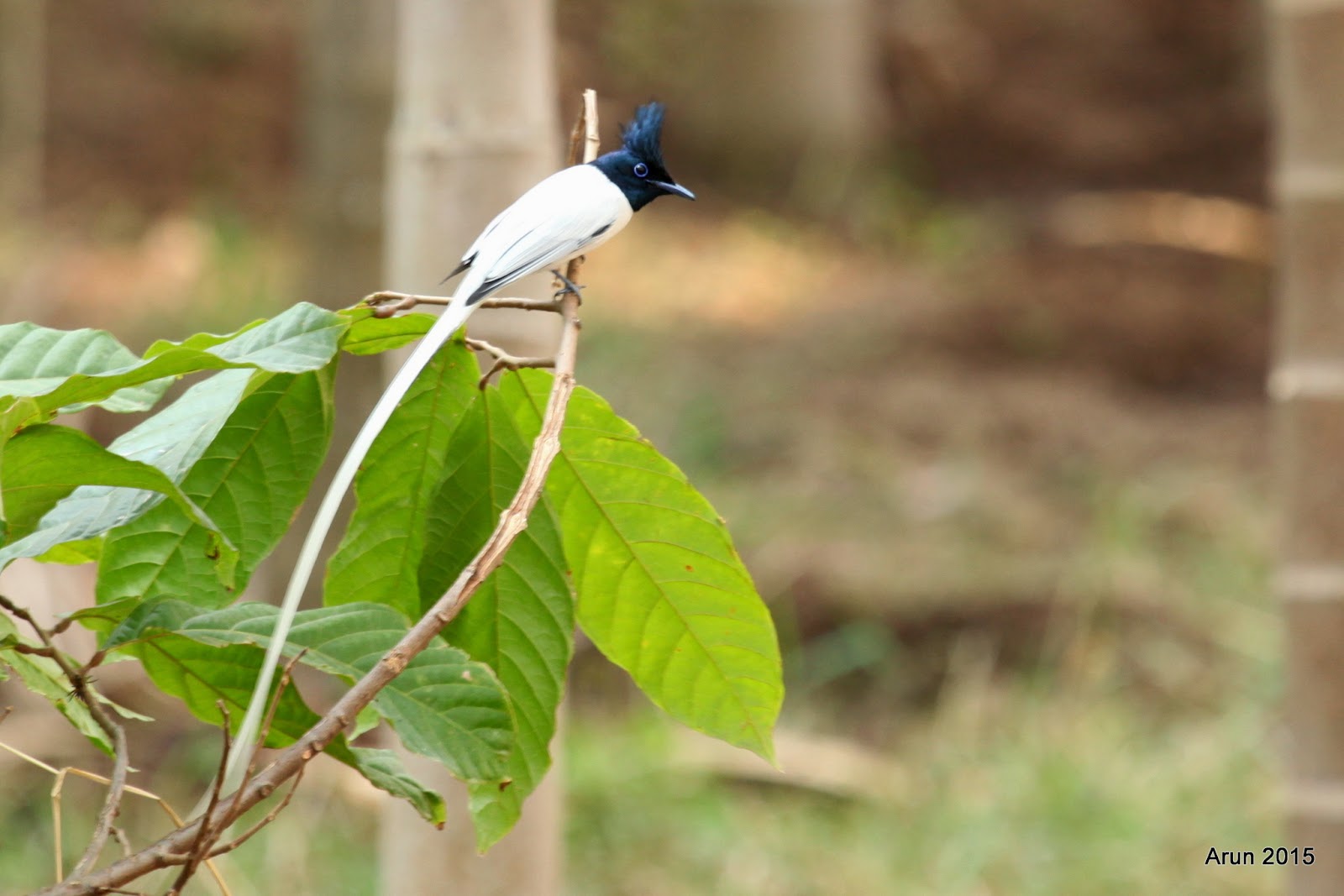
Flycatcher | Asian Paradise - Male
Flycatcher | Tickell's Blue
Flycatcher | Asian Paradise - Female
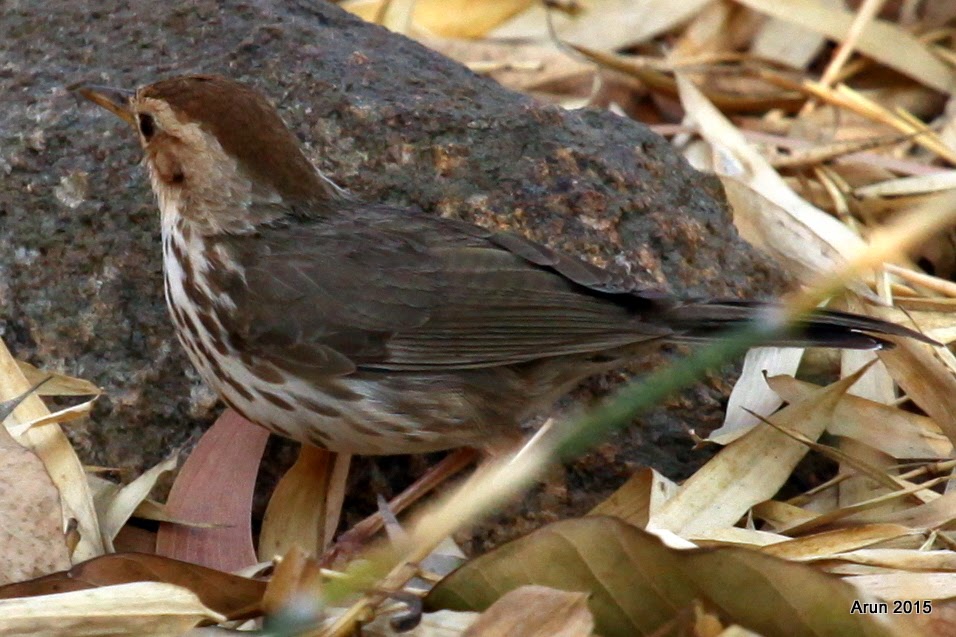
Babbler | Puff-throated
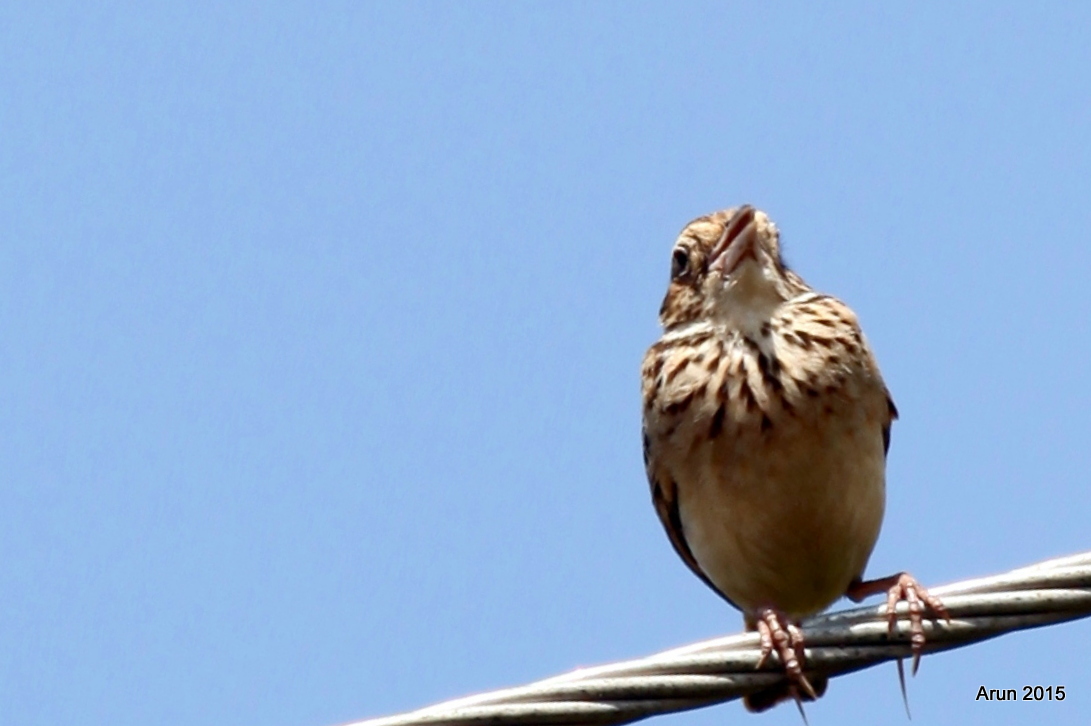
Pipit | Paddyfield
Robin | Indian - Male
Robin | Indian - Female

15 June, 2014

2014 | 166 | 15Jun14 | Shivanahalli

BNG BIRDS - 3rd Sunday Trail @ Shivanahalli
Special thanks to Ms.Geethanjali and BNG birds for arranging such a wonderful birding trail. Adding to it when professionals like Mr.Seshadiri, Mr.Deepak joins, the whole team gets enlightened with tons of information, for me personally I felt amazed to hear about gear systems in carpenter bees, habits of procession ants, evolution of terminalia trees, specialty of sandal woods roots and so on. For a while I though I should have choose botany or Zoology as my major. : ). At the same time, need to thank Ashram and their team for allowing us inside. Thank you again for all your support.
Arun
:: Birds ::
01. Tickell's Blue Flycatcher (Cyornis tickelliae) - Female -  14 cm
ID by  Richard Grimmett : Male from Blue-throated by orange throat. Female has blue-grey cast to upperparts (especially rump and tail), orange breast, and white belly and flanks.
02. Common Tailorbird (Orthotomus sutorius) - Adult - 13 cm
ID by  Richard Grimmett : Has long (slightly down curved) pale bill, rufous forehead and forecrown, greenish upperparts, and dull whitish or buffish underparts. Breeding male has elongated central tail feathers. Juvenile lacks rufous on forecrown. Subspecies in Sri Lanka (e.g. 0. s. sutorius) have darker and greener upperparts and lack supercilium. 
03.  Orange-headed Thrush (Zoothera citrina) - Adult Male - 21 cm
ID by  Richard Grimmett : Adult has orange head and underparts; male with blue-grey mantle, female with olive brown wash to mantle. Juvenile has buffish-orange streaking on upperparts and mottled breast. Shows white banding on underwing in flight. Z. c. cyanotus (peninsula) has vertical black stripes across white ear-coverts, and white throat.
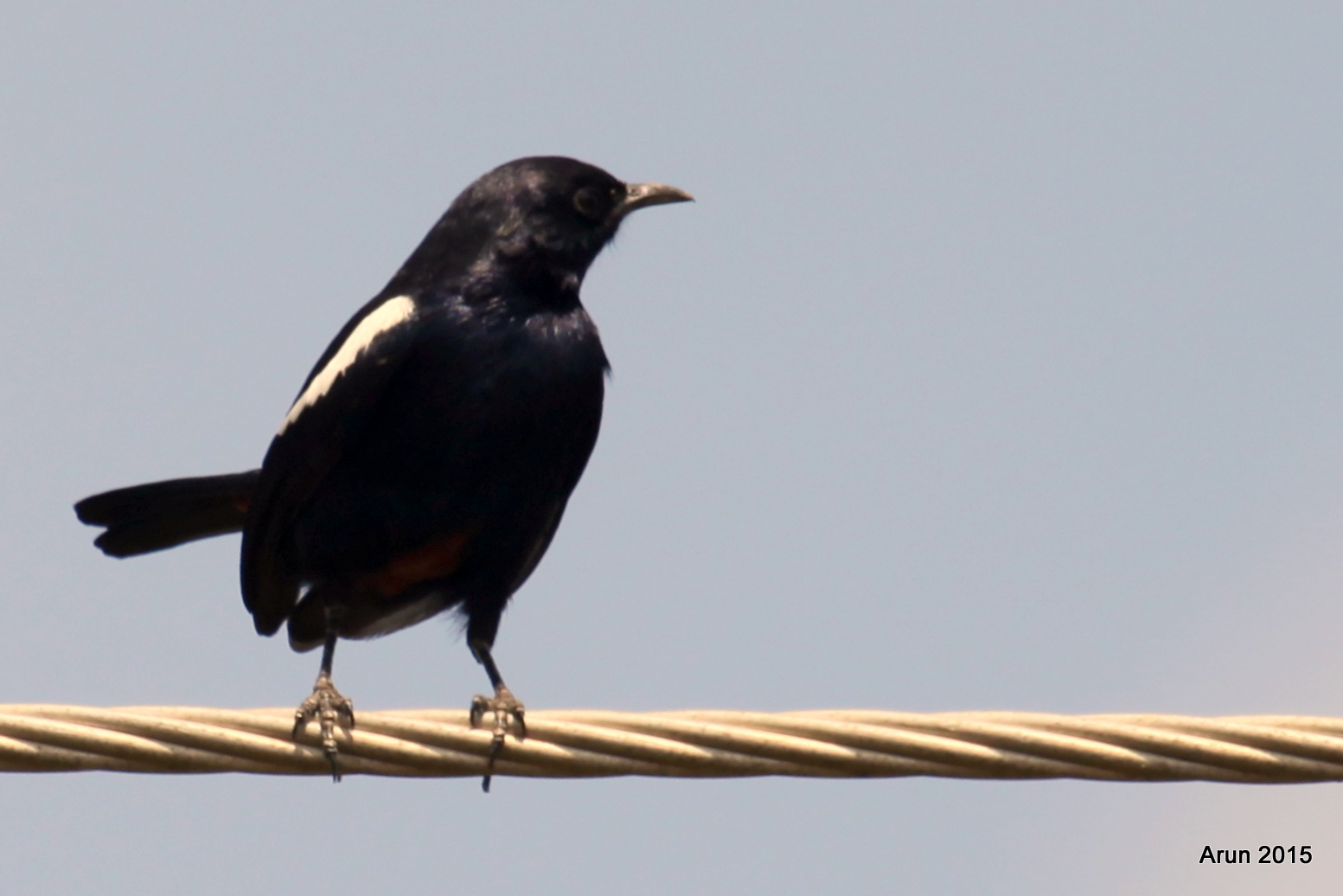
04.  Pied Bushchat (Saxicola caprata) - Female - 12.5-13 cm
ID by  Richard Grimmett : Male is entirely black except for white rump and patch on wing; duller due to rufous fringes to body in non-breeding and First-winter plumages. Female has dark brown upperparts and rufous-brown underparts, with rufous-orange rump. Females in peninsula and Sri Lanka are darker and more prominently streaked than in North.

05.  Green Bee-eater (Merops orientalis) - Juvenile - 16-18 cm
ID by  Richard Grimmett : Small with elongated central tail feathers, blue or green throat with black gorget, variable golden-brown to rufous crown and nape, and green tail. Juvenile has square-ended tail; crown and mantle are green, lacks black gorget, and throat is pale yellowish- or bluish-green. 

:: Insects and other Invertebrates ::
01.  Millipedes (Myriapodous arthropods) - Feeding on fruit - 0.2-35 cm
ID by  Wikipedia: Millipedes have as few as eleven to over one hundred segments. They are generally black or brown in colour, although there are a few brightly coloured species. The millipede's most obvious feature is its large number of legs. Having many short legs makes millipedes rather slow, but the many legs pushing in unison provides powerful strength for burrowing.
02. Chiasmia sp
03. Tailed Jay (Graphium agamemnon) - Matting
Thanks to Mr.Vimal who spotted and showed this lovely couples.

27 April, 2014

2014 | 117 | 27Apr14 | Hesaraghatta

01. Booted Warbler (Iduna caligata)
ID by  Richard Grimmett : Small, with square-ended tail, and short undertail-coverts. Often shows faint whitish edges and tip to tail and fringe to tertials. Supercilium usually reasonably distinct and square-ended behind the eye, and can be bordered above by a diffuse dark line. Typically shorter- and finer-billed than Sykes's, with more prominent supercilium, and upperparts are warmer brown; it usually appears more Phylloscopus-like, owingto shorter bill, and more frequently feeds on the ground. Possibly confusable with Common Chiffchaff, but lacks any greenish or olive tones, and has pale base to lower mandible and pale legs.
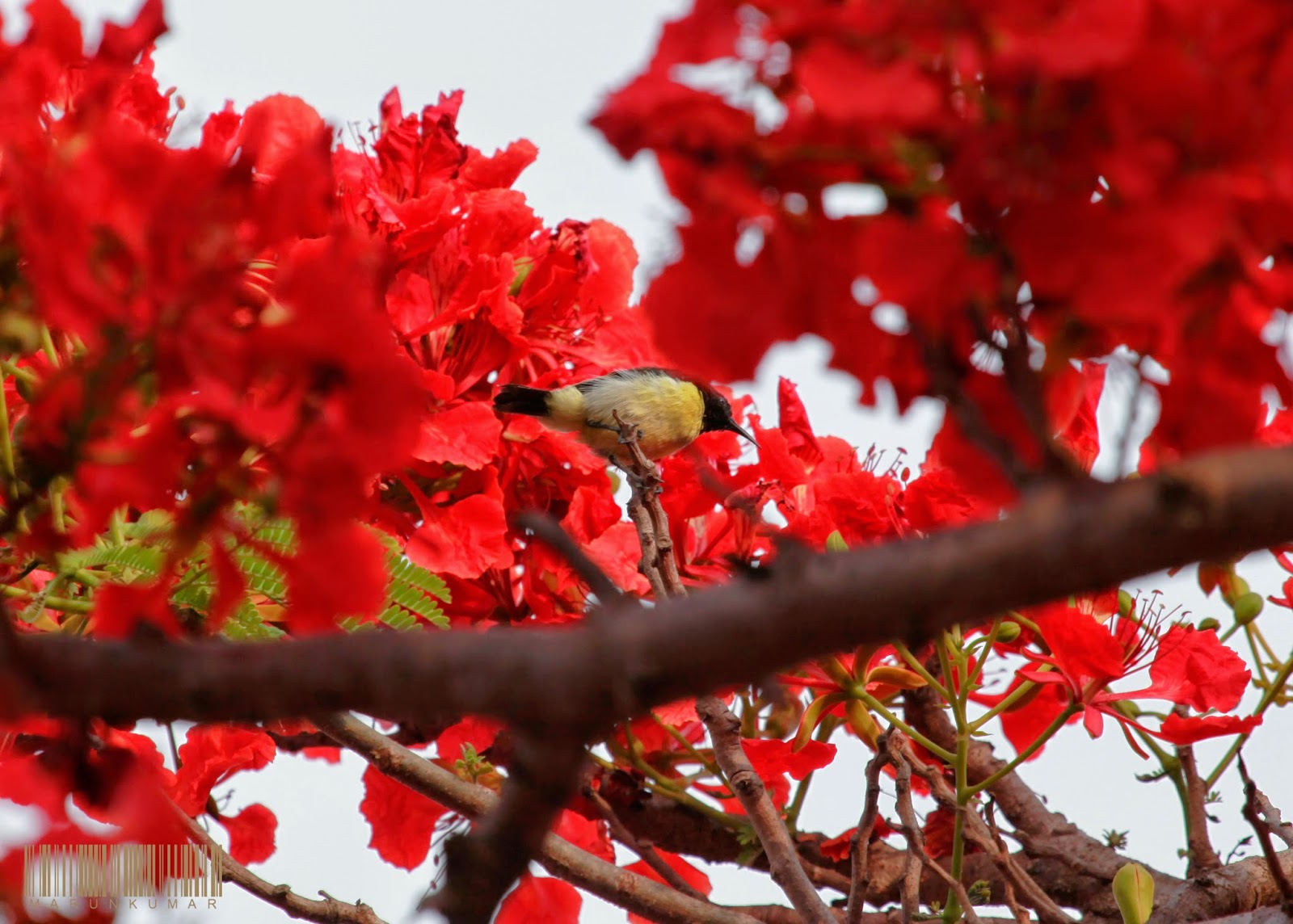
02. Purple Sunbird (Cinnyris asiaticus) - Male
ID by  Richard Grimmett : Has shorter and less down curved bill than Loten's. Male is metallic blue-green and purple becoming blacker on belly and vent. Female has uniform yellowish underparts, with faint supercilium and darker mask (whiter below in worn plumage). Eclipse male is as female, but has a broad blackish stripe down centre of throat and breast, metallic blue wing coverts and glossy black wings and tail. Juvenile is brighter yellow on entire underparts than female.
03. Brahminy Kite (Haliastur indus) - Adult
ID by  Richard Grimmett : Small size and kite-like flight. Wings usually angled at carpals. Tail rounded. Adult mainly chestnut, with white head, neck and breast. Juvenile mainly brown, with pale streaking on head, mantle and breast, large pale patch at base of primaries on underwing, and pale brown and unmarked underside to tail.
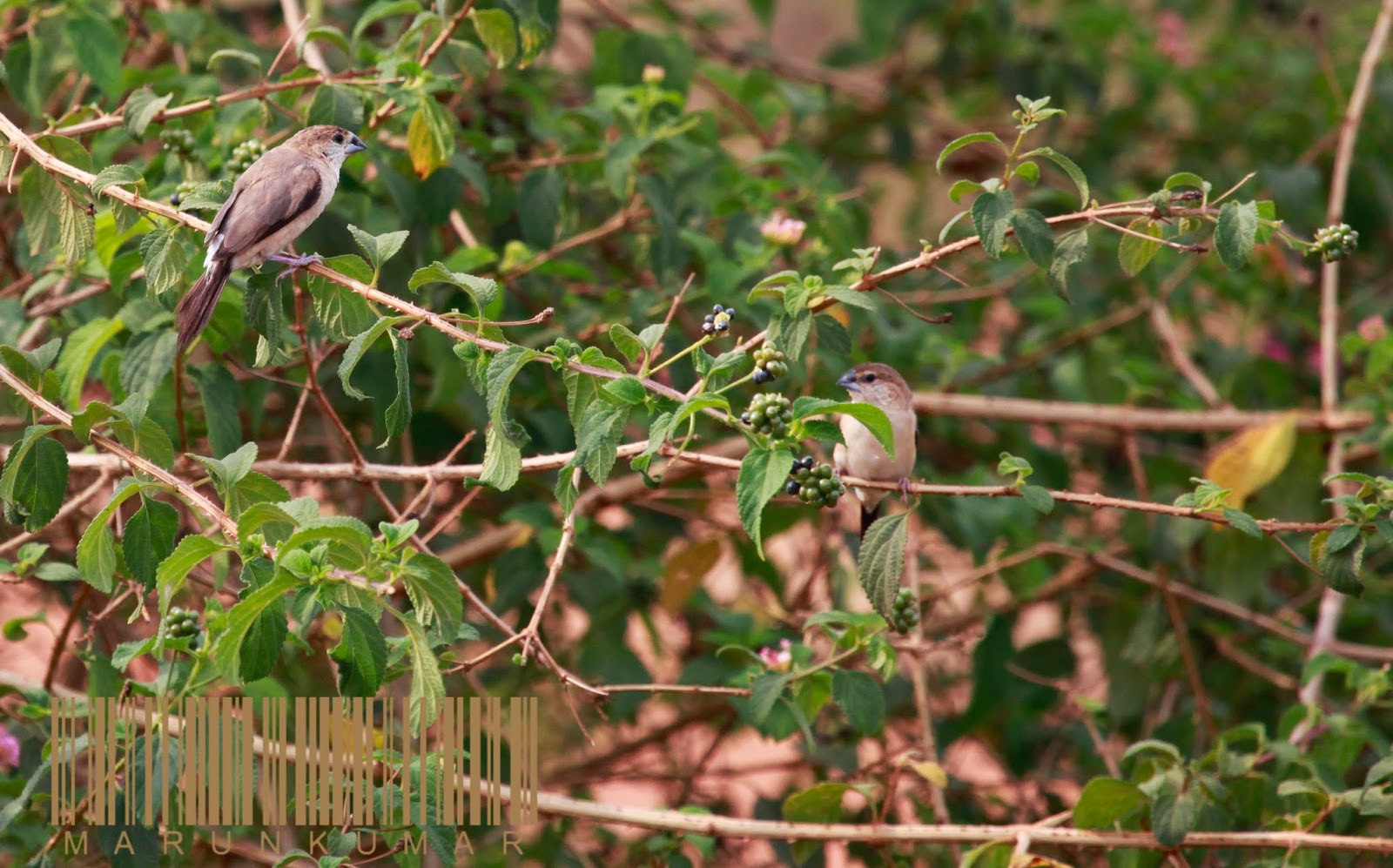
04. Indian Silverbill or White-throated Munia
(Lonchura malabarica)  - Male
ID by  Richard Grimmett : Male has fawn brown upperparts, whitish face and underparts with barred flanks, long and pointed black tail, and white rump and uppertail-coverts. Female is duller with plainer face, and flanks are less barred. Juvenile lacks barring on flanks, has dark mottling on rump, and tail is shorter and more rounded.
ID by  Wikipedia : The adult Indian Silverbill is 11–11.5 cm long and has a conical silver-grey bill, buff-brown upperparts, white underparts, buffy flanks and dark wings. The tail is black and the wings are dark contrasting with a white rump. The sexes are similar.
05. Purple-rumped Sunbird (Leptocoma zeylonica) - Male
ID by  Richard Grimmett : Male has narrow maroon breast-band, maroon head sides and mantle, metallic green shoulder patch, and yellow lower breast and belly with distinctive greyish-white flanks. Does not have eclipse plumage.
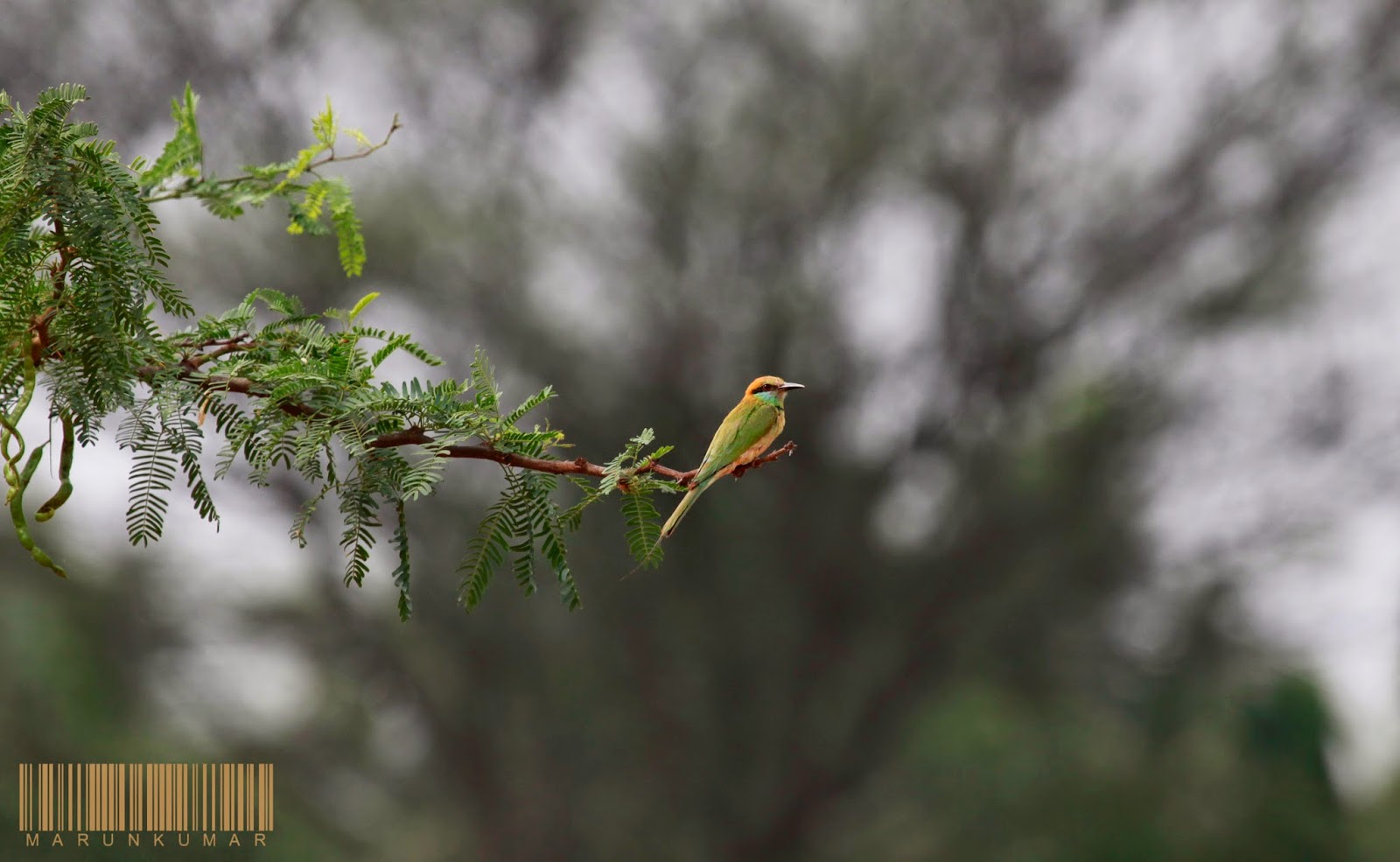
06. Green Bee-eater (Merops orientalis) - Adult
ID by  Richard Grimmett : Small with elongated central tail feathers, blue or green throat with black gorget, variable golden-brown to rufous crown and nape, and green tail. 
ID by  Wikipedia: Like other bee-eaters, this species is a richly coloured, slender bird. It is about 9 inches (16–18 cm) long with about 2 inches made up by the elongated central tail-feathers. The sexes are not visually distinguishable. The entire plumage is bright green and tinged with blue especially on the chin and throat. The crown and upper back are tinged with golden rufous. The flight feathers are rufous washed with green and tipped with blackish. A fine black line runs in front of and behind the eye. 
07. Brown Shrike (Lanius cristatus) - Female
ID by  Richard Grimmett : Typically has darker and more uniform rufous-brown upperparts, and warmer rufous flanks. Also thicker bill, more graduated tail and lacks white patch at base of primaries (apparent in male and some female Red-tailed). Female has paler lores and faint dark scaling on breast and flanks.

08. Crimson Rose (Pachliopta hector) - Male
ID by  Wikipedia: Male Upperside black. Fore wing with a broad white interrupted band from the subcostal nervure opposite the origin of veins 10 and 11, extended obliquely to the tornus, and a second short pre-apical similar band; both bands composed of detached irregularly indented broad streaks in the interspaces. Hind wing with a diseal posteriorly strongly curved series of seven crimson spots followed by a subterminal series of crimson lunules. Cilia black alternated with white. Underside: fore whig dull brownish black, hind wing black; markings as on the npporsido, but the crimson spots and crescentic markings on the hind wing larger. Antennae, thorax and abdomen abovo at base, black; head and rest of the abdomen bright crimson; beneath: iho palpi, the sides of the thorax and abdomen crimson.
Female. Similar, the discal series of spots and subterminal lunules much duller, pale crimson irrorated with black scales; in some specimens the anterior spots and lunules almost white barely tinged with crimson; abdomen above with the black colour extended further towards the apex.