


spread wings
 |
| 01. Barn Swallow (Hirundo rustica) - Adult - 18 cm ID by Richard Grimmett : Adult has bright red forehead and throat, blue-black breast-band and upperparts, and long tail-streamers. Underparts vary from white to rufous. Immature has duller orange forehead and throat, breastband is browner and less well defined, upperparts are duller, and has shorter tail-streamers. |
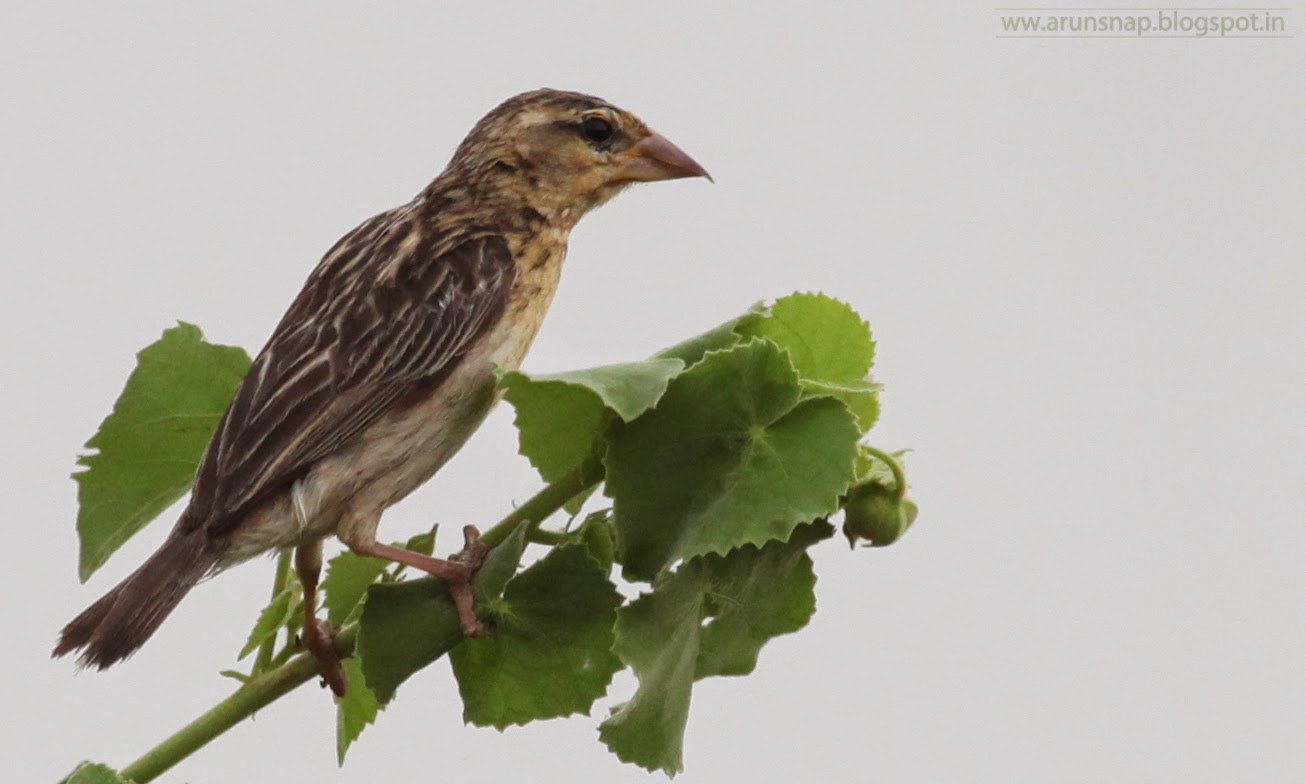 |
| 02. Baya Weaver (Ploceus philippinus) - Female/ Juv ? - 15 cm ID by Richard Grimmett : Breeding male of nominate has yellow crown, dark brown ear-coverts and throat, unstreaked yellow breast, and yellow streaking on mantle and scapulars. Non-breeding male, female and juvenile usually have unstreaked buffish underparts; streaking can be as prominent as on poorly marked Streaked, but has less distinct and buffish supercilium, lacks yellow neck patch, and lacks pronounced dark moustachial and malar stripes. Non-breeding male,female and juvenile burmanicus more rufousbuff on supercilium and underparts. |
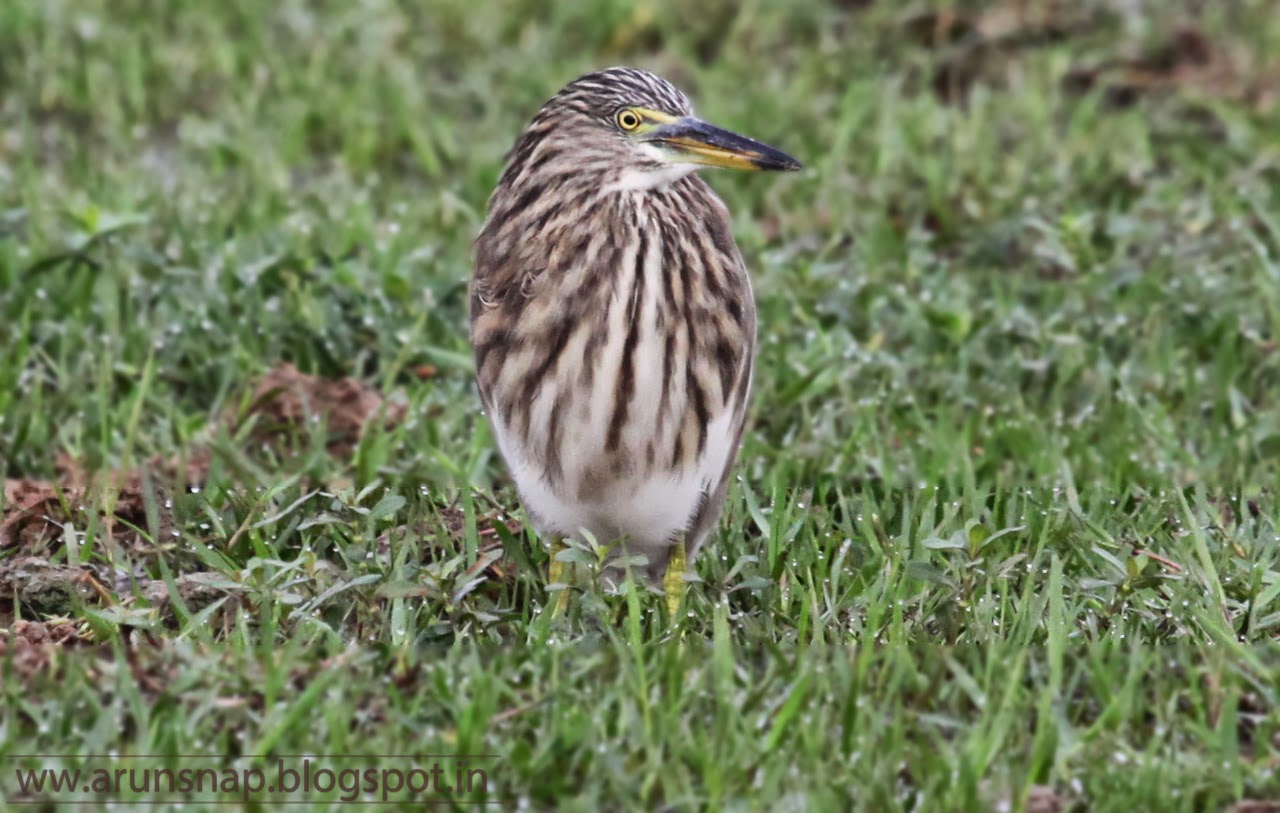 |
| 03. Indian Pond Heron (Ardeola grayii) - Non-Breeding Adult - 42-45 cm ID by Richard Grimmett : Whitishwings contrast with dark saddle. Adult breeding has yellowish-buff head and neck and maroon-brown mantle/ scapulars. Head, neck and breast streaked/spotted in non-breeding plumage. |
 |
| 04. Wood Sandpiper (Tringa glareola) - Juvenile ?? 18-21 cm ID by Richard Grimmett : From Green Sandpiper by longer, yellowish legs and slimmer appearance, heavily speckled upperparts, and prominent supercilium behind eye; in flight by call, slimmer body and narrower wings, toes projecting clearly beyond tail, paler underwing contrasting less with white underparts, and paler brown upperparts contrasting less with smaller white rump. Adult breeding has heavily streaked breast and barred flanks; upperparts barred and spotted pale grey-brown and white. Adult non-breeding has more uniform grey-brown upperparts, spotted whitish, and breast brownish and lightly streaked. Juvenile has warm brown upperparts speckled warm buff, and lightly streaked buff breast. |
 |
| 05. Purple Heron (Ardea purpurea) - Adult - 78-90 cm ID by Richard Grimmett : Rakish, with long, thin neck. In flight, compared with Grey Heron, bulge of recoiled neck is very pronounced, protruding feet large, underwing-coverts purplish (adult) or buff (juvenile) and lacks white leading edge to wing. Adult has chestnut head and neck with black stripes, grey mantle and upperwing-coverts, and dark chestnut belly and underwing-coverts. Juvenile has black crown, buffish neck, and brownish mantle and upperwing-coverts with rufous-buff fringes. |
 |
| 06. Brahminy Kite (Haliastur indus) - Adult ID by Richard Grimmett : Small size and kite-like flight. Wings usually angled at carpals. Tail rounded. Adult mainly chestnut, with white head, neck and breast. Juvenile mainly brown, with pale streaking on head, mantle and breast, large pale patch at base of primaries on underwing, and pale brown and unmarked underside to tail. |
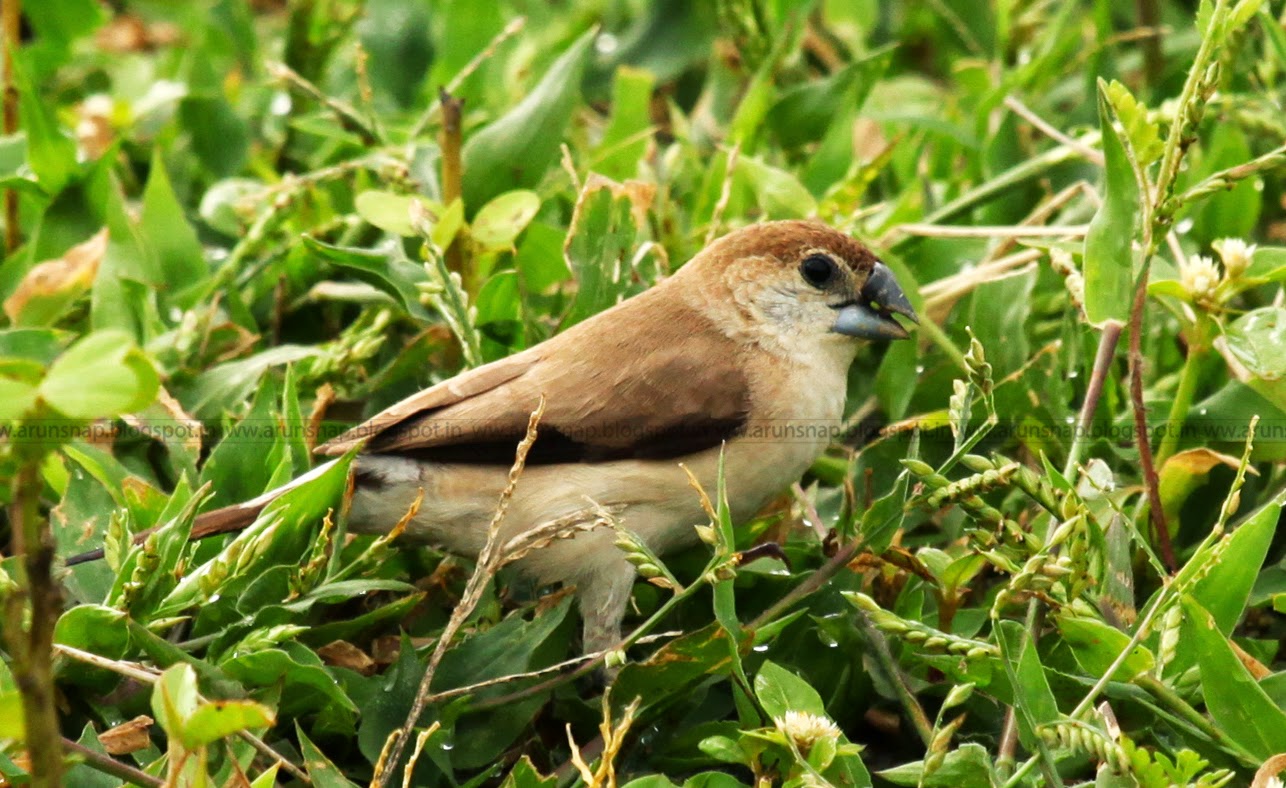 |
| 07. Indian Silverbill or White-throated Munia (Lonchura malabarica) - Male ID by Richard Grimmett : Male has fawn brown upperparts, whitish face and underparts with barred flanks, long and pointed black tail, and white rump and uppertail-coverts. Female is duller with plainer face, and flanks are less barred. Juvenile lacks barring on flanks, has dark mottling on rump, and tail is shorter and more rounded. ID by Wikipedia : The adult Indian Silverbill is 11–11.5 cm long and has a conical silver-grey bill, buff-brown upperparts, white underparts, buffy flanks and dark wings. The tail is black and the wings are dark contrasting with a white rump. The sexes are similar. |
 |
| 08. Little Egret (Egretta garzetta) - Breeding Adult - 55-65 cm ID by Richard Grimmett : Slim and graceful. Has black bill, black legs with yellow feet, and greyish or yellowish lores. In breeding plumage has two elongated nape plumes, and mantle plumes, and lores and feet become reddish during courtship. Bill in non-breeding and immature can be paler and pinkish or greyish at base, or dull yellowish on some; legs can be yellowish or greenish. |
 |
| 09. Caspian Tern (Hydroprogne caspia) - Breeding Adult - 38-46 cm ID by Richard Grimmett : Large size and broad-winged/short-tailed appearance. Huge red bill and black underside to primaries. Adult breeding has complete black cap. Adult non-breeding has black-streaked crown and black mask; bill is duller, with more black at tip. First-winter and first-summer are similar to adult non-breeding, but show faint dark lesser-covert and secondary bars and dark-tipped tail (but upperwing appears much plainer than in Lesser and Great Crested Terns). Juvenile has narrow dark subterminal bars to scapulars and wing-coverts; forehead and crown are more heavily marked, almost forming dark cap. |
 |
| 01. Booted Warbler (Iduna caligata) ID by Richard Grimmett : Small, with square-ended tail, and short undertail-coverts. Often shows faint whitish edges and tip to tail and fringe to tertials. Supercilium usually reasonably distinct and square-ended behind the eye, and can be bordered above by a diffuse dark line. Typically shorter- and finer-billed than Sykes's, with more prominent supercilium, and upperparts are warmer brown; it usually appears more Phylloscopus-like, owingto shorter bill, and more frequently feeds on the ground. Possibly confusable with Common Chiffchaff, but lacks any greenish or olive tones, and has pale base to lower mandible and pale legs. |
 |
| 02. Purple Sunbird (Cinnyris asiaticus) - Male ID by Richard Grimmett : Has shorter and less down curved bill than Loten's. Male is metallic blue-green and purple becoming blacker on belly and vent. Female has uniform yellowish underparts, with faint supercilium and darker mask (whiter below in worn plumage). Eclipse male is as female, but has a broad blackish stripe down centre of throat and breast, metallic blue wing coverts and glossy black wings and tail. Juvenile is brighter yellow on entire underparts than female. |
 |
| 03. Brahminy Kite (Haliastur indus) - Adult ID by Richard Grimmett : Small size and kite-like flight. Wings usually angled at carpals. Tail rounded. Adult mainly chestnut, with white head, neck and breast. Juvenile mainly brown, with pale streaking on head, mantle and breast, large pale patch at base of primaries on underwing, and pale brown and unmarked underside to tail. |
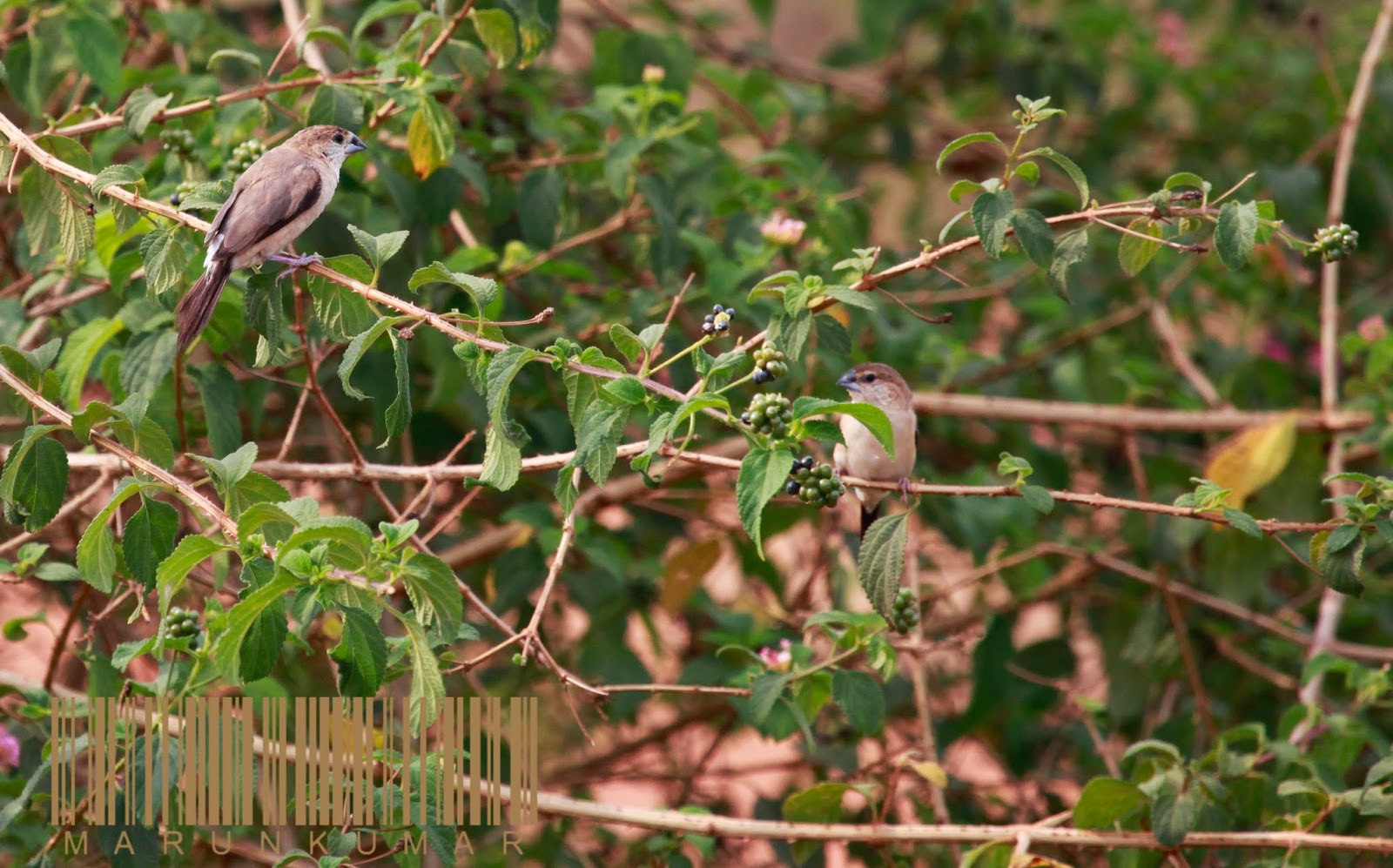 |
| 04. Indian Silverbill or White-throated Munia (Lonchura malabarica) - Male ID by Richard Grimmett : Male has fawn brown upperparts, whitish face and underparts with barred flanks, long and pointed black tail, and white rump and uppertail-coverts. Female is duller with plainer face, and flanks are less barred. Juvenile lacks barring on flanks, has dark mottling on rump, and tail is shorter and more rounded. ID by Wikipedia : The adult Indian Silverbill is 11–11.5 cm long and has a conical silver-grey bill, buff-brown upperparts, white underparts, buffy flanks and dark wings. The tail is black and the wings are dark contrasting with a white rump. The sexes are similar. |
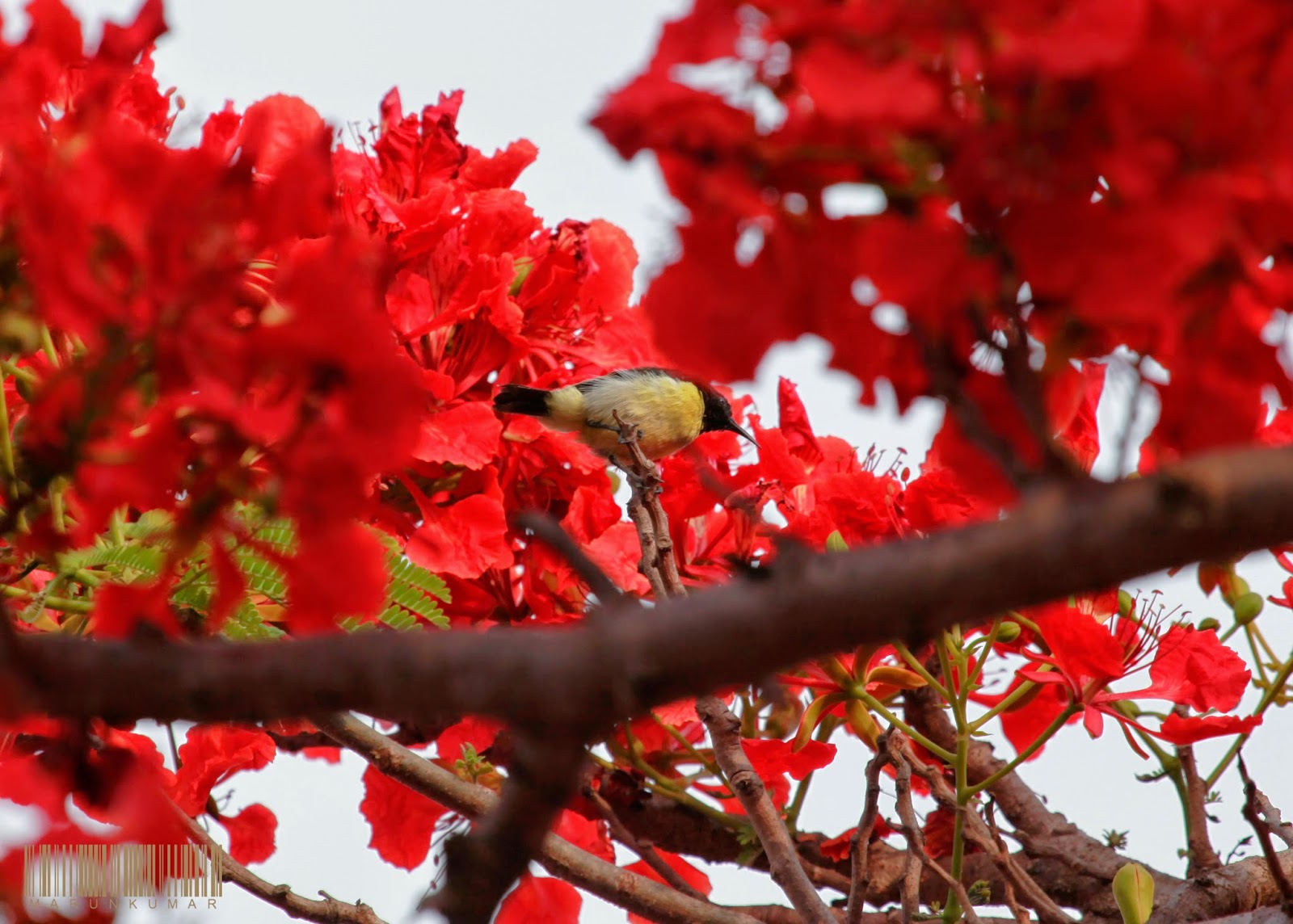 |
| 05. Purple-rumped Sunbird (Leptocoma zeylonica) - Male ID by Richard Grimmett : Male has narrow maroon breast-band, maroon head sides and mantle, metallic green shoulder patch, and yellow lower breast and belly with distinctive greyish-white flanks. Does not have eclipse plumage. |
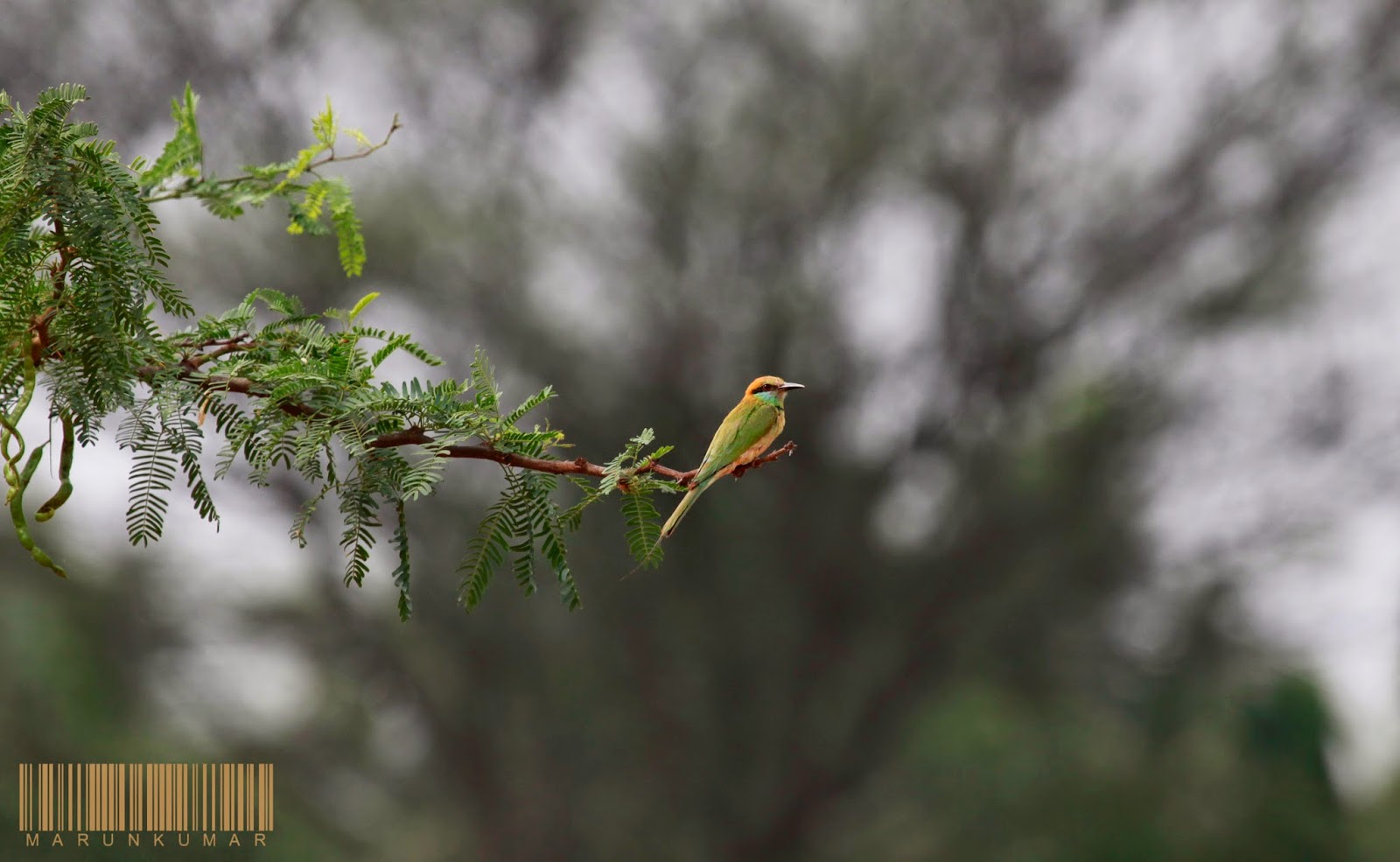 |
| 06. Green Bee-eater (Merops orientalis) - Adult ID by Richard Grimmett : Small with elongated central tail feathers, blue or green throat with black gorget, variable golden-brown to rufous crown and nape, and green tail. ID by Wikipedia: Like other bee-eaters, this species is a richly coloured, slender bird. It is about 9 inches (16–18 cm) long with about 2 inches made up by the elongated central tail-feathers. The sexes are not visually distinguishable. The entire plumage is bright green and tinged with blue especially on the chin and throat. The crown and upper back are tinged with golden rufous. The flight feathers are rufous washed with green and tipped with blackish. A fine black line runs in front of and behind the eye. |
 |
| 07. Brown Shrike (Lanius cristatus) - Female ID by Richard Grimmett : Typically has darker and more uniform rufous-brown upperparts, and warmer rufous flanks. Also thicker bill, more graduated tail and lacks white patch at base of primaries (apparent in male and some female Red-tailed). Female has paler lores and faint dark scaling on breast and flanks. |
 |
| 08. Crimson Rose (Pachliopta hector) - Male ID by Wikipedia: Male Upperside black. Fore wing with a broad white interrupted band from the subcostal nervure opposite the origin of veins 10 and 11, extended obliquely to the tornus, and a second short pre-apical similar band; both bands composed of detached irregularly indented broad streaks in the interspaces. Hind wing with a diseal posteriorly strongly curved series of seven crimson spots followed by a subterminal series of crimson lunules. Cilia black alternated with white. Underside: fore whig dull brownish black, hind wing black; markings as on the npporsido, but the crimson spots and crescentic markings on the hind wing larger. Antennae, thorax and abdomen abovo at base, black; head and rest of the abdomen bright crimson; beneath: iho palpi, the sides of the thorax and abdomen crimson. Female. Similar, the discal series of spots and subterminal lunules much duller, pale crimson irrorated with black scales; in some specimens the anterior spots and lunules almost white barely tinged with crimson; abdomen above with the black colour extended further towards the apex. |
