|
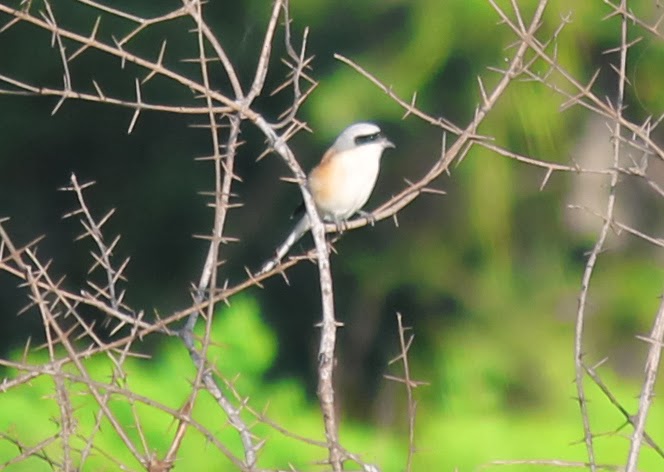
| 01. Shikra (Accipiter badius) - Male ID by Richard Grimmett : Under wing pale, with fine barring on remiges, and slightly darker wing-tips. Head cuckoo-like compared with other Accipiter. Male has pale blue-grey upperparts with contrasting dark grey primaries, indistinct grey gular stripe, fine brownish-orange barring on underparts, unbarred white thighs, and unbarred or lightly barred central tail feathers. |
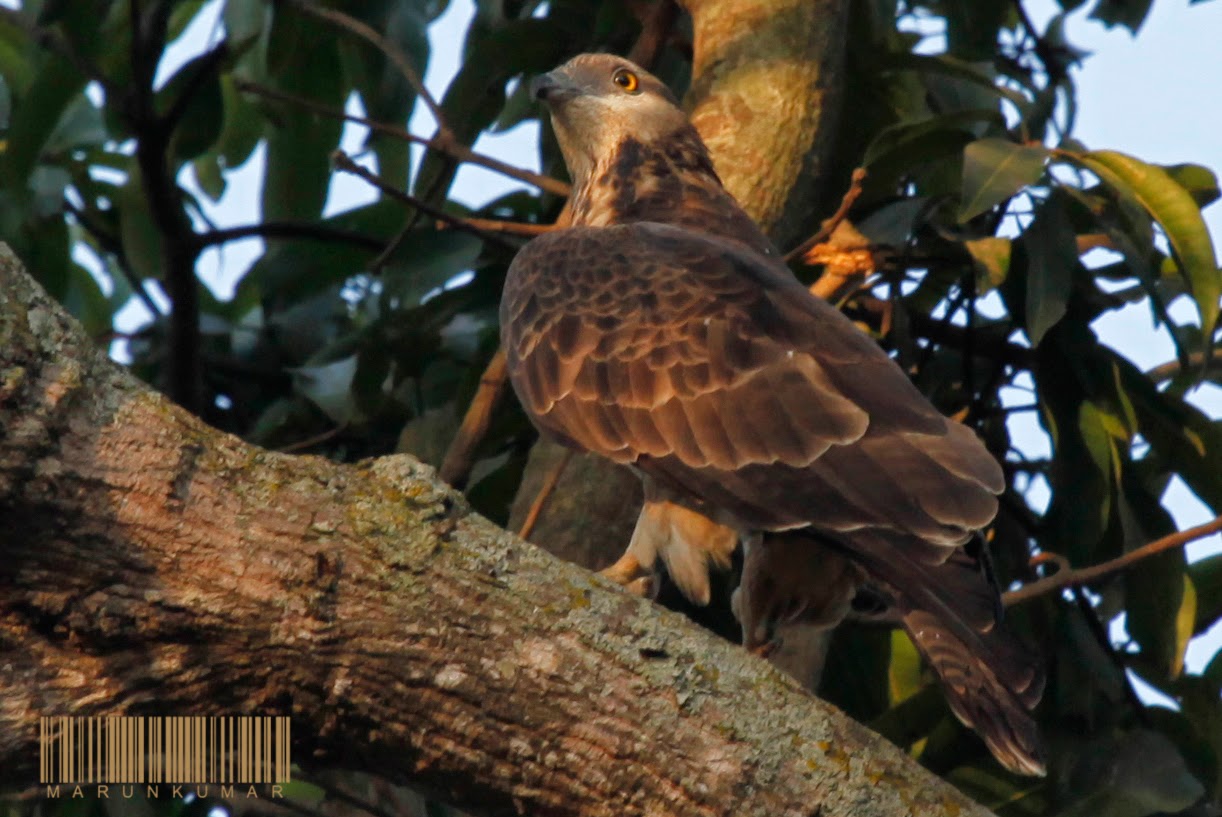 |
| 02. Oriental Honey-buzzard (Perm's ptilorhynchus) - Female ID by Richard Grimmett : Tail long and broad, and has narrow neck, small head and bill, and short bare tarsi. Soars with wings flat. Has small crest. Underparts and underwing-coverts range from dark brown through rufous to white, and unmarked, streaked or barred; often shows dark moustachial stripe and gular stripe, and gorget of streaking across lower throat. Lacks dark carpal patch. Male has grey face, two black tail-bands, usually three black under wing bands, and brown iris. Female has browner face and upper parts, three black tail-bands, four narrower black under wing bands, and yellow iris. |
 |
| 03. Paddyfield Pipit (Anthus rufulus) - Adult ID by Richard Grimmett : Lores is often pale (but can be dark), and shows warm ginger buff wash across breast and down flanks (underparts more uniform cream-white on Tawny) |
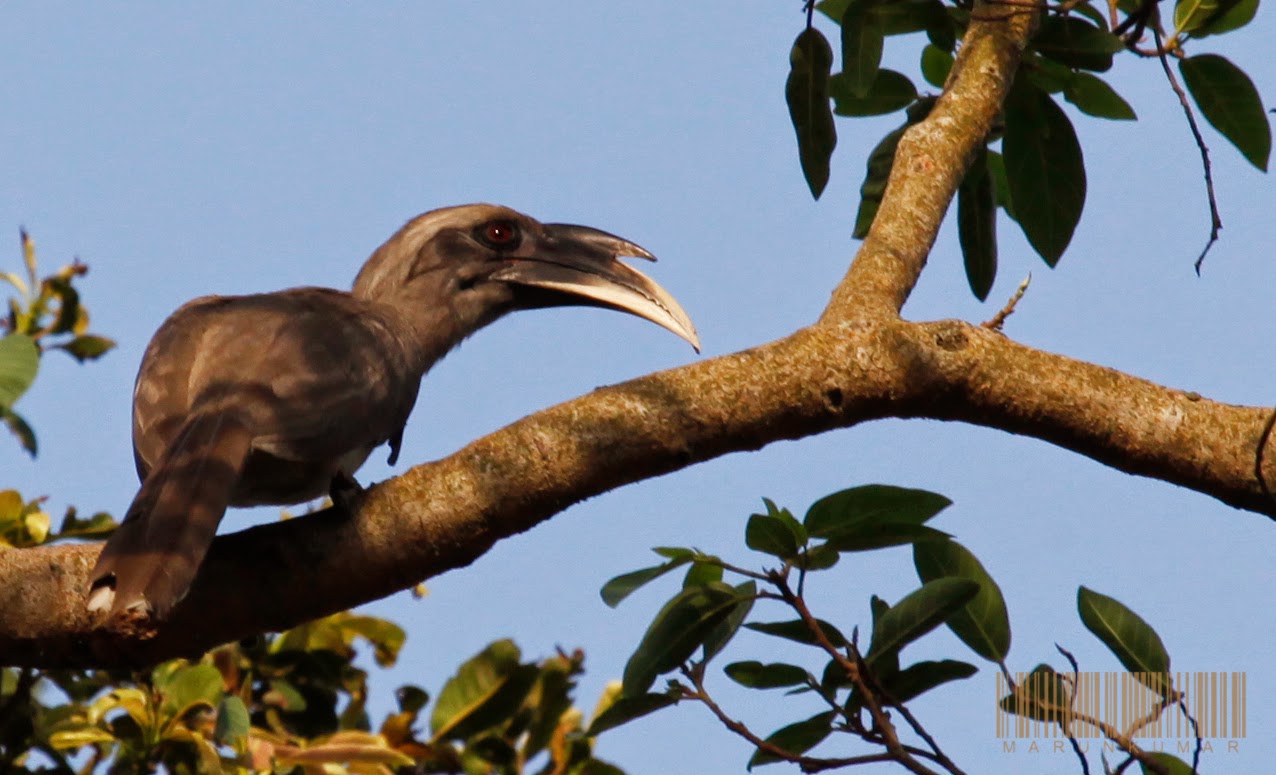 |
| 04. Indian Grey Hornbill (Ocyceros birostris) - Adult ID by Richard Grimmett : Broad greyish-white supercilium with dark grey ear-coverts, white tips to primaries and secondaries, and white-tipped tail. Has prominent blackish casque, and more extensive black at base of bill compared with Malabar. Further, lacks pale streaking on head, neck and breast, has paler sandy brownish-grey coloration to upper parts, and white trailing edge to secondaries. Tail is also longer than on Malabar Grey, and paler brown with dark grey sub terminal band and elongated central feathers. Female is similar to male, but has smaller casque with less pronounced tip. Immature has bill as female's, but smaller and with smaller casque; lacks white wing-tips. |
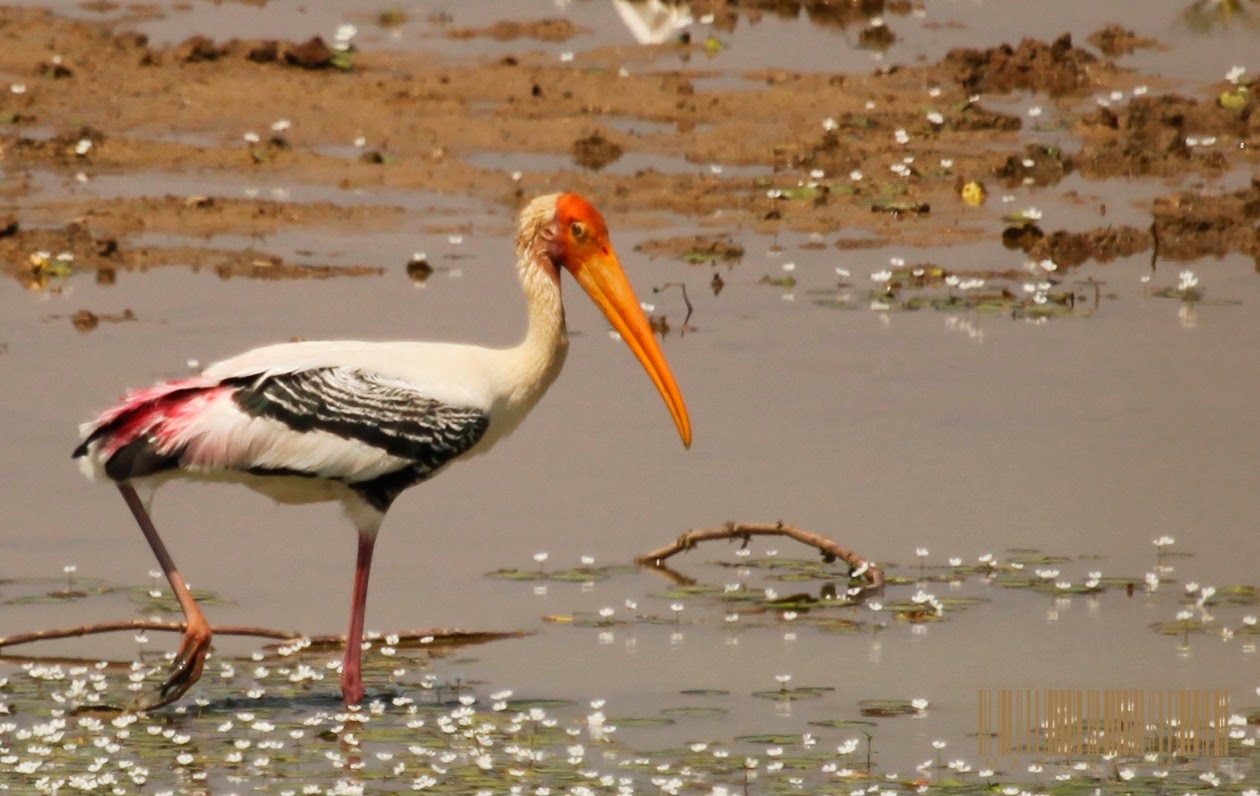 |
| 05. Painted Stork (Mycteria leucocephala) - Adult ID by Richard Grimmett : Adult has downcurved yellow bill, bare orange head (redder in breeding season), and pinkish legs; white barring on mainly black upperwing-coverts, pinkish tertials, and black barring across breast. Juvenile dirty greyish-white, with grey-brown (feathered) head and neck and brown lesser coverts; bill and legs duller than adult's. |
 |
| 06. Yellow-billed Babbler (Turdoides affinis) - Adult ID by Richard Grimmett : Have creamy-white lores, forehead and crown, dark mottling on throat and breast (diffusely streaked on most similar Jungle races), pale grey panel on wings, and also (in some birds) pale bluish-white iris. |
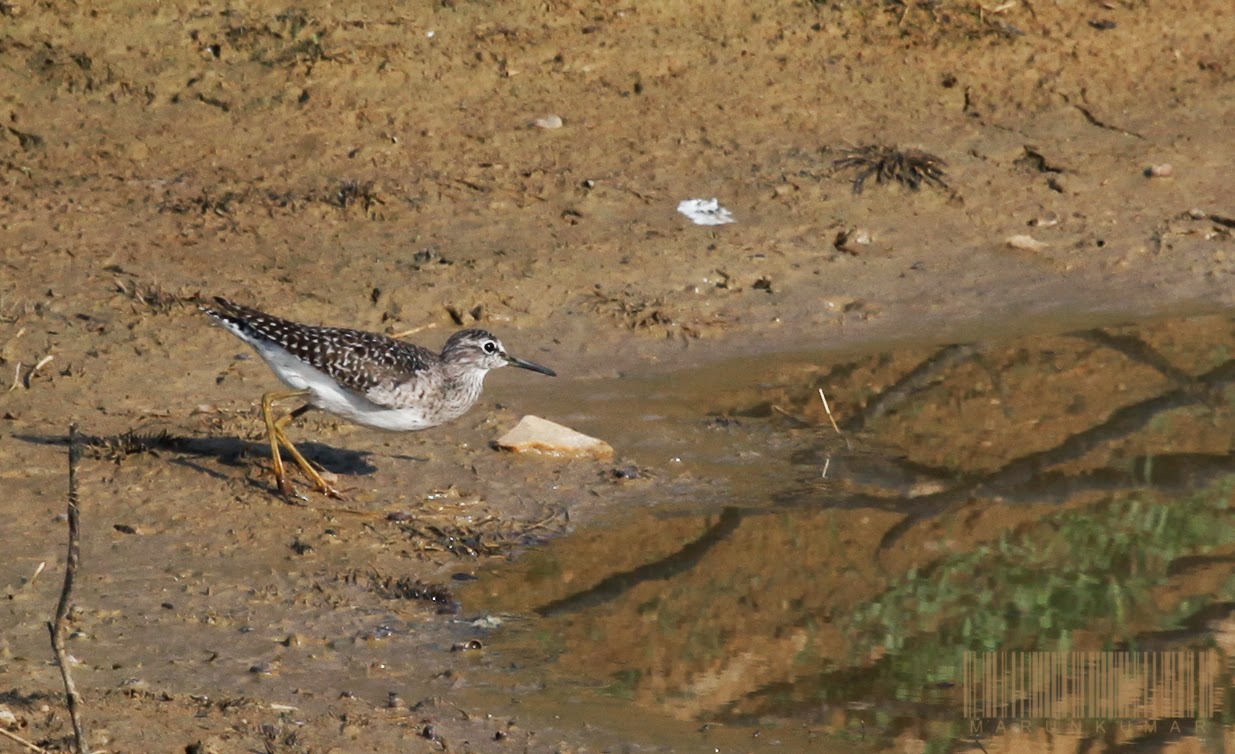 | |||
| 07. Wood Sandpiper (Tringa Glareola) Adult Non-Breeding Plumage ID by Richard Grimmett : From Green by longer, yellowish legs and slimmer appearance, heavily speckled upper parts, and prominent super-cilium behind eye. Adult breeding has heavily streaked breast and barred flanks; upper parts barred and spotted pale grey-brown and white. Adult non-breeding has more uniform grey-brown upper parts, spotted whitish, and breast brownish and lightly streaked. Juvenile has warm brown upper parts speckled warm buff, and lightly streaked buff breast. |
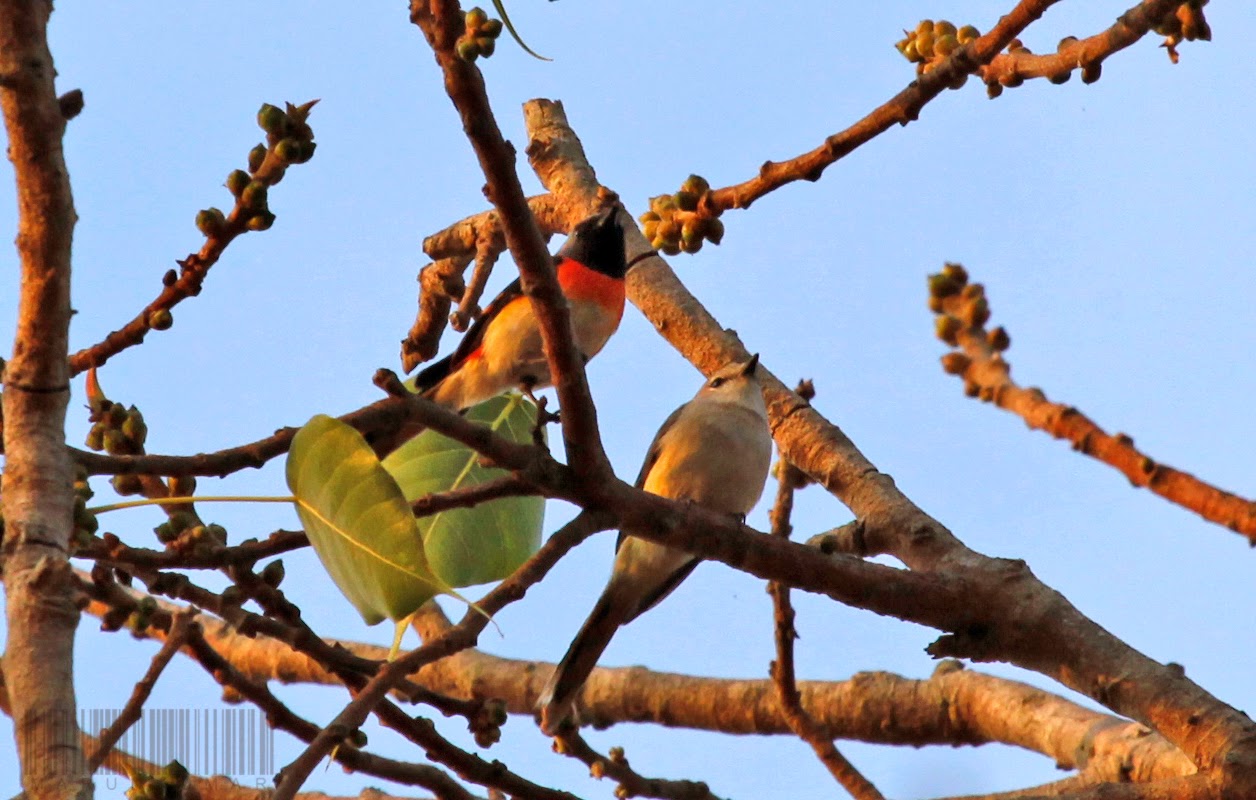 |
| 08. Small Minivet (Pericrocotus cinnamomeus) - Male & Female ID by Wikipedia : Strong dark beak and long wings. The male differs from most other common minivets by having grey, not glossy black, upper parts and head, and orange underparts, fading to yellow on the belly, orange tail edges, rump and wing patches. The female is grey above, with yellow underparts (including the face), tail edges, rump and wing patches. |
 |
| 09. Pied Bush Chat (Saxicola caprata) - Female ID by Wikipedia : Similar to Siberian Stonechat dumpy structure and upright stance, but slightly smaller. The male is black except for a white rump, wing patch and lower belly. The iris is dark brown, the bill and legs black. The female is drab brown and slightly streaked. Juveniles have a scaly appearance on the underside but dark above like the females. |
 | |
|
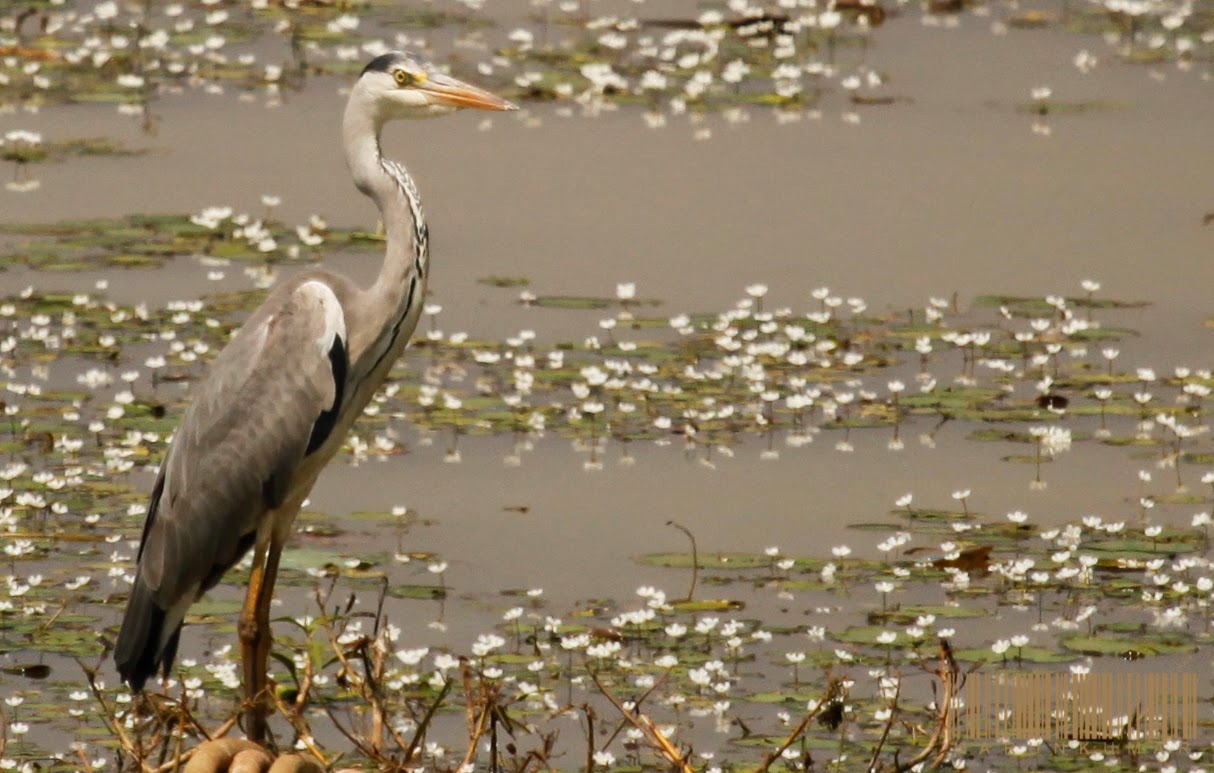 |
| 10. Grey Heron (Ardea cinerea) - Male ID by Wikipedia : Plumage is largely grey above, and off-white below. Adults have a white head with a broad black supercilium and slender crest, while immatures have a dull grey head. It has a powerful, pinkish-yellow bill, which is brighter in breeding adults. It has a slow flight, with its long neck retracted (S-shaped). This is characteristic of herons and bitterns, and distinguishes them from storks, cranes and spoonbills, which extend their necks. |
 |
| 11. Common Skittering Frog - Euphlyctis Cyanophlyctis ID by Wikipedia : This species have the remarkable ability to leap from a floating position out of the water. |
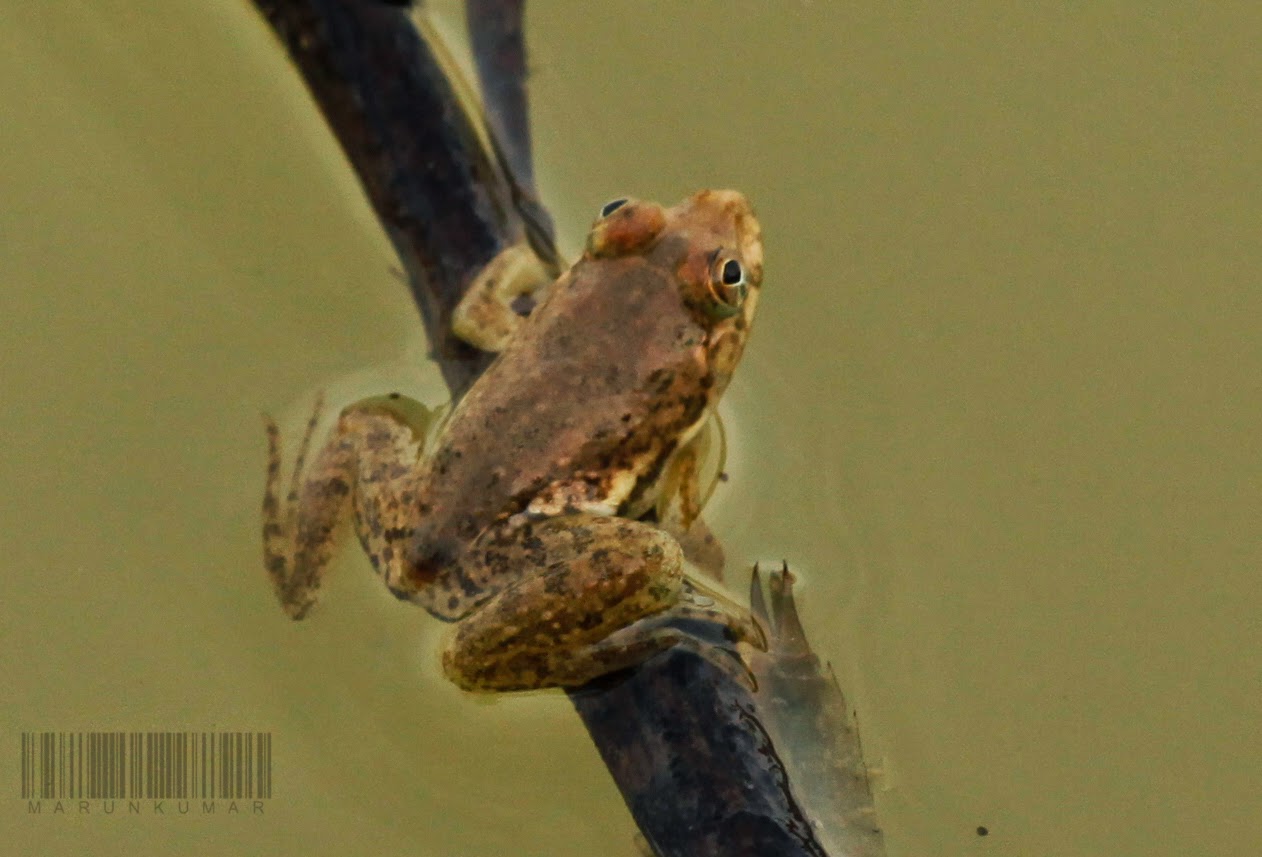 |
| 12. Common Skittering Frog - Euphlyctis Cyanophlyctis ID by Wikipedia : This species have the remarkable ability to leap from a floating position out of the water. |
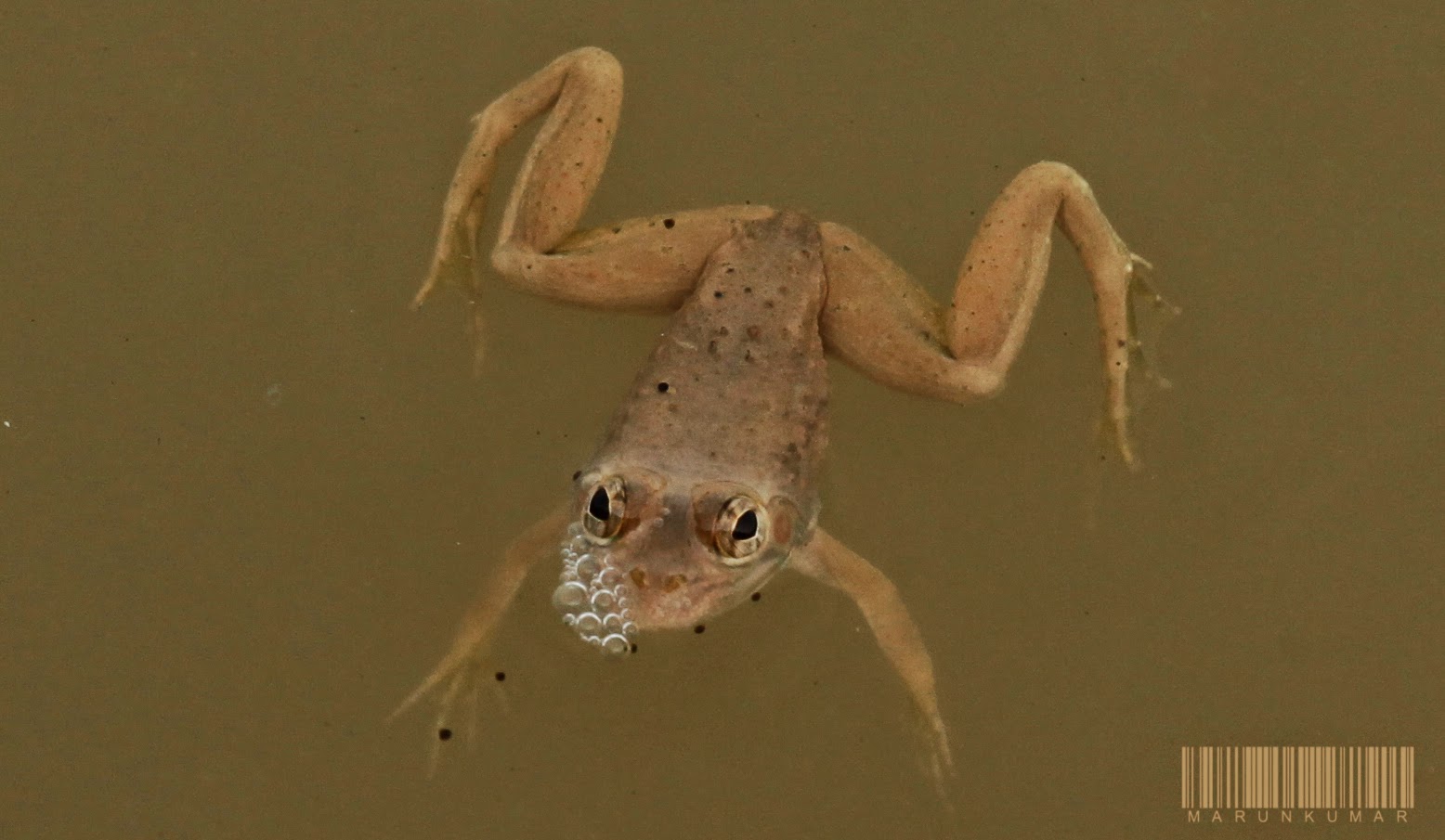 | ||
| 13. Common Skittering Frog - Euphlyctis Cyanophlyctis ID by Wikipedia : This species have the remarkable ability to leap from a floating position out of the water. 
|