Showing posts with label Wood Sandpiper. Show all posts

30 September, 2014

2014 | 271 | 28Sep14 | Hoskote Lake

01.  Barn Swallow (Hirundo rustica) - Adult - 18 cm
ID by  Richard Grimmett : Adult has bright red forehead and throat, blue-black breast-band and upperparts, and long tail-streamers. Underparts vary from white to rufous. Immature has duller orange forehead and throat, breastband is browner and less well defined, upperparts are duller, and has shorter tail-streamers.
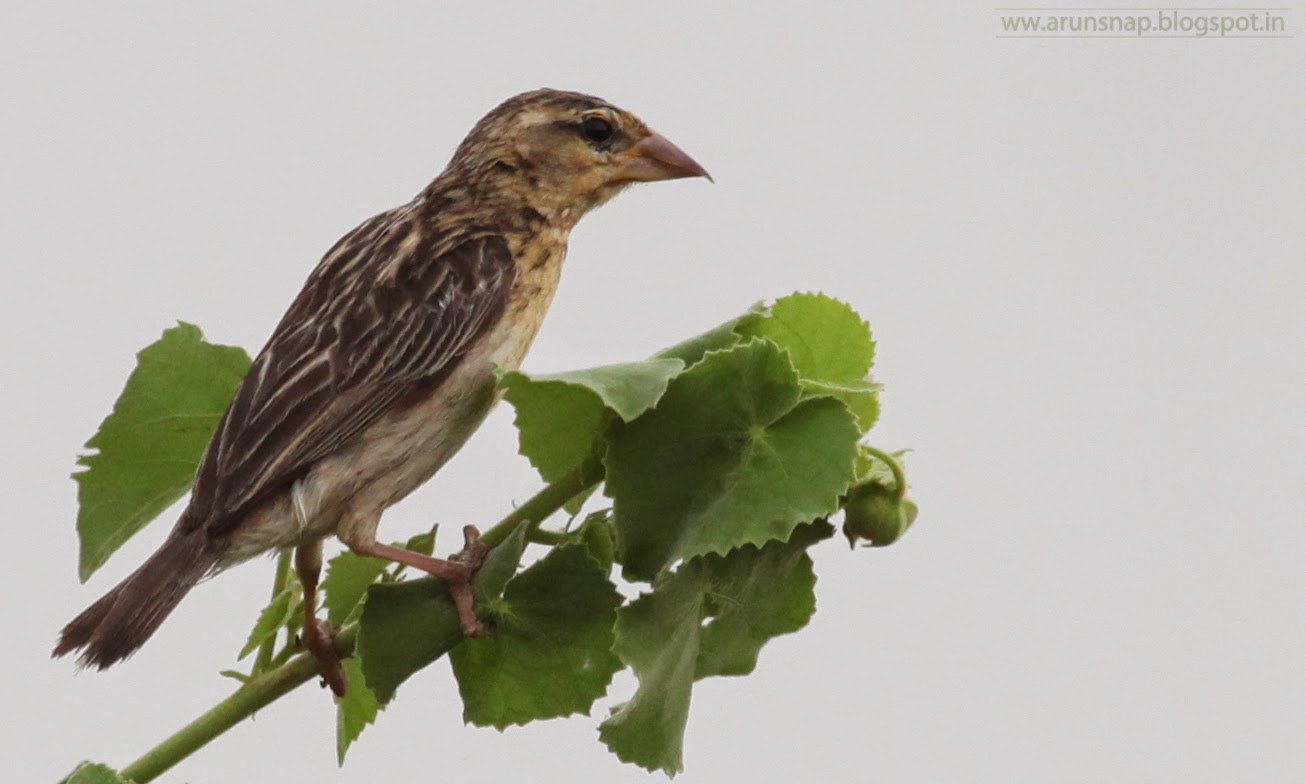
02. Baya Weaver (Ploceus philippinus) - Female/ Juv ? - 15 cm
ID by  Richard Grimmett : Breeding male of nominate has yellow crown, dark brown ear-coverts and throat, unstreaked yellow breast, and yellow streaking on mantle and scapulars. Non-breeding male, female and juvenile usually have unstreaked buffish underparts; streaking can be as prominent as on poorly marked Streaked, but has less distinct and buffish supercilium, lacks yellow neck patch, and lacks pronounced dark moustachial and malar stripes. Non-breeding male,female and juvenile burmanicus more rufousbuff on supercilium and underparts. 

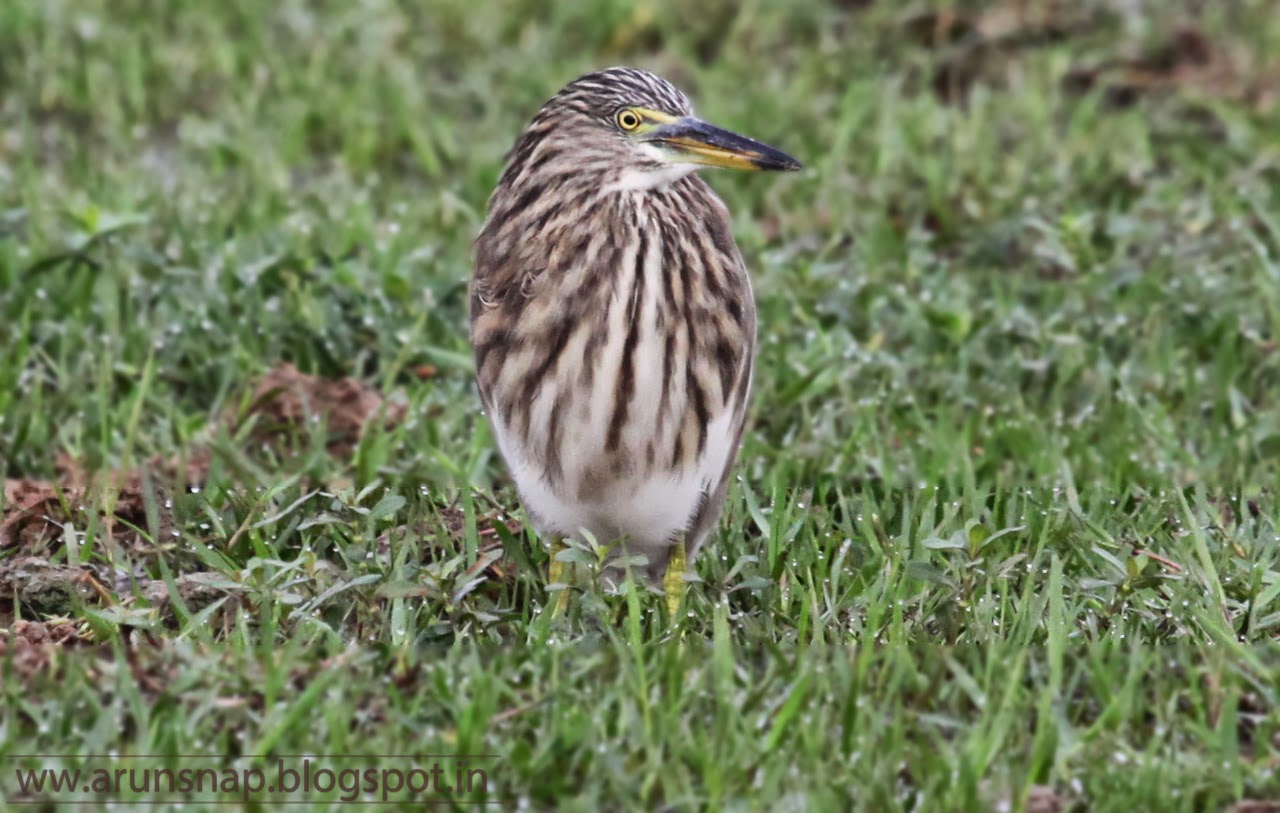
03.  Indian Pond Heron (Ardeola grayii) - Non-Breeding Adult - 42-45 cm
ID by  Richard Grimmett : Whitishwings contrast with dark saddle. Adult breeding has yellowish-buff head and neck and
maroon-brown mantle/ scapulars. Head, neck and breast streaked/spotted in non-breeding plumage.
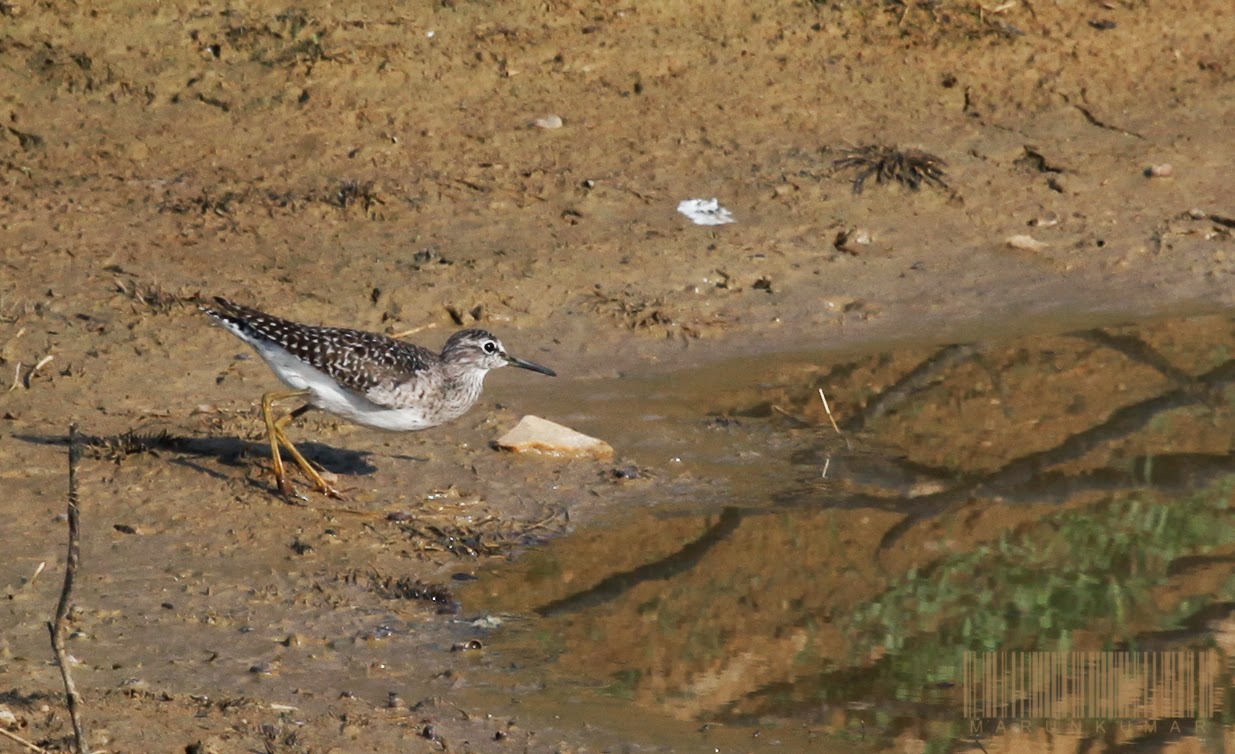
04.  Wood Sandpiper (Tringa glareola) - Juvenile ?? 18-21 cm
ID by  Richard Grimmett : From Green Sandpiper by longer, yellowish legs and slimmer appearance, heavily speckled upperparts, and prominent supercilium behind eye; in flight by call, slimmer body and narrower wings, toes projecting clearly beyond tail, paler underwing contrasting less with white underparts, and paler brown upperparts contrasting less with smaller white rump. Adult breeding has heavily streaked breast and barred flanks; upperparts barred and spotted pale grey-brown and white. Adult non-breeding has more uniform grey-brown upperparts, spotted whitish, and breast brownish and lightly streaked. Juvenile has warm brown upperparts speckled warm buff, and lightly streaked buff breast.
05. Purple Heron (Ardea purpurea) - Adult - 78-90 cm
ID by  Richard Grimmett : Rakish, with long, thin neck. In flight, compared with Grey Heron, bulge of recoiled neck is very pronounced, protruding feet large, underwing-coverts purplish (adult) or buff (juvenile) and lacks white leading edge to wing. Adult has chestnut head and neck with black stripes, grey mantle and upperwing-coverts, and dark chestnut belly and underwing-coverts. Juvenile has black crown, buffish neck, and brownish mantle and upperwing-coverts with rufous-buff fringes.
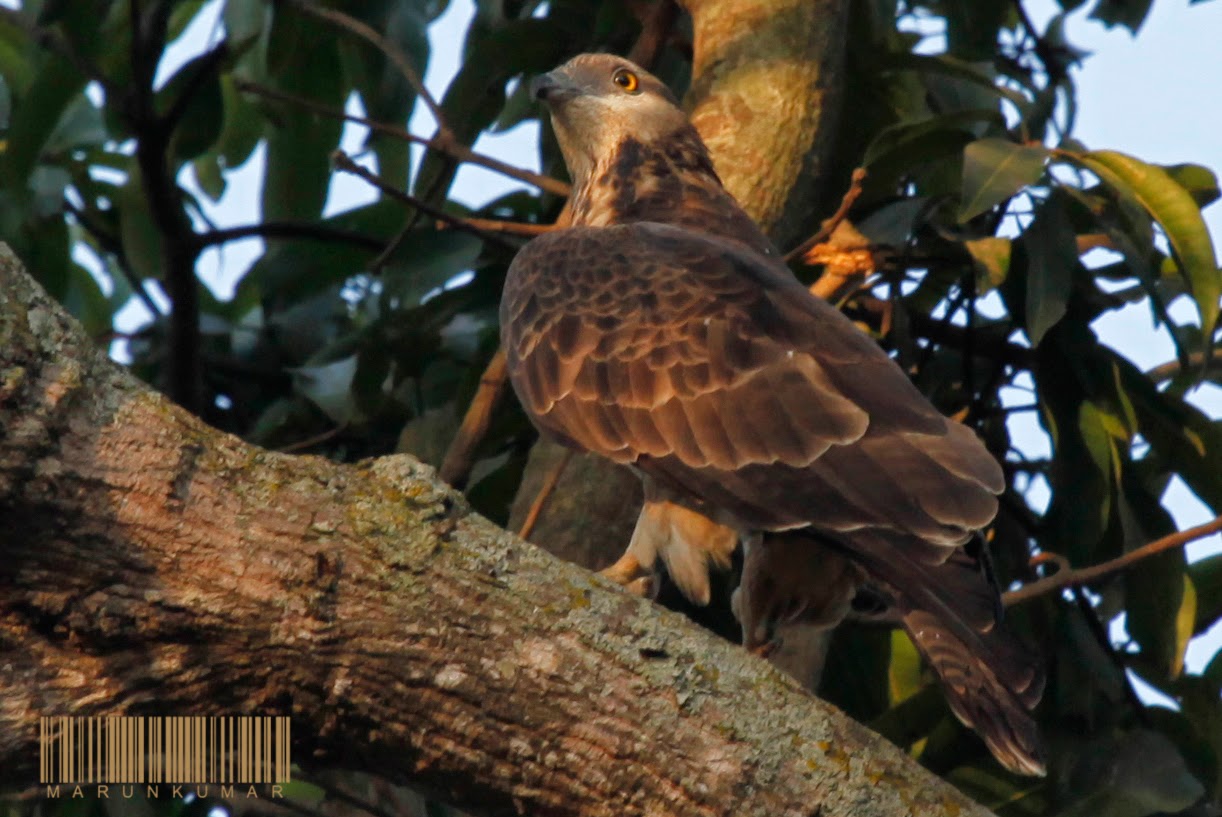
06.  Brahminy Kite (Haliastur indus) - Adult
ID by  Richard Grimmett : Small size and kite-like flight. Wings usually angled at carpals. Tail rounded. Adult mainly chestnut, with white head, neck and breast. Juvenile mainly brown, with pale streaking on head, mantle and breast, large pale patch at base of primaries on underwing, and pale brown and unmarked underside to tail.
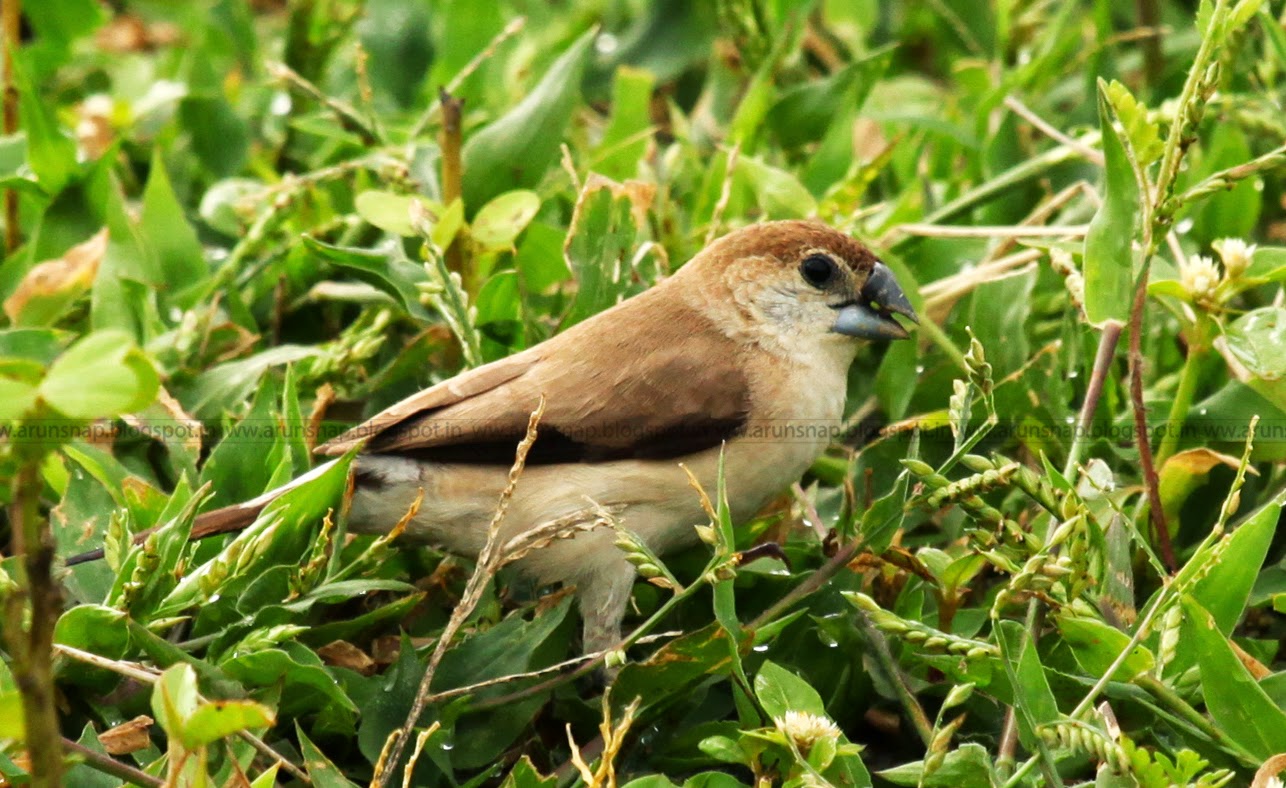
07.  Indian Silverbill or White-throated Munia
(Lonchura malabarica)  - Male
ID by  Richard Grimmett : Male has fawn brown upperparts, whitish face and underparts with barred flanks, long and pointed black tail, and white rump and uppertail-coverts. Female is duller with plainer face, and flanks are less barred. Juvenile lacks barring on flanks, has dark mottling on rump, and tail is shorter and more rounded.
ID by  Wikipedia : The adult Indian Silverbill is 11–11.5 cm long and has a conical silver-grey bill, buff-brown upperparts, white underparts, buffy flanks and dark wings. The tail is black and the wings are dark contrasting with a white rump. The sexes are similar.

08. Little Egret (Egretta garzetta) - Breeding Adult - 55-65 cm
ID by  Richard Grimmett : Slim and graceful. Has black bill, black legs with yellow feet, and greyish or yellowish lores. In breeding plumage has two elongated nape plumes, and mantle plumes, and lores and feet become reddish during courtship. Bill in non-breeding and immature can be paler and pinkish or greyish at base, or dull yellowish on some; legs can be yellowish or greenish. 
09. Caspian Tern (Hydroprogne caspia) - Breeding Adult - 38-46 cm
ID by  Richard Grimmett : Large size and broad-winged/short-tailed appearance. Huge red bill and black underside to primaries. Adult breeding has complete black cap. Adult non-breeding has black-streaked crown and black mask; bill is duller, with more black at tip. First-winter and first-summer are similar to adult non-breeding, but show faint dark lesser-covert and secondary bars and dark-tipped tail (but upperwing appears much plainer than in Lesser and Great Crested Terns). Juvenile has narrow dark subterminal bars to scapulars and wing-coverts; forehead and crown are more heavily marked, almost forming dark cap. 

20 April, 2014

2014 | 110 | 20Apr14 | Hulimangala

Shikra Accipiter badius - Male
01. Shikra (Accipiter badius) - Male
ID by  Richard Grimmett : Under wing pale, with fine barring on remiges, and slightly darker wing-tips. Head
cuckoo-like compared with other Accipiter. Male has pale blue-grey upperparts with contrasting dark grey primaries, indistinct grey gular stripe, fine brownish-orange barring on underparts, unbarred white thighs, and unbarred or lightly barred central tail feathers.
Oriental Honey-buzzard, OHB, Pigeon Head, Raptor
02. Oriental Honey-buzzard
(Perm's ptilorhynchus) - Female
ID by  Richard Grimmett : Tail long and broad, and has narrow neck, small head and bill, and short bare tarsi. Soars with wings flat. Has small crest. Underparts and underwing-coverts range from dark brown through rufous to white, and unmarked, streaked or barred; often shows dark moustachial stripe and gular stripe, and gorget of streaking across lower throat. Lacks dark carpal patch. Male has grey face, two black tail-bands, usually three black under wing bands, and brown iris. Female has browner face and upper parts, three black tail-bands, four narrower black under wing bands, and yellow iris. 
Paddyfield Pipit, Adult
03. Paddyfield Pipit (Anthus rufulus) - Adult
ID by  Richard Grimmett : Lores is often pale (but can be dark), and shows warm ginger buff wash
across breast and down flanks (underparts more uniform cream-white on Tawny)
Indian Grey Hornbill (Ocyceros birostris) - Adult
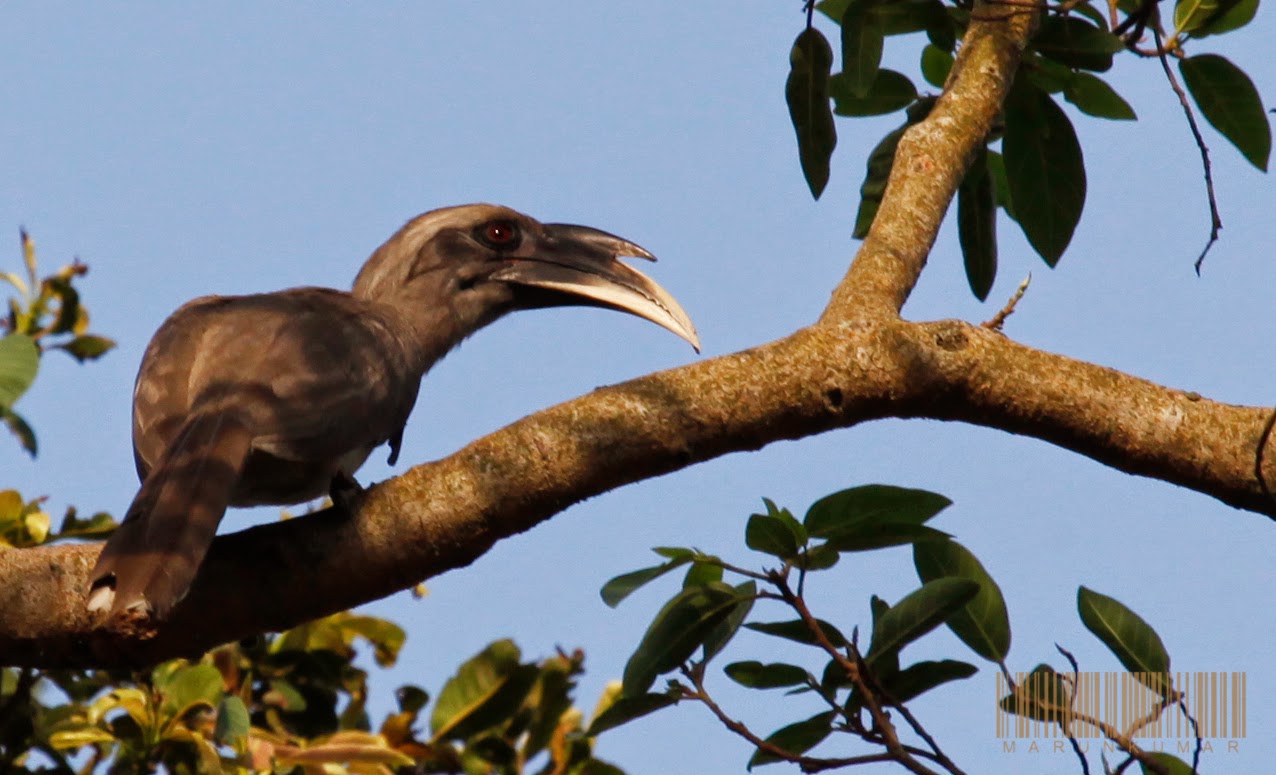
04.  Indian Grey Hornbill (Ocyceros birostris) - Adult
ID by  Richard Grimmett : Broad greyish-white supercilium with dark grey ear-coverts, white tips to primaries and secondaries, and white-tipped tail. Has prominent blackish casque, and more extensive black at base of bill compared with Malabar. Further, lacks pale streaking on head, neck and breast, has paler sandy brownish-grey coloration to upper parts, and white trailing edge to secondaries. Tail is also longer than on Malabar Grey, and paler brown with dark grey sub terminal band and elongated central feathers. Female is similar to male, but has smaller casque with less pronounced tip. Immature has bill as female's, but smaller and with smaller casque; lacks white wing-tips.
Painted Stork (Mycteria leucocephala) - Adult
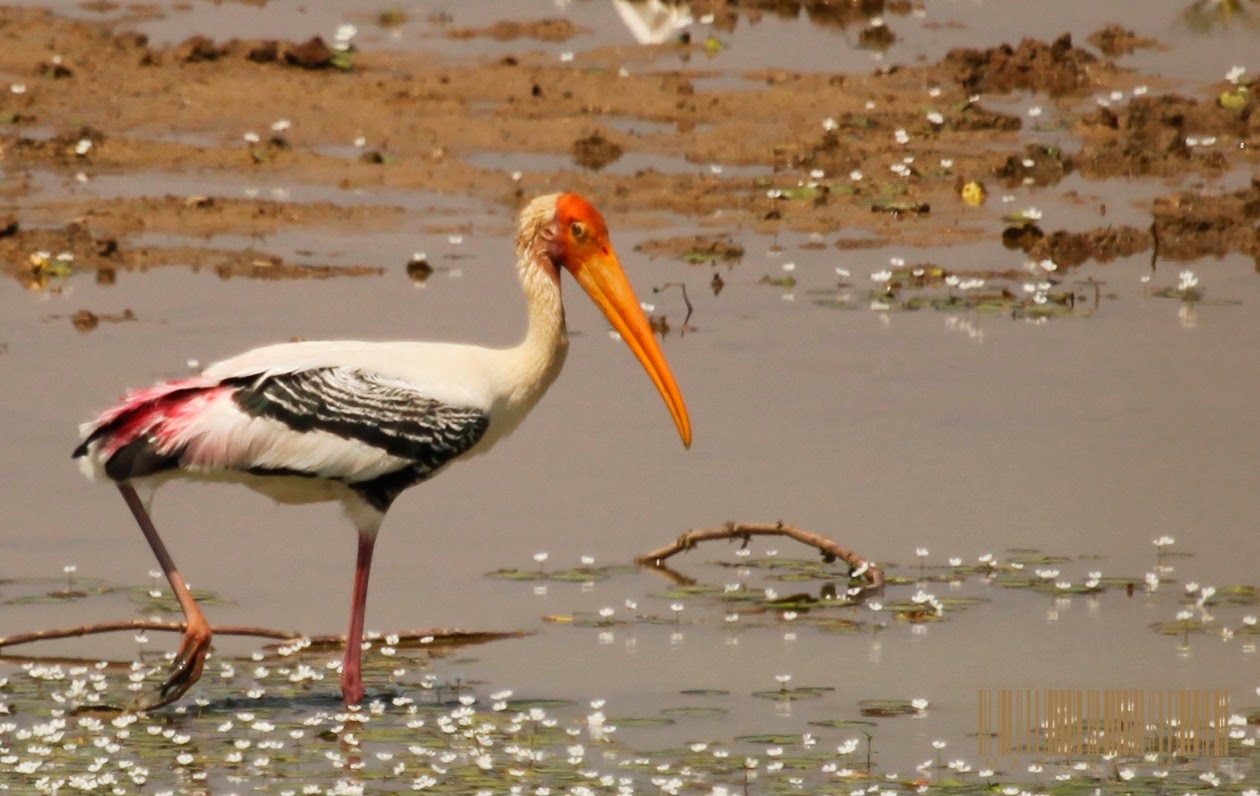
05.  Painted Stork (Mycteria leucocephala) - Adult
ID by  Richard Grimmett : Adult has downcurved yellow bill, bare orange head (redder in breeding season), and pinkish legs; white barring on mainly black upperwing-coverts, pinkish tertials, and black barring across breast. Juvenile dirty greyish-white, with grey-brown (feathered) head and neck and brown lesser coverts; bill and legs duller than adult's.
Yellow-billed Babbler (Turdoides affinis) - Adult
06.  Yellow-billed Babbler (Turdoides affinis) - Adult
ID by  Richard Grimmett : Have creamy-white lores, forehead and crown, dark mottling on throat and breast (diffusely streaked on most similar Jungle races), pale grey panel on wings, and also (in some birds) pale bluish-white iris.
ID by Grimmett : From Green by longer, yellowish legs and slimmer appearance, heavily speckled upperparts, and prominent supercilium behind eye; in flight by call, slimmer body and narrower wings, toes projectingclearly beyondtail, paler underwing contrasting less with white underparts, and paler brown upperparts contrasting less with smaller white rump. Adult breeding has heavily streaked breast and barred flanks; upperparts barred and spotted pale grey-brown and white. Adult non-breeding has more uniform grey-brown upperparts, spotted whitish, and breast brownish and lightly streaked. Juvenile has warm brown upperparts speckled warm buff, and lightly streaked buff breast.
07. Wood Sandpiper (Tringa Glareola)
Adult Non-Breeding Plumage

 ID by  Richard Grimmett : From Green by longer, yellowish legs and slimmer appearance, heavily speckled upper parts, and prominent super-cilium behind eye. Adult breeding has heavily streaked breast and barred flanks; upper parts barred and spotted pale grey-brown and white. Adult non-breeding has more uniform grey-brown upper parts, spotted whitish, and breast brownish and lightly streaked. Juvenile has warm brown upper parts speckled warm buff, and lightly streaked buff breast.


Small Minivet (Pericrocotus cinnamomeus) - Male & Female
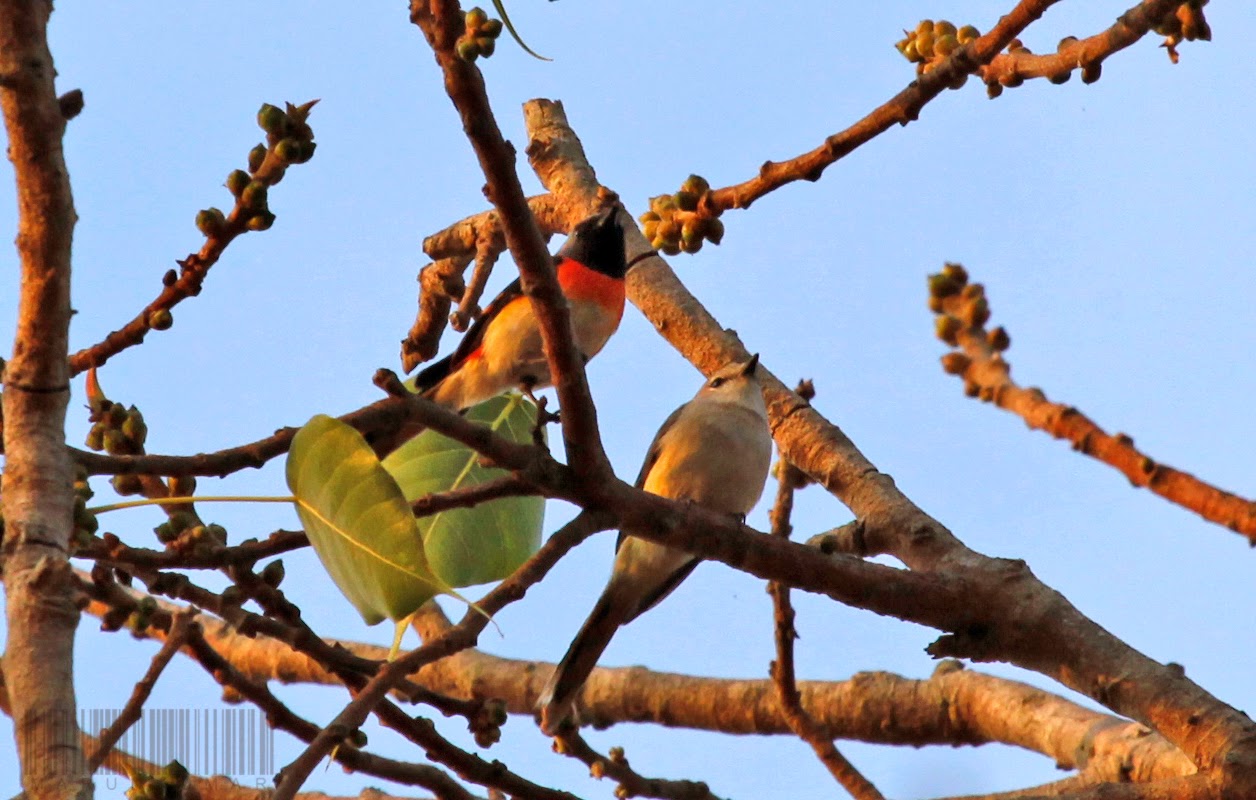
08. Small Minivet (Pericrocotus cinnamomeus)
- Male & Female
ID by  Wikipedia : Strong dark beak and long wings. The male differs from most other common minivets by having grey, not glossy black, upper parts and head, and orange underparts, fading to yellow on the belly, orange tail edges, rump and wing patches. The female is grey above, with yellow underparts (including the face), tail edges, rump and wing patches.

Pied Bush Chat (Saxicola caprata) - Female
09. Pied Bush Chat (Saxicola caprata) - Female
ID by  Wikipedia : Similar to Siberian Stonechat dumpy structure and upright stance, but slightly smaller. The male is black except for a white rump, wing patch and lower belly. The iris is dark brown, the bill and legs black. The female is drab brown and slightly streaked. Juveniles have a scaly appearance on the underside but dark above like the females.

Black-rumped Flameback (Dinopium benghalense) - Male
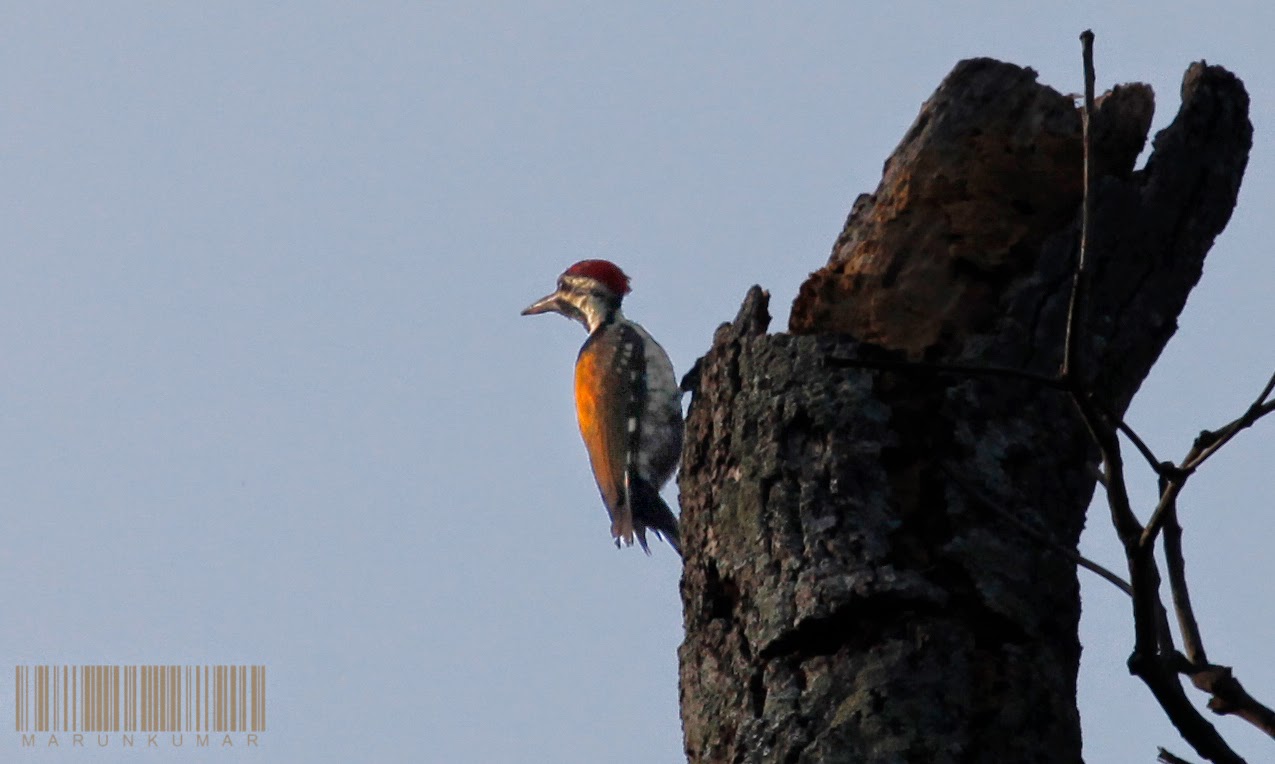
10. Black-rumped Flameback
(Dinopium benghalense) - Male
ID by  Wikipedia : Typical woodpecker shape, and the golden yellow wing coverts are distinctive. The rump is black. The underparts are white with dark chevron markings. The black throat finely marked with white. The head is whitish with a black nape and throat, and there is a greyish eye patch. It has no dark moustachial stripes.The adult male has a red crown and crest. Females have a black forecrown spotted with white, with red only on the rear crest. Young birds are like the female, but duller.Has a straight pointed bill, a stiff tail to provide support against tree trunks, and zygodactyl feet, with two toes pointing forward, and two backward. The long tongue can be darted forward to capture insects.
Grey Heron (Ardea cinerea) - Male
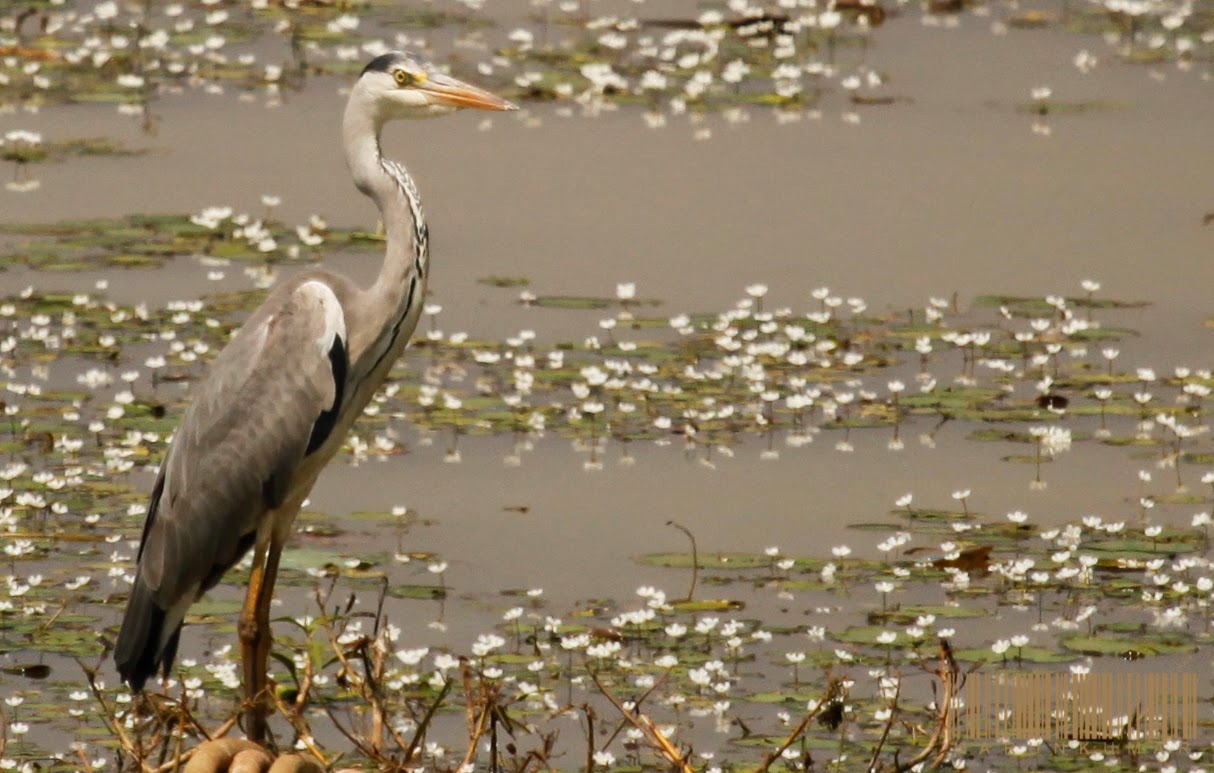
10. Grey Heron (Ardea cinerea) - Male
ID by  Wikipedia : Plumage is largely grey above, and off-white below. Adults have a white head with a broad black supercilium and slender crest, while immatures have a dull grey head. It has a powerful, pinkish-yellow bill, which is brighter in breeding adults. It has a slow flight, with its long neck retracted (S-shaped). This is characteristic of herons and bitterns, and distinguishes them from storks, cranes and spoonbills, which extend their necks.
Common Skittering Frog - Euphlyctis Cyanophlyctis
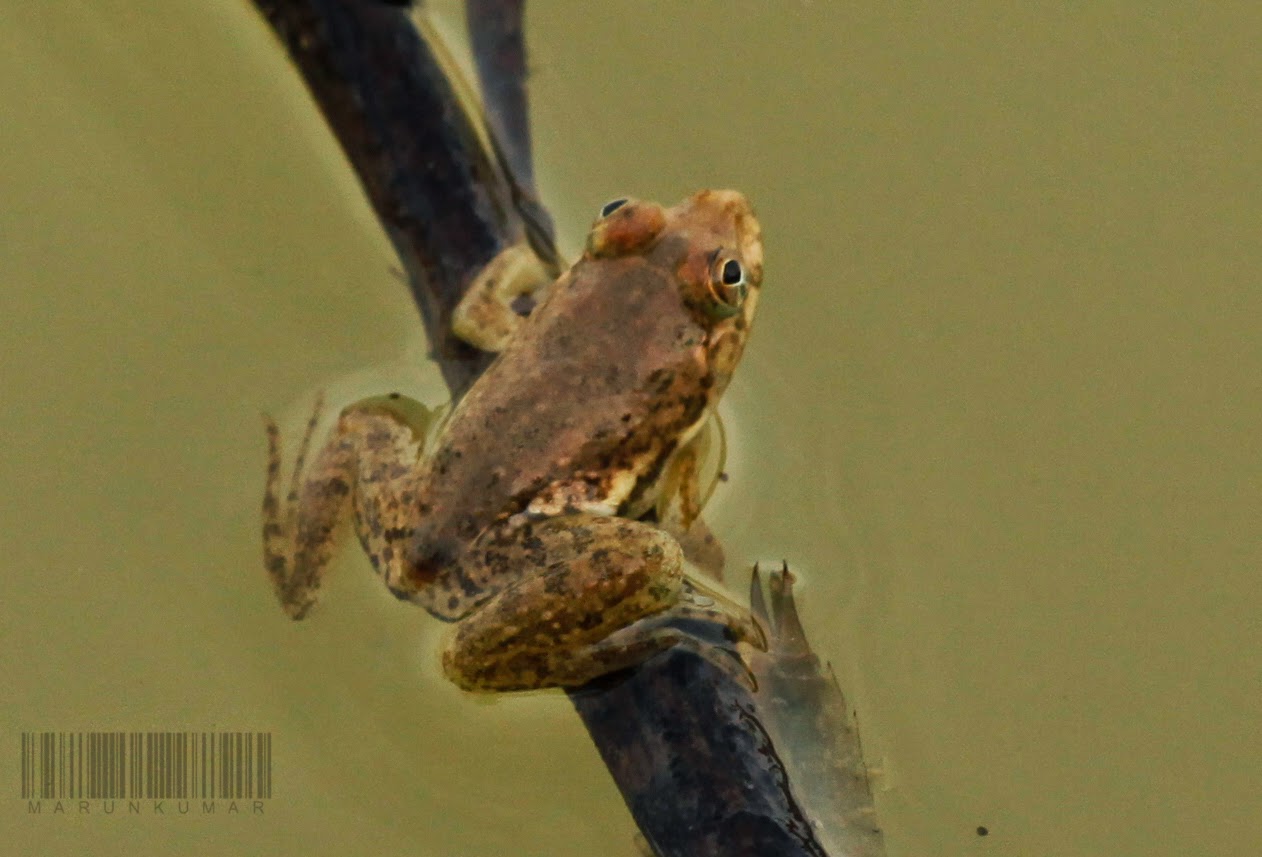
11. Common Skittering Frog - Euphlyctis Cyanophlyctis
ID by  Wikipedia : This species have the remarkable ability to leap from a floating position out of the water.
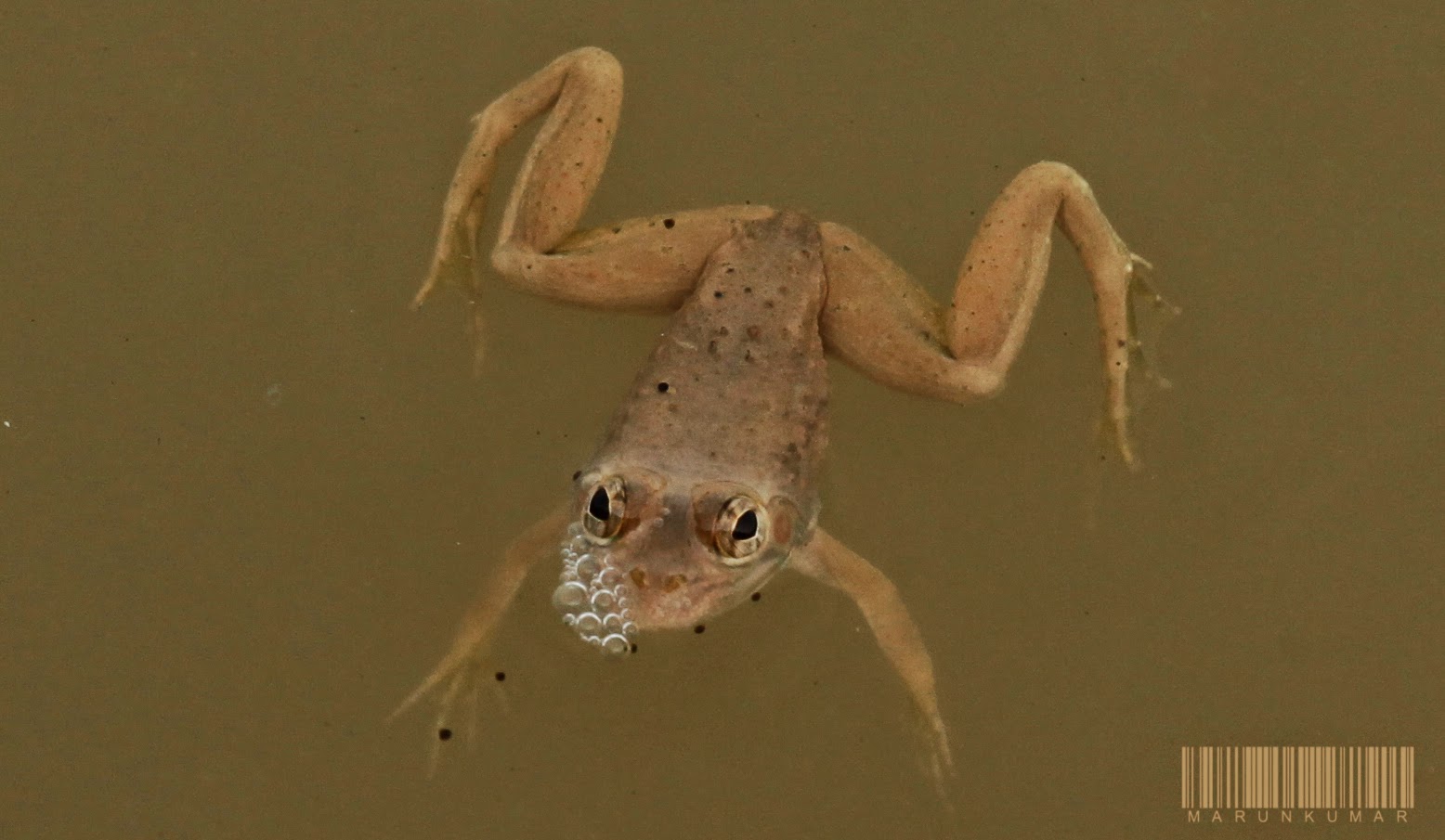
12. Common Skittering Frog - Euphlyctis Cyanophlyctis
ID by  Wikipedia : This species have the remarkable ability to leap from a floating position out of the water.
13. Common Skittering Frog - Euphlyctis Cyanophlyctis
ID by  Wikipedia : This species have the remarkable ability to leap from a floating position out of the water.


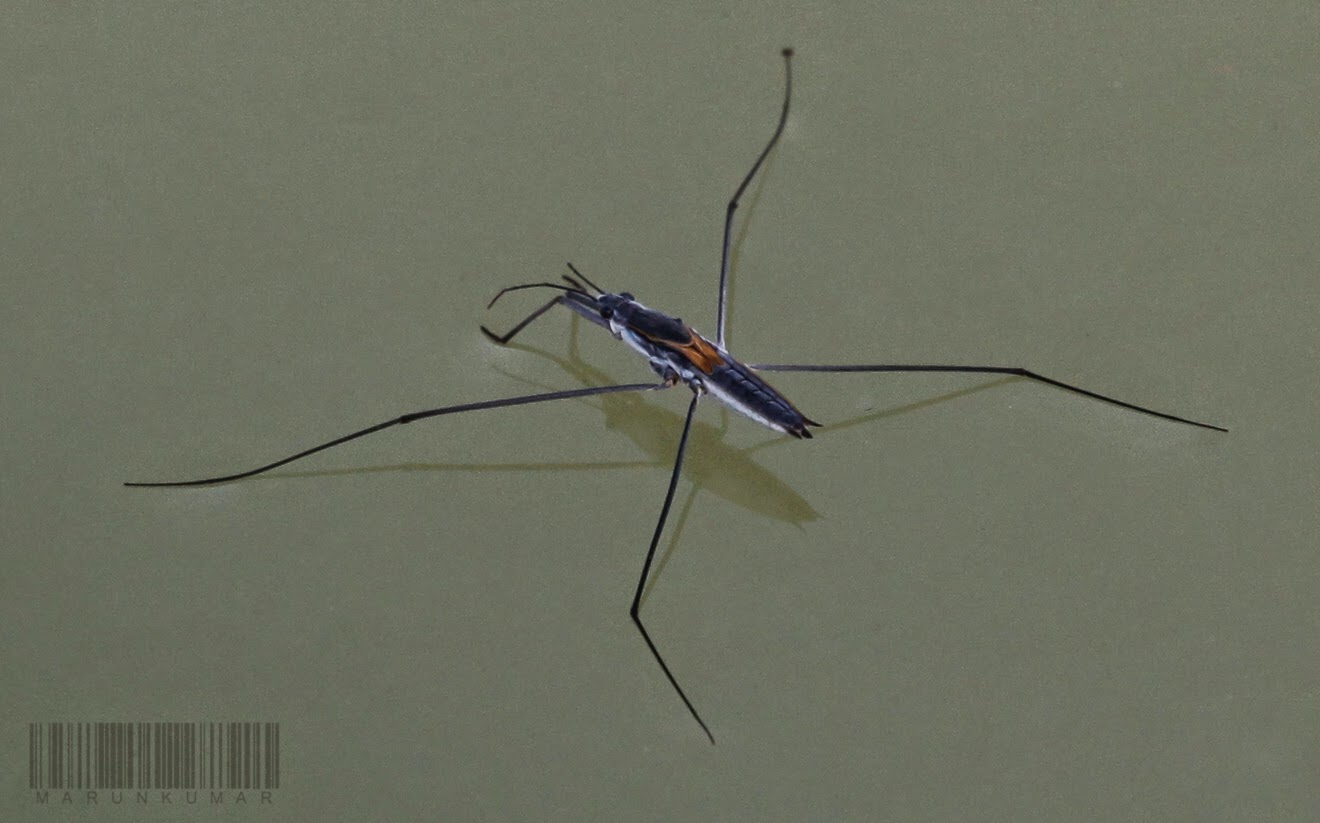
15. Pond skaters (Gerridae)