Showing posts with label Pied Bushchat. Show all posts

15 June, 2014

2014 | 166 | 15Jun14 | Shivanahalli

BNG BIRDS - 3rd Sunday Trail @ Shivanahalli
Special thanks to Ms.Geethanjali and BNG birds for arranging such a wonderful birding trail. Adding to it when professionals like Mr.Seshadiri, Mr.Deepak joins, the whole team gets enlightened with tons of information, for me personally I felt amazed to hear about gear systems in carpenter bees, habits of procession ants, evolution of terminalia trees, specialty of sandal woods roots and so on. For a while I though I should have choose botany or Zoology as my major. : ). At the same time, need to thank Ashram and their team for allowing us inside. Thank you again for all your support.
Arun
:: Birds ::
01. Tickell's Blue Flycatcher (Cyornis tickelliae) - Female -  14 cm
ID by  Richard Grimmett : Male from Blue-throated by orange throat. Female has blue-grey cast to upperparts (especially rump and tail), orange breast, and white belly and flanks.
02. Common Tailorbird (Orthotomus sutorius) - Adult - 13 cm
ID by  Richard Grimmett : Has long (slightly down curved) pale bill, rufous forehead and forecrown, greenish upperparts, and dull whitish or buffish underparts. Breeding male has elongated central tail feathers. Juvenile lacks rufous on forecrown. Subspecies in Sri Lanka (e.g. 0. s. sutorius) have darker and greener upperparts and lack supercilium. 
03.  Orange-headed Thrush (Zoothera citrina) - Adult Male - 21 cm
ID by  Richard Grimmett : Adult has orange head and underparts; male with blue-grey mantle, female with olive brown wash to mantle. Juvenile has buffish-orange streaking on upperparts and mottled breast. Shows white banding on underwing in flight. Z. c. cyanotus (peninsula) has vertical black stripes across white ear-coverts, and white throat.
04.  Pied Bushchat (Saxicola caprata) - Female - 12.5-13 cm
ID by  Richard Grimmett : Male is entirely black except for white rump and patch on wing; duller due to rufous fringes to body in non-breeding and First-winter plumages. Female has dark brown upperparts and rufous-brown underparts, with rufous-orange rump. Females in peninsula and Sri Lanka are darker and more prominently streaked than in North.

05.  Green Bee-eater (Merops orientalis) - Juvenile - 16-18 cm
ID by  Richard Grimmett : Small with elongated central tail feathers, blue or green throat with black gorget, variable golden-brown to rufous crown and nape, and green tail. Juvenile has square-ended tail; crown and mantle are green, lacks black gorget, and throat is pale yellowish- or bluish-green. 

:: Insects and other Invertebrates ::
01.  Millipedes (Myriapodous arthropods) - Feeding on fruit - 0.2-35 cm
ID by  Wikipedia: Millipedes have as few as eleven to over one hundred segments. They are generally black or brown in colour, although there are a few brightly coloured species. The millipede's most obvious feature is its large number of legs. Having many short legs makes millipedes rather slow, but the many legs pushing in unison provides powerful strength for burrowing.
02. Chiasmia sp
03. Tailed Jay (Graphium agamemnon) - Matting
Thanks to Mr.Vimal who spotted and showed this lovely couples.

20 April, 2014

2014 | 110 | 20Apr14 | Hulimangala

Shikra Accipiter badius - Male
01. Shikra (Accipiter badius) - Male
ID by  Richard Grimmett : Under wing pale, with fine barring on remiges, and slightly darker wing-tips. Head
cuckoo-like compared with other Accipiter. Male has pale blue-grey upperparts with contrasting dark grey primaries, indistinct grey gular stripe, fine brownish-orange barring on underparts, unbarred white thighs, and unbarred or lightly barred central tail feathers.
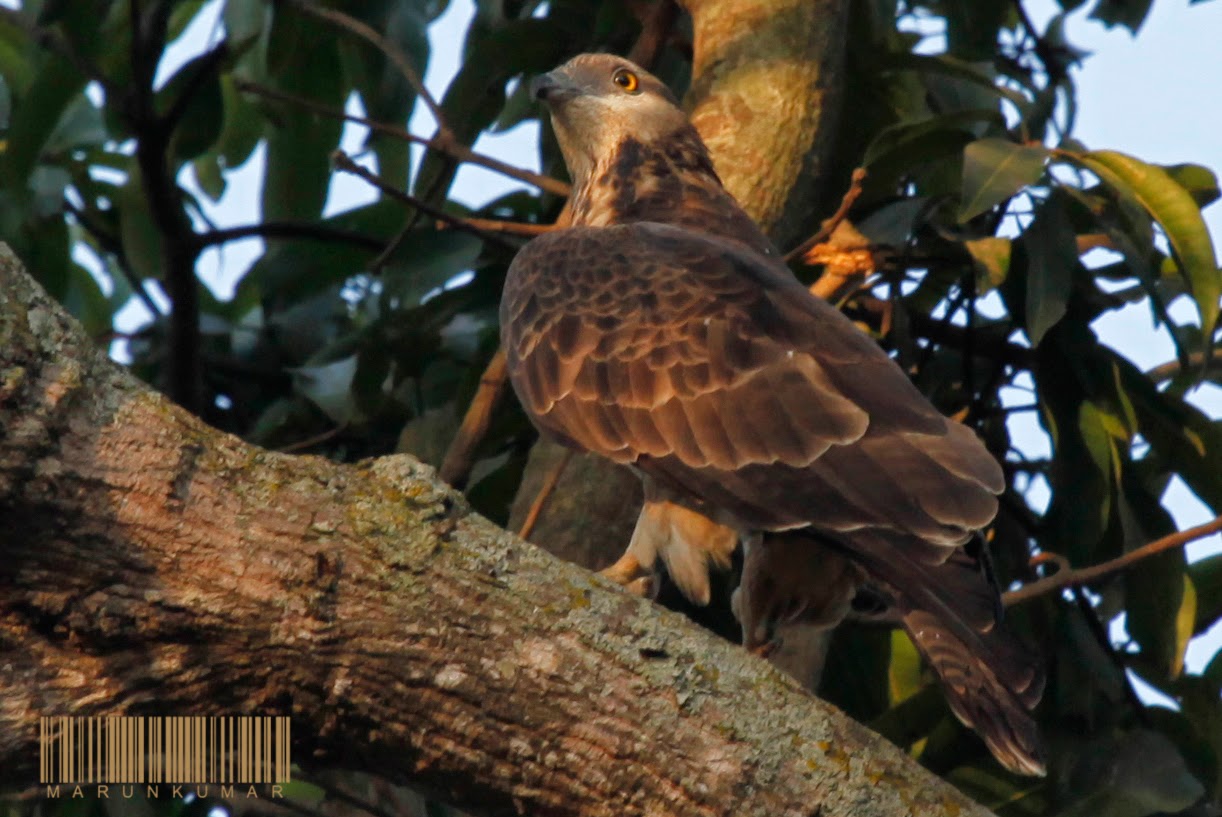
Oriental Honey-buzzard, OHB, Pigeon Head, Raptor
02. Oriental Honey-buzzard
(Perm's ptilorhynchus) - Female
ID by  Richard Grimmett : Tail long and broad, and has narrow neck, small head and bill, and short bare tarsi. Soars with wings flat. Has small crest. Underparts and underwing-coverts range from dark brown through rufous to white, and unmarked, streaked or barred; often shows dark moustachial stripe and gular stripe, and gorget of streaking across lower throat. Lacks dark carpal patch. Male has grey face, two black tail-bands, usually three black under wing bands, and brown iris. Female has browner face and upper parts, three black tail-bands, four narrower black under wing bands, and yellow iris. 
Paddyfield Pipit, Adult
03. Paddyfield Pipit (Anthus rufulus) - Adult
ID by  Richard Grimmett : Lores is often pale (but can be dark), and shows warm ginger buff wash
across breast and down flanks (underparts more uniform cream-white on Tawny)
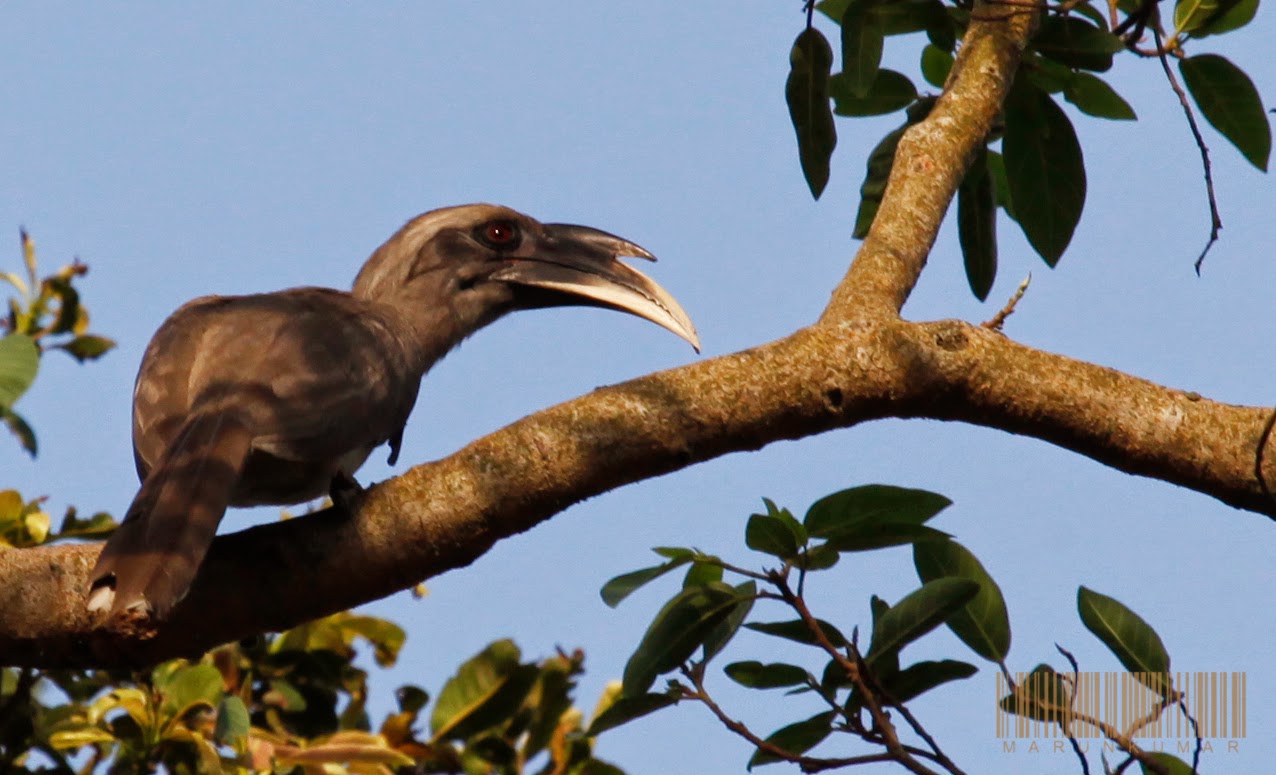
Indian Grey Hornbill (Ocyceros birostris) - Adult
04.  Indian Grey Hornbill (Ocyceros birostris) - Adult
ID by  Richard Grimmett : Broad greyish-white supercilium with dark grey ear-coverts, white tips to primaries and secondaries, and white-tipped tail. Has prominent blackish casque, and more extensive black at base of bill compared with Malabar. Further, lacks pale streaking on head, neck and breast, has paler sandy brownish-grey coloration to upper parts, and white trailing edge to secondaries. Tail is also longer than on Malabar Grey, and paler brown with dark grey sub terminal band and elongated central feathers. Female is similar to male, but has smaller casque with less pronounced tip. Immature has bill as female's, but smaller and with smaller casque; lacks white wing-tips.
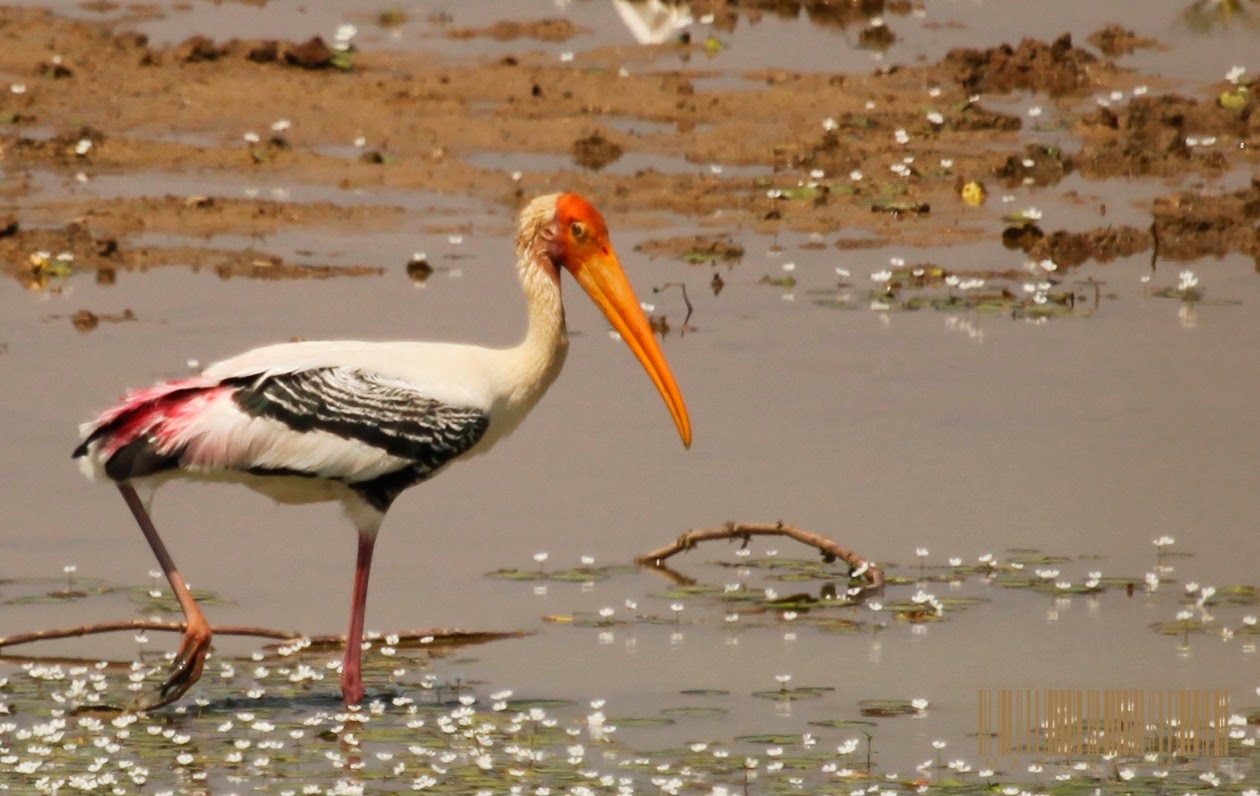
Painted Stork (Mycteria leucocephala) - Adult
05.  Painted Stork (Mycteria leucocephala) - Adult
ID by  Richard Grimmett : Adult has downcurved yellow bill, bare orange head (redder in breeding season), and pinkish legs; white barring on mainly black upperwing-coverts, pinkish tertials, and black barring across breast. Juvenile dirty greyish-white, with grey-brown (feathered) head and neck and brown lesser coverts; bill and legs duller than adult's.
Yellow-billed Babbler (Turdoides affinis) - Adult
06.  Yellow-billed Babbler (Turdoides affinis) - Adult
ID by  Richard Grimmett : Have creamy-white lores, forehead and crown, dark mottling on throat and breast (diffusely streaked on most similar Jungle races), pale grey panel on wings, and also (in some birds) pale bluish-white iris.
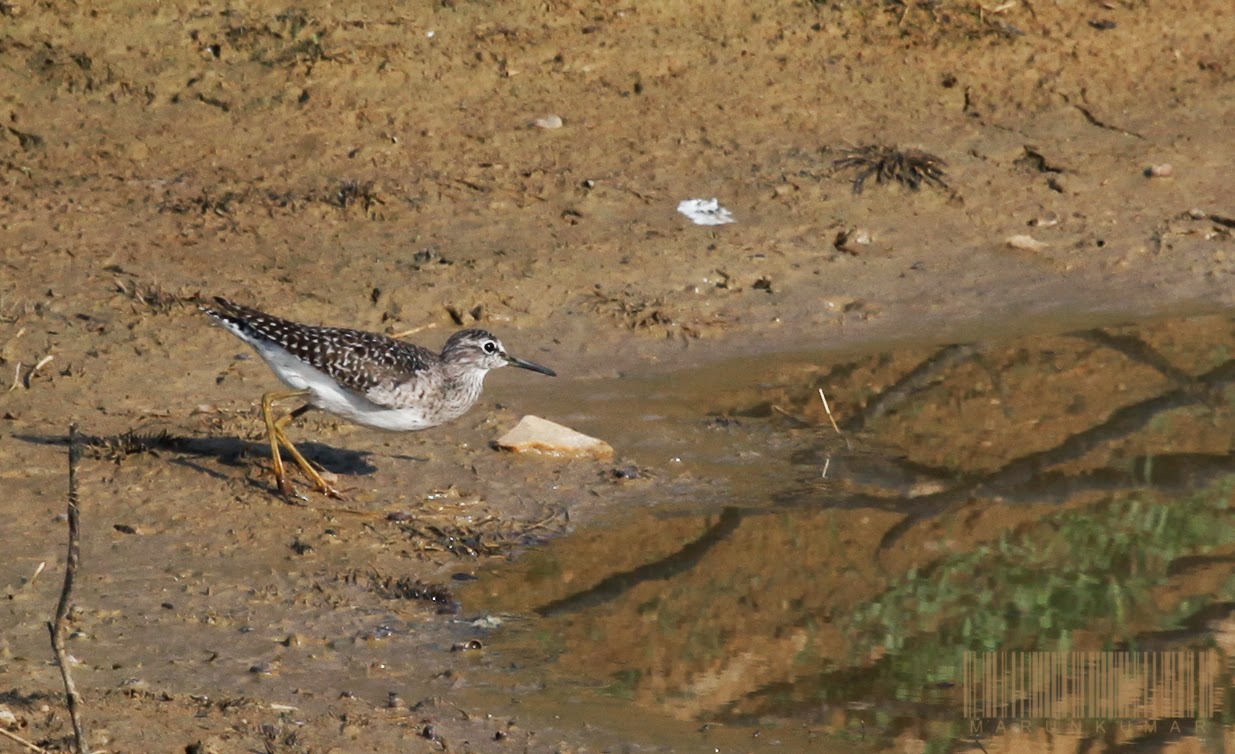
ID by Grimmett : From Green by longer, yellowish legs and slimmer appearance, heavily speckled upperparts, and prominent supercilium behind eye; in flight by call, slimmer body and narrower wings, toes projectingclearly beyondtail, paler underwing contrasting less with white underparts, and paler brown upperparts contrasting less with smaller white rump. Adult breeding has heavily streaked breast and barred flanks; upperparts barred and spotted pale grey-brown and white. Adult non-breeding has more uniform grey-brown upperparts, spotted whitish, and breast brownish and lightly streaked. Juvenile has warm brown upperparts speckled warm buff, and lightly streaked buff breast.
07. Wood Sandpiper (Tringa Glareola)
Adult Non-Breeding Plumage

 ID by  Richard Grimmett : From Green by longer, yellowish legs and slimmer appearance, heavily speckled upper parts, and prominent super-cilium behind eye. Adult breeding has heavily streaked breast and barred flanks; upper parts barred and spotted pale grey-brown and white. Adult non-breeding has more uniform grey-brown upper parts, spotted whitish, and breast brownish and lightly streaked. Juvenile has warm brown upper parts speckled warm buff, and lightly streaked buff breast.


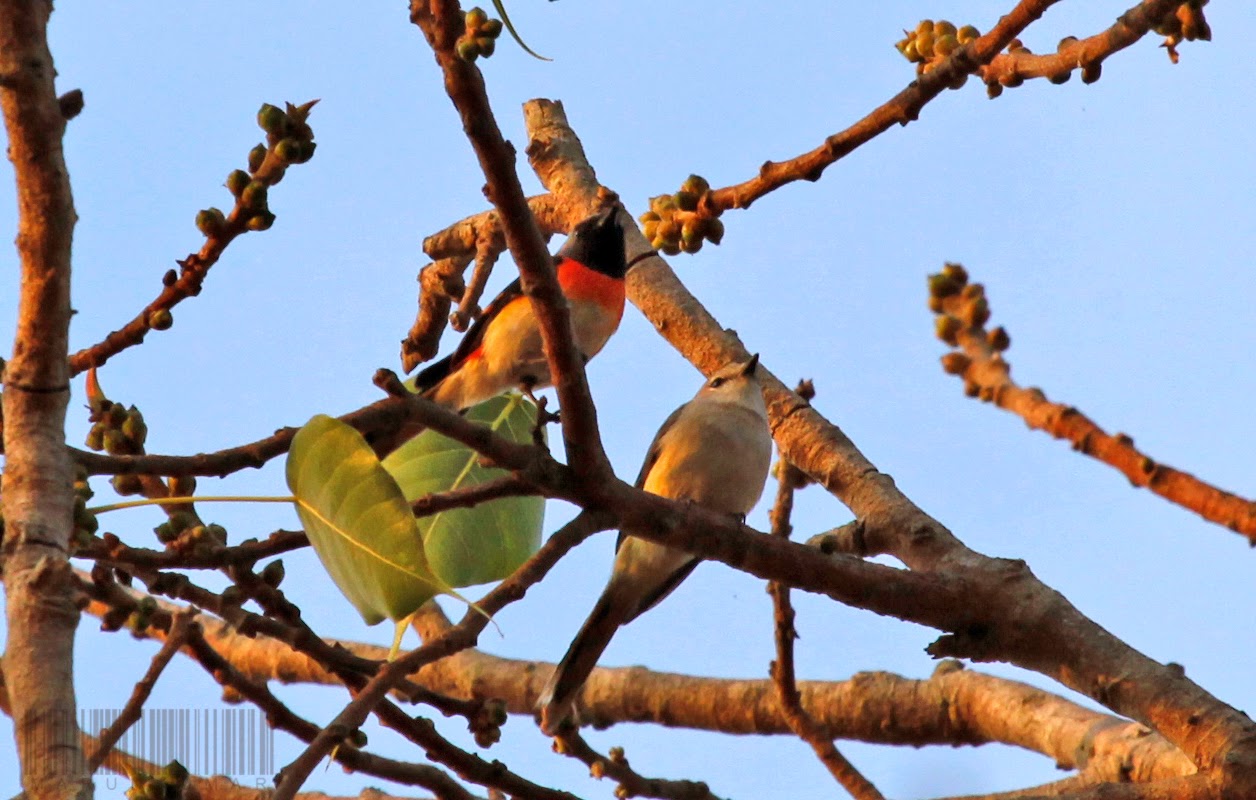
Small Minivet (Pericrocotus cinnamomeus) - Male & Female
08. Small Minivet (Pericrocotus cinnamomeus)
- Male & Female
ID by  Wikipedia : Strong dark beak and long wings. The male differs from most other common minivets by having grey, not glossy black, upper parts and head, and orange underparts, fading to yellow on the belly, orange tail edges, rump and wing patches. The female is grey above, with yellow underparts (including the face), tail edges, rump and wing patches.

Pied Bush Chat (Saxicola caprata) - Female
09. Pied Bush Chat (Saxicola caprata) - Female
ID by  Wikipedia : Similar to Siberian Stonechat dumpy structure and upright stance, but slightly smaller. The male is black except for a white rump, wing patch and lower belly. The iris is dark brown, the bill and legs black. The female is drab brown and slightly streaked. Juveniles have a scaly appearance on the underside but dark above like the females.

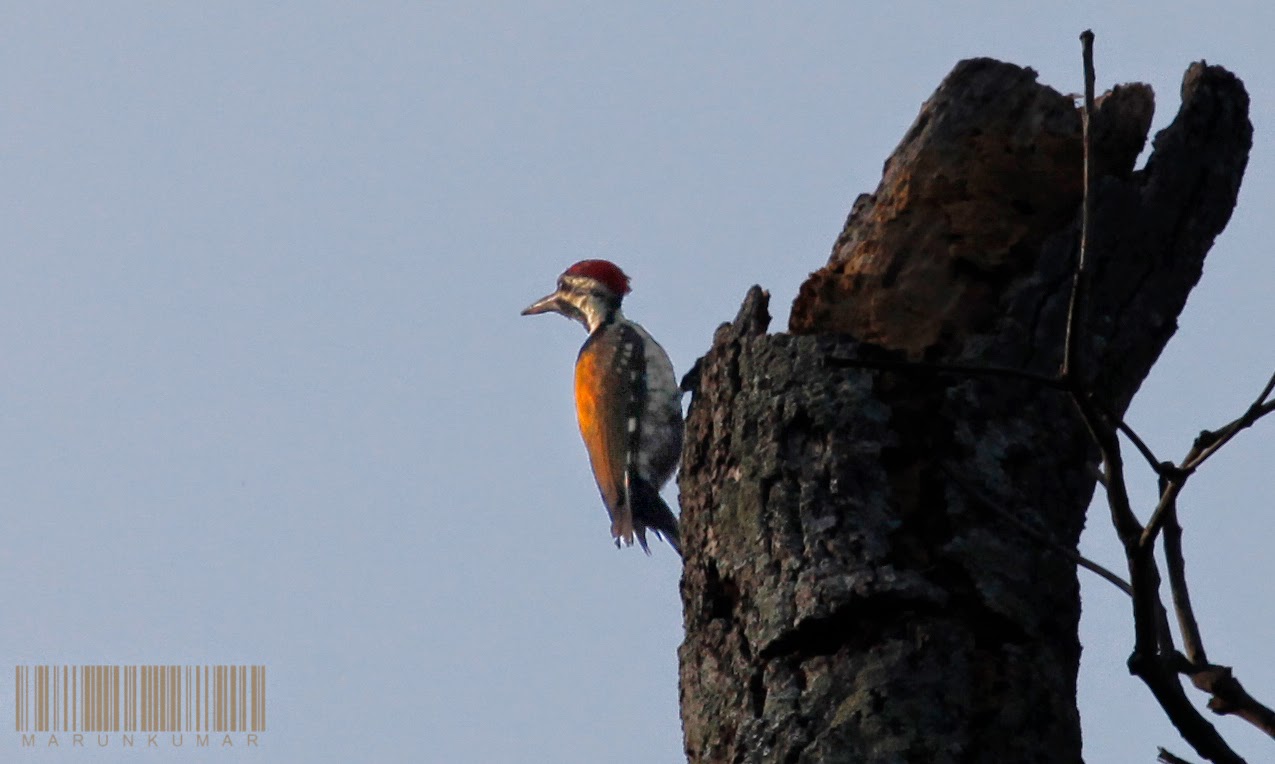
Black-rumped Flameback (Dinopium benghalense) - Male
10. Black-rumped Flameback
(Dinopium benghalense) - Male
ID by  Wikipedia : Typical woodpecker shape, and the golden yellow wing coverts are distinctive. The rump is black. The underparts are white with dark chevron markings. The black throat finely marked with white. The head is whitish with a black nape and throat, and there is a greyish eye patch. It has no dark moustachial stripes.The adult male has a red crown and crest. Females have a black forecrown spotted with white, with red only on the rear crest. Young birds are like the female, but duller.Has a straight pointed bill, a stiff tail to provide support against tree trunks, and zygodactyl feet, with two toes pointing forward, and two backward. The long tongue can be darted forward to capture insects.
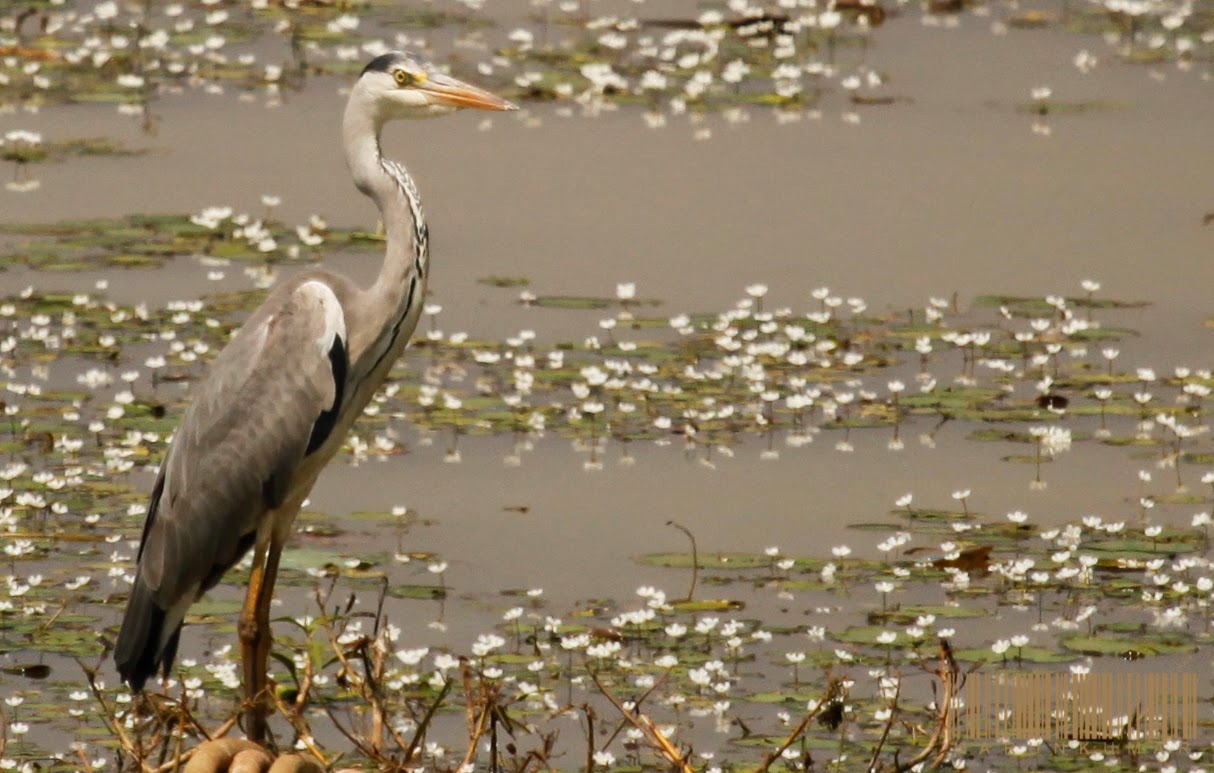
Grey Heron (Ardea cinerea) - Male
10. Grey Heron (Ardea cinerea) - Male
ID by  Wikipedia : Plumage is largely grey above, and off-white below. Adults have a white head with a broad black supercilium and slender crest, while immatures have a dull grey head. It has a powerful, pinkish-yellow bill, which is brighter in breeding adults. It has a slow flight, with its long neck retracted (S-shaped). This is characteristic of herons and bitterns, and distinguishes them from storks, cranes and spoonbills, which extend their necks.
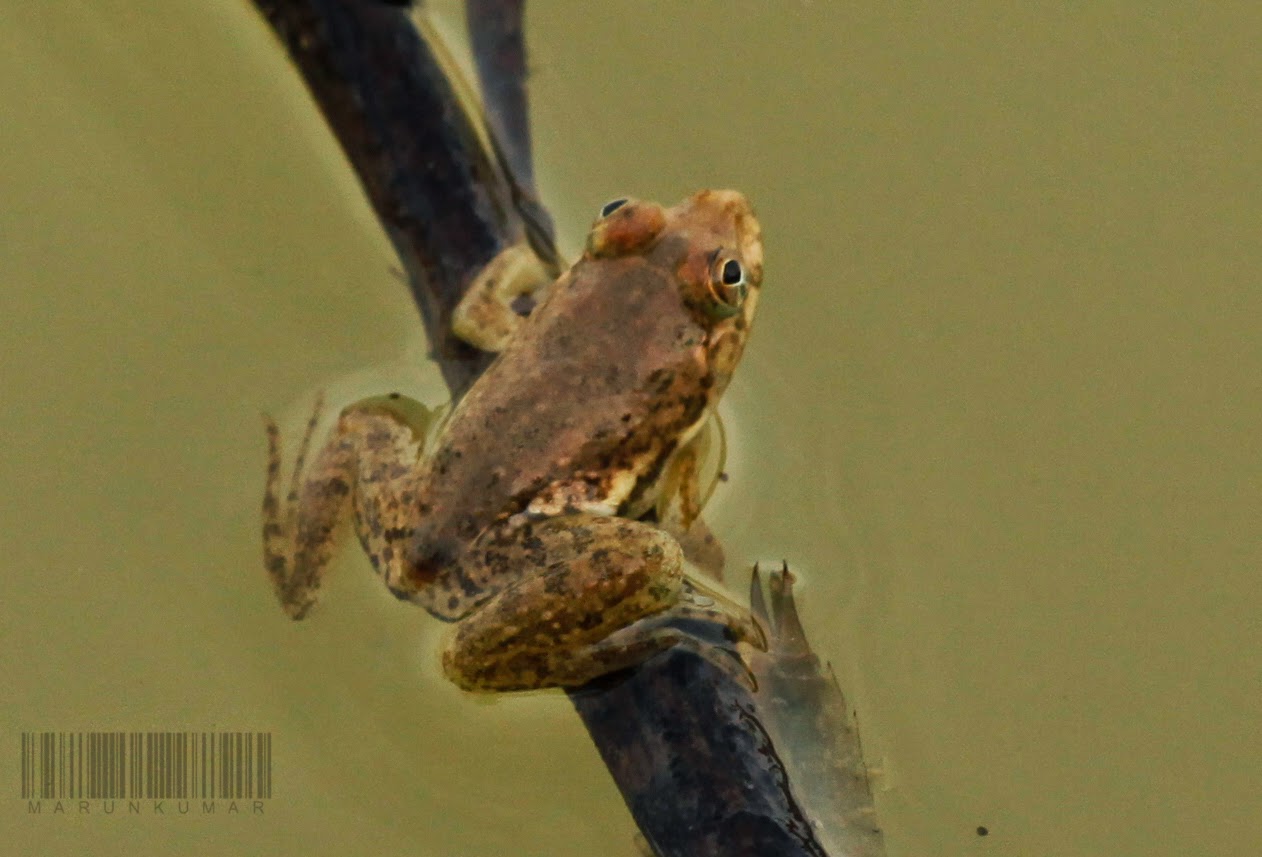
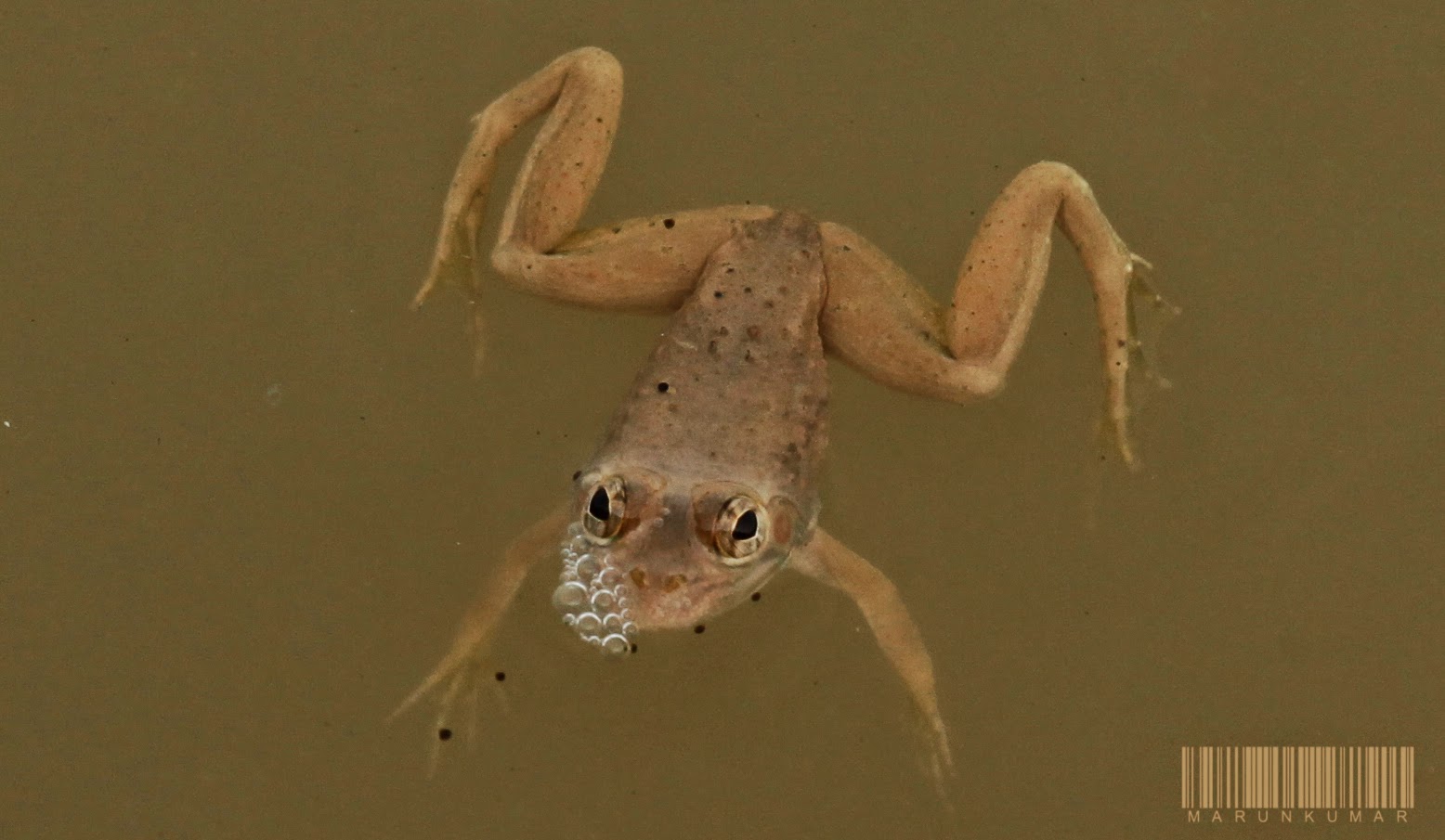
Common Skittering Frog - Euphlyctis Cyanophlyctis
11. Common Skittering Frog - Euphlyctis Cyanophlyctis
ID by  Wikipedia : This species have the remarkable ability to leap from a floating position out of the water.
12. Common Skittering Frog - Euphlyctis Cyanophlyctis
ID by  Wikipedia : This species have the remarkable ability to leap from a floating position out of the water.
13. Common Skittering Frog - Euphlyctis Cyanophlyctis
ID by  Wikipedia : This species have the remarkable ability to leap from a floating position out of the water.


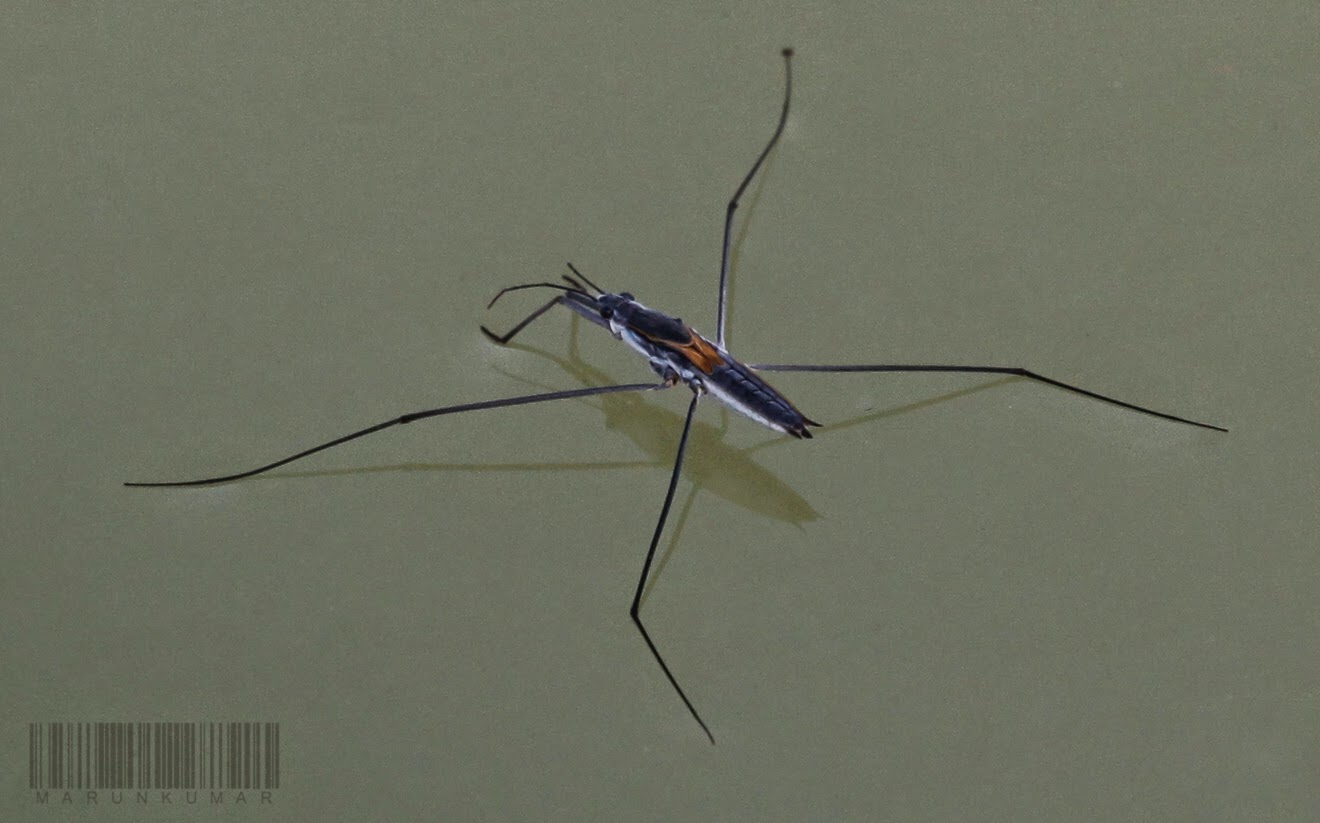
15. Pond skaters (Gerridae)