Showing posts with label Purple Heron. Show all posts

30 September, 2014

2014 | 271 | 28Sep14 | Hoskote Lake
01.  Barn Swallow (Hirundo rustica) - Adult - 18 cm
ID by  Richard Grimmett : Adult has bright red forehead and throat, blue-black breast-band and upperparts, and long tail-streamers. Underparts vary from white to rufous. Immature has duller orange forehead and throat, breastband is browner and less well defined, upperparts are duller, and has shorter tail-streamers.
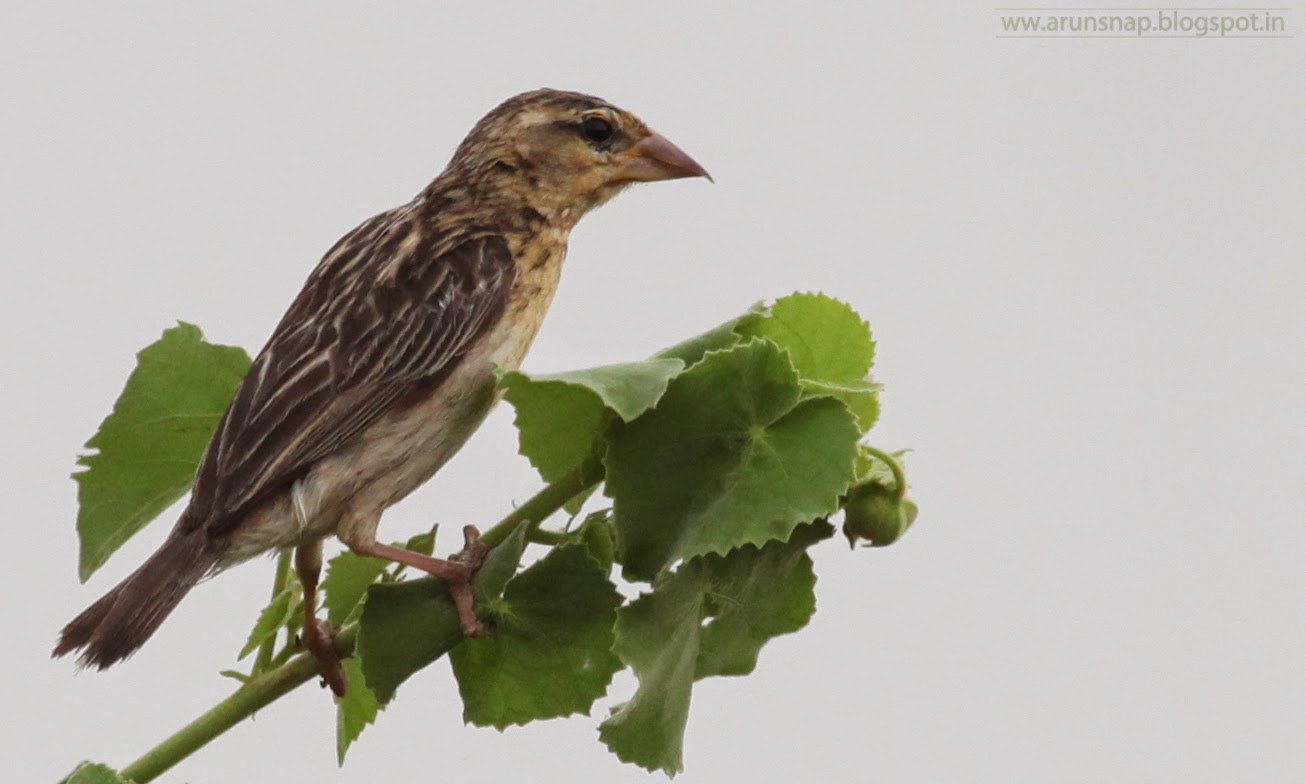
02. Baya Weaver (Ploceus philippinus) - Female/ Juv ? - 15 cm
ID by  Richard Grimmett : Breeding male of nominate has yellow crown, dark brown ear-coverts and throat, unstreaked yellow breast, and yellow streaking on mantle and scapulars. Non-breeding male, female and juvenile usually have unstreaked buffish underparts; streaking can be as prominent as on poorly marked Streaked, but has less distinct and buffish supercilium, lacks yellow neck patch, and lacks pronounced dark moustachial and malar stripes. Non-breeding male,female and juvenile burmanicus more rufousbuff on supercilium and underparts. 

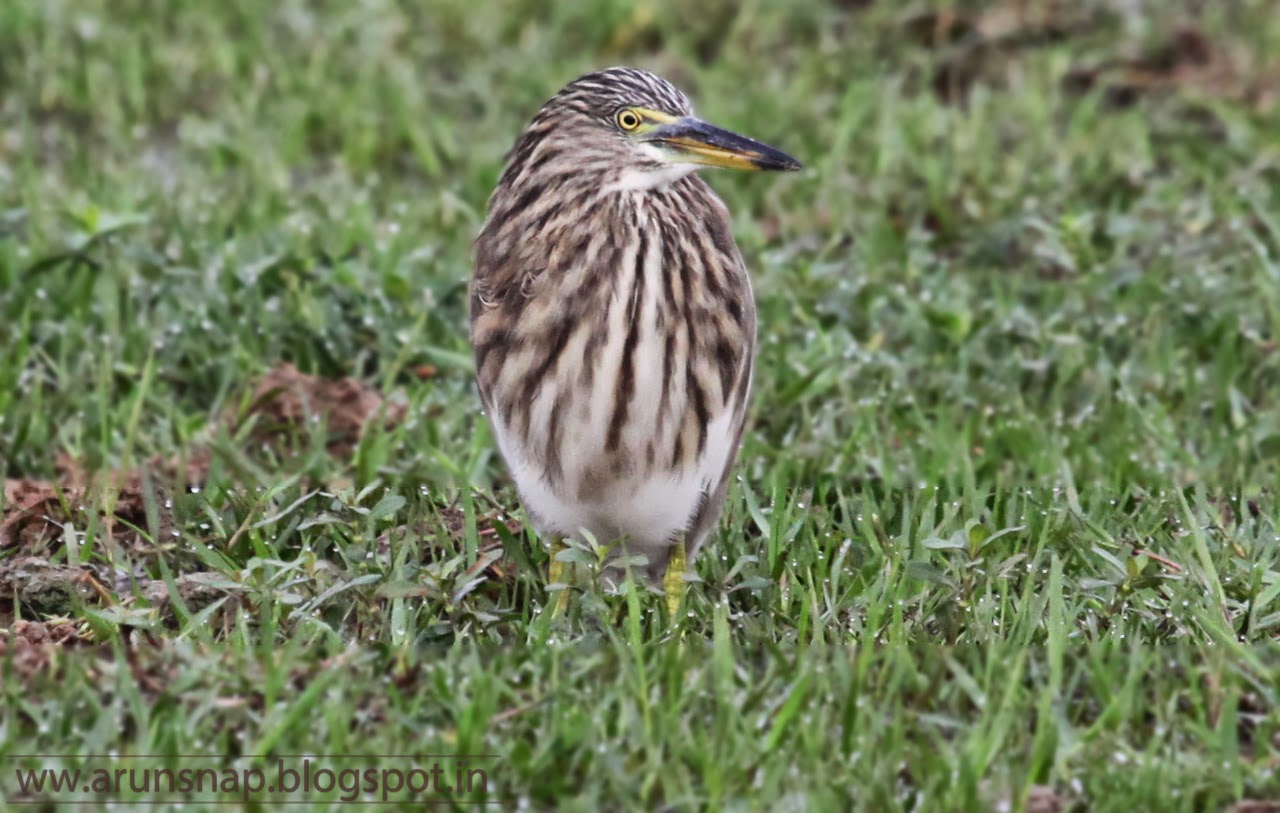
03.  Indian Pond Heron (Ardeola grayii) - Non-Breeding Adult - 42-45 cm
ID by  Richard Grimmett : Whitishwings contrast with dark saddle. Adult breeding has yellowish-buff head and neck and
maroon-brown mantle/ scapulars. Head, neck and breast streaked/spotted in non-breeding plumage.
04.  Wood Sandpiper (Tringa glareola) - Juvenile ?? 18-21 cm
ID by  Richard Grimmett : From Green Sandpiper by longer, yellowish legs and slimmer appearance, heavily speckled upperparts, and prominent supercilium behind eye; in flight by call, slimmer body and narrower wings, toes projecting clearly beyond tail, paler underwing contrasting less with white underparts, and paler brown upperparts contrasting less with smaller white rump. Adult breeding has heavily streaked breast and barred flanks; upperparts barred and spotted pale grey-brown and white. Adult non-breeding has more uniform grey-brown upperparts, spotted whitish, and breast brownish and lightly streaked. Juvenile has warm brown upperparts speckled warm buff, and lightly streaked buff breast.
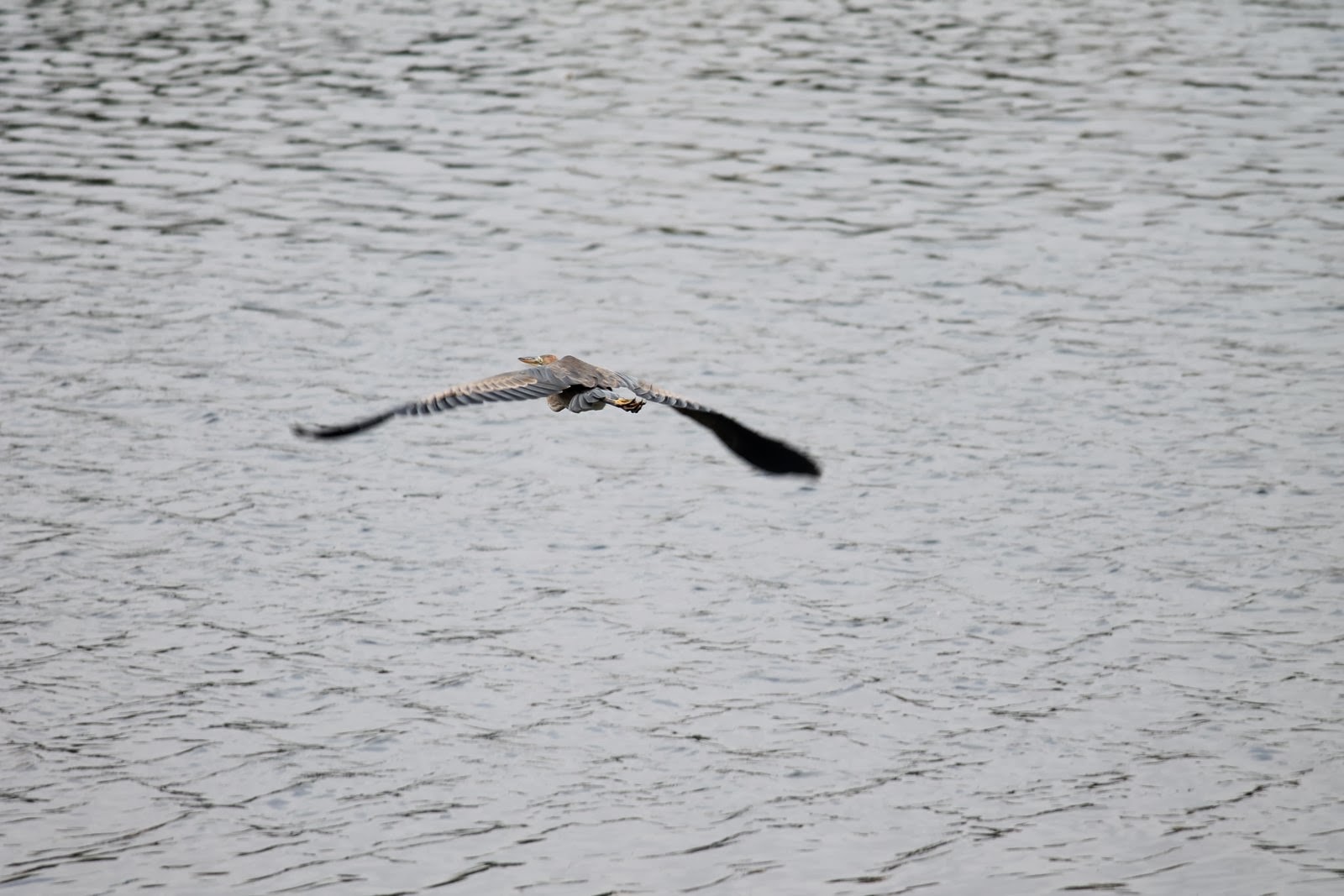
05. Purple Heron (Ardea purpurea) - Adult - 78-90 cm
ID by  Richard Grimmett : Rakish, with long, thin neck. In flight, compared with Grey Heron, bulge of recoiled neck is very pronounced, protruding feet large, underwing-coverts purplish (adult) or buff (juvenile) and lacks white leading edge to wing. Adult has chestnut head and neck with black stripes, grey mantle and upperwing-coverts, and dark chestnut belly and underwing-coverts. Juvenile has black crown, buffish neck, and brownish mantle and upperwing-coverts with rufous-buff fringes.
06.  Brahminy Kite (Haliastur indus) - Adult
ID by  Richard Grimmett : Small size and kite-like flight. Wings usually angled at carpals. Tail rounded. Adult mainly chestnut, with white head, neck and breast. Juvenile mainly brown, with pale streaking on head, mantle and breast, large pale patch at base of primaries on underwing, and pale brown and unmarked underside to tail.
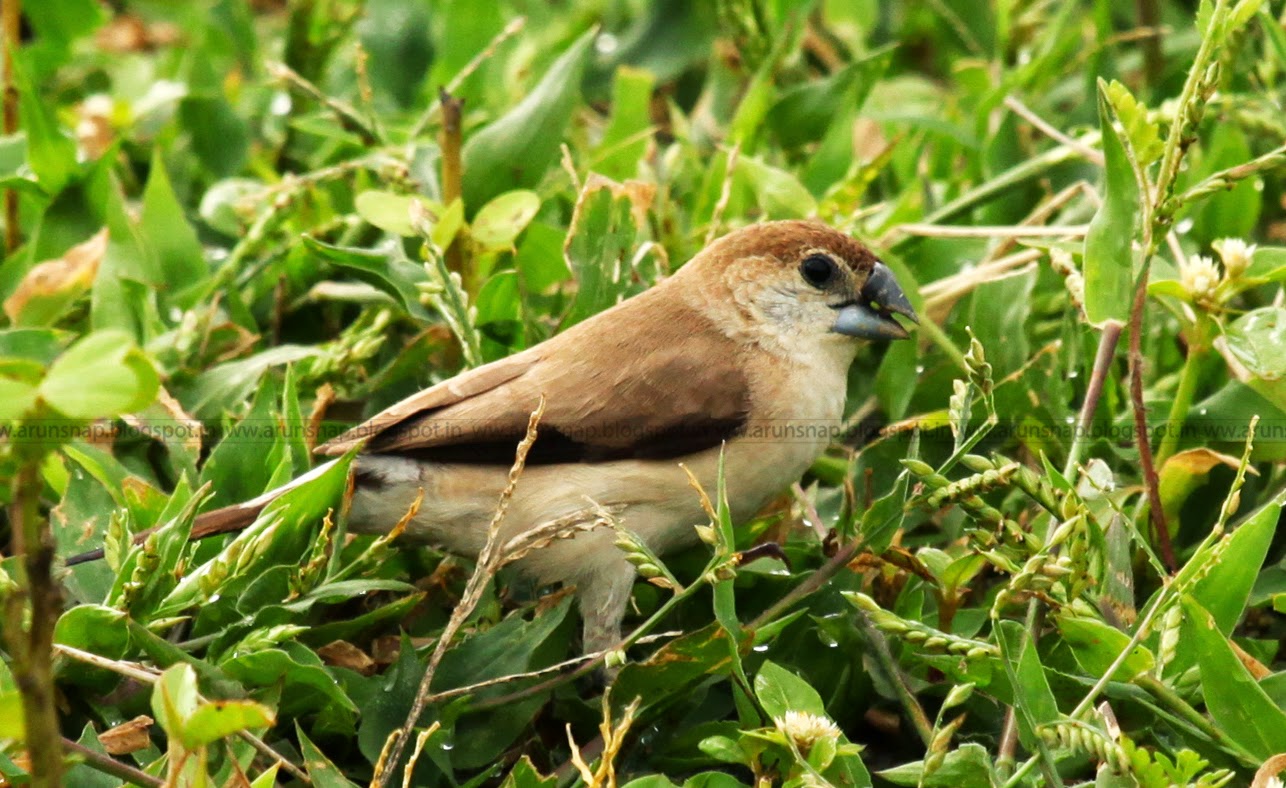
07.  Indian Silverbill or White-throated Munia
(Lonchura malabarica)  - Male
ID by  Richard Grimmett : Male has fawn brown upperparts, whitish face and underparts with barred flanks, long and pointed black tail, and white rump and uppertail-coverts. Female is duller with plainer face, and flanks are less barred. Juvenile lacks barring on flanks, has dark mottling on rump, and tail is shorter and more rounded.
ID by  Wikipedia : The adult Indian Silverbill is 11–11.5 cm long and has a conical silver-grey bill, buff-brown upperparts, white underparts, buffy flanks and dark wings. The tail is black and the wings are dark contrasting with a white rump. The sexes are similar.

08. Little Egret (Egretta garzetta) - Breeding Adult - 55-65 cm
ID by  Richard Grimmett : Slim and graceful. Has black bill, black legs with yellow feet, and greyish or yellowish lores. In breeding plumage has two elongated nape plumes, and mantle plumes, and lores and feet become reddish during courtship. Bill in non-breeding and immature can be paler and pinkish or greyish at base, or dull yellowish on some; legs can be yellowish or greenish. 
09. Caspian Tern (Hydroprogne caspia) - Breeding Adult - 38-46 cm
ID by  Richard Grimmett : Large size and broad-winged/short-tailed appearance. Huge red bill and black underside to primaries. Adult breeding has complete black cap. Adult non-breeding has black-streaked crown and black mask; bill is duller, with more black at tip. First-winter and first-summer are similar to adult non-breeding, but show faint dark lesser-covert and secondary bars and dark-tipped tail (but upperwing appears much plainer than in Lesser and Great Crested Terns). Juvenile has narrow dark subterminal bars to scapulars and wing-coverts; forehead and crown are more heavily marked, almost forming dark cap. 

04 May, 2014

2014 | 124_04May14 | Mysore Kukkarahalli Lake

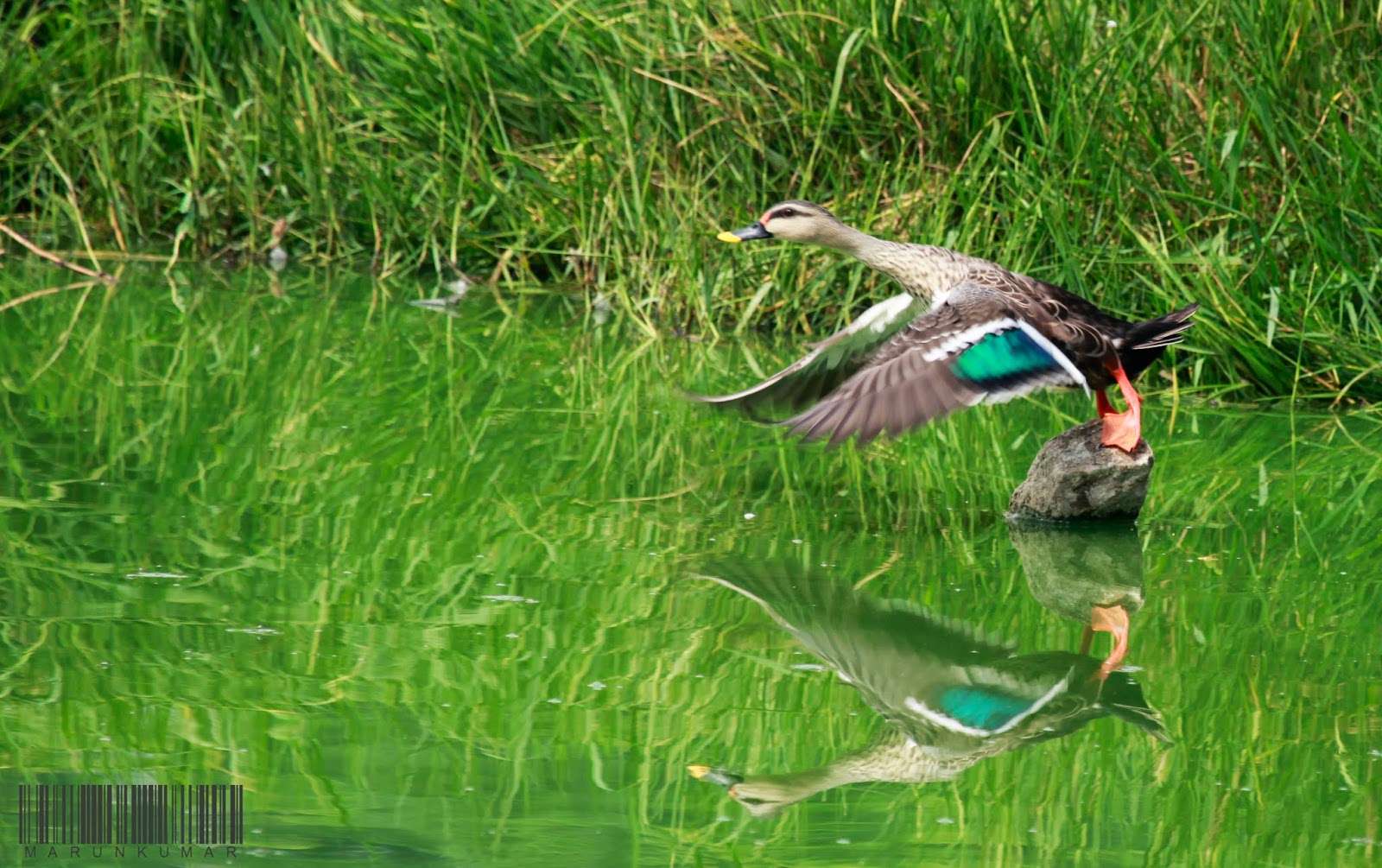
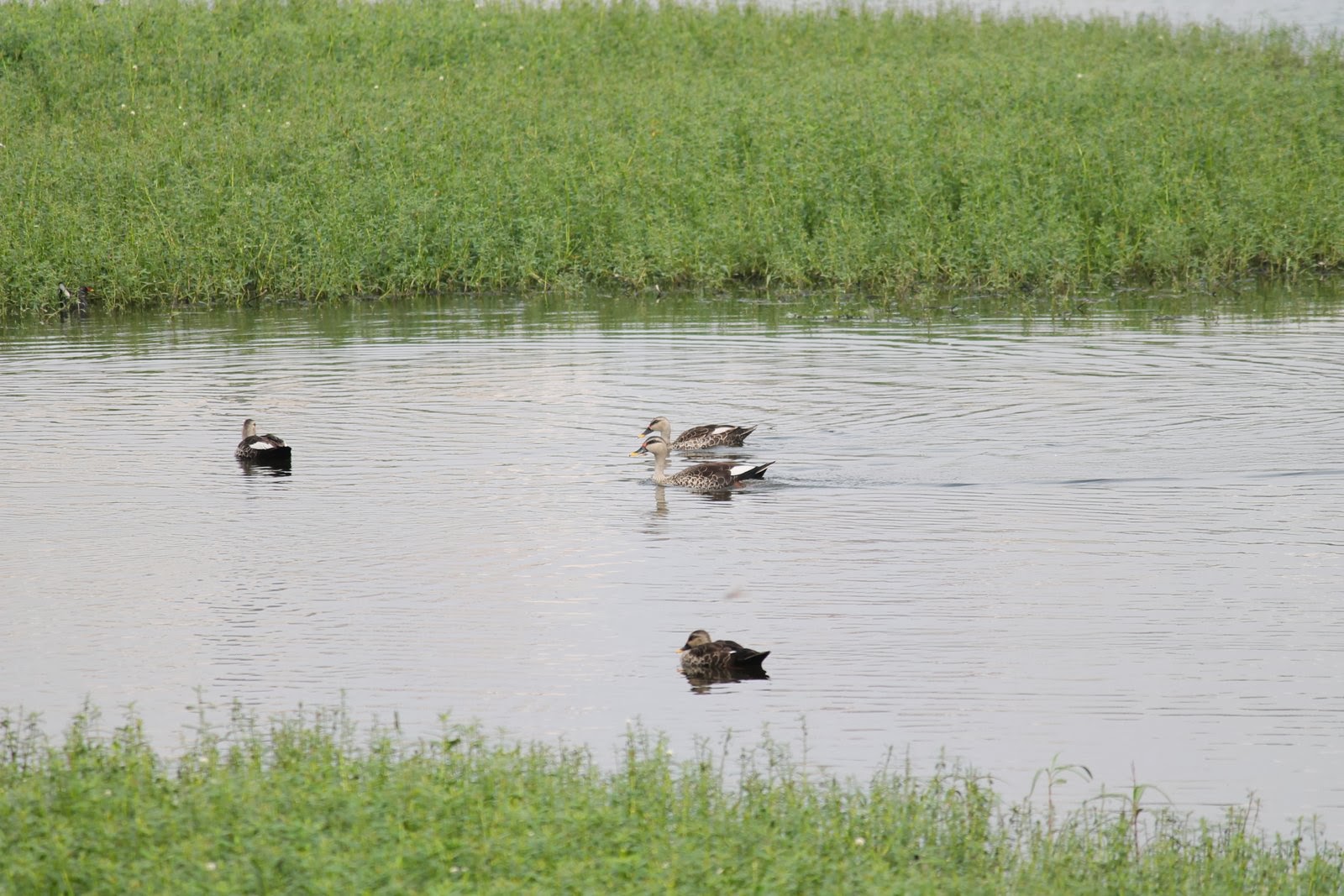
01. Indian Spot-billed Duck (Anas poecilorhyncha) - Male - 58-63 cm
ID by  Richard Grimmett : Has yellow-tipped black bill, greyish-white head and neck with black crown and eye-stripe, blackish spotting on breast, white scalloping on flanks, and largely white tertials. In flight, wings appear dark except for white on tertials and white underwing-coverts. Male has prominent red loral spot and is more strongly marked than female and juvenile (the red loral spot is less conspicuous on female and lacking on juvenile).
02. Indian Spot-billed Duck (Anas poecilorhyncha) - Male - 58-63 cm
ID by  Richard Grimmett : Has yellow-tipped black bill, greyish-white head and neck with black crown and eye-stripe, blackish spotting on breast, white scalloping on flanks, and largely white tertials. In flight, wings appear dark except for white on tertials and white underwing-coverts. Male has prominent red loral spot and is more strongly marked than female and juvenile (the red loral spot is less conspicuous on female and lacking on juvenile).
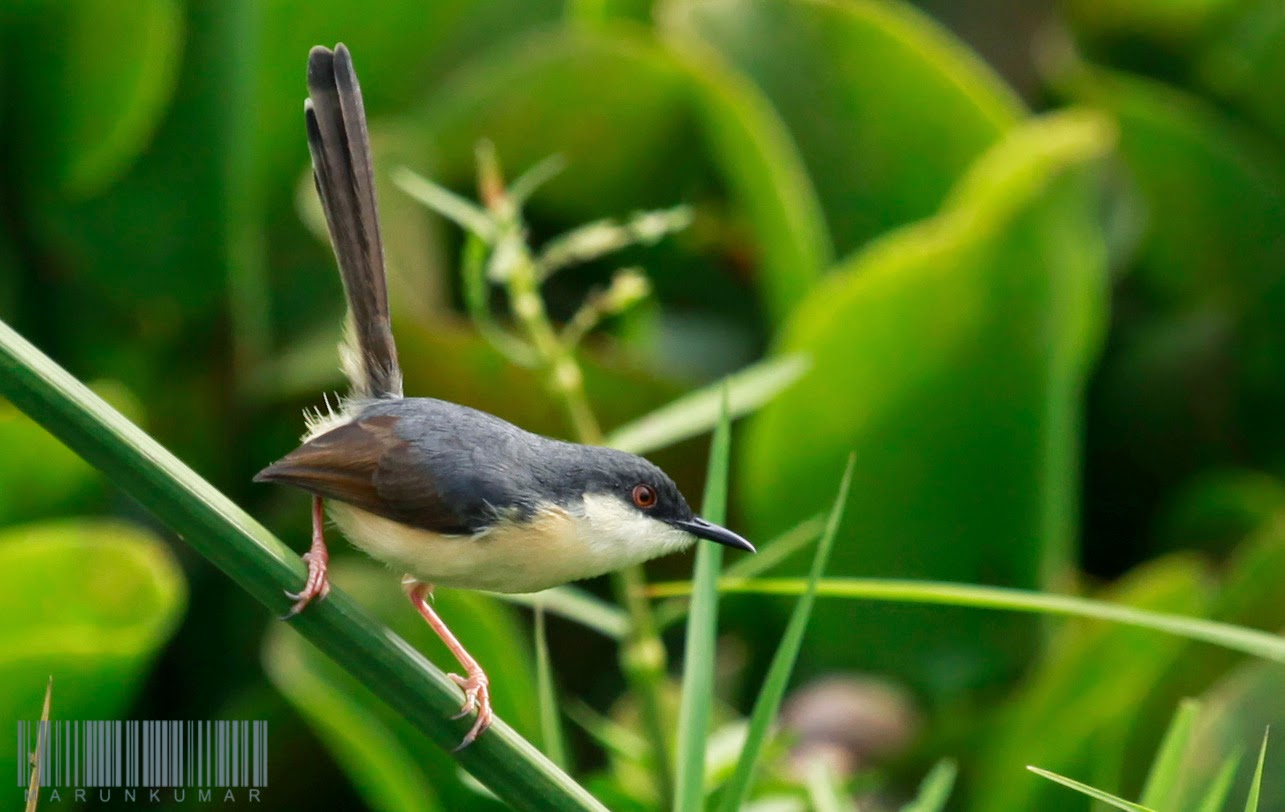
03. Ashy Prinia (Prinia Socialis) - Male in Breeding plumage - 13 cm
ID by  Richard Grimmett : Has white supercilium (sometimes lacking), slate-grey crown and ear-coverts, red eye, slate-grey (breeding) or rufousbrown (non-breeding) mantle, orange-buff wash on underparts, and prominent black subterminal marks (and whitish tips) to tail feathers. Juvenile has greenish upperparts and buffish-yellow underparts.
04. Bronze-winged Jacana (Metopidius indicus) - Adult - 28-31 cm
ID by  Richard Grimmett : Dark upperwing and underwing. Adult has white supercilium, bronze-green upperparts, and blackish underparts. Juvenile has orange-buff wash on breast, short white supercilium, and yellowish bill.
05. Common Moorhen (Gallinula chloropus) - Adult Breeding Plumage - 32-35 cm
ID by  Richard Grimmett : White lateral undertail-coverts, with black central stripe, and usually shows white line along flanks. Breeding adult has blackish head and neck, slate-grey underparts, and dark olive-brown upperparts; red bill with yellow tip and red frontal shield. Non-breeding adult has duller bill and legs. Juvenile has dull green bill, and is mainly brown with whitish throat, grey wash to breast and flanks, and variable whitish patch on belly. Immature resembles non-breeding adult, but has duller body plumage, with grey of underparts washed with brown and buff, whitish throat, and less prominent pale border to the flanks. 
06. Tawny-bellied Babbler (Dumetia hyperythra albogularis) - Adult - 13 cm
ID by  Richard Grimmett : Forehead and forecrown are rufous-buff, sides of head and underparts are orange-buff, mantle is olive-brown, and wings and tail are brown,the tail with faint barring. Eye is pale and bill is pale pinkish brown. Juvenile has brighter, more rufous-brown upperparts, lacking rufous-brown forehead; has only traces of white on throat, and duller underparts.
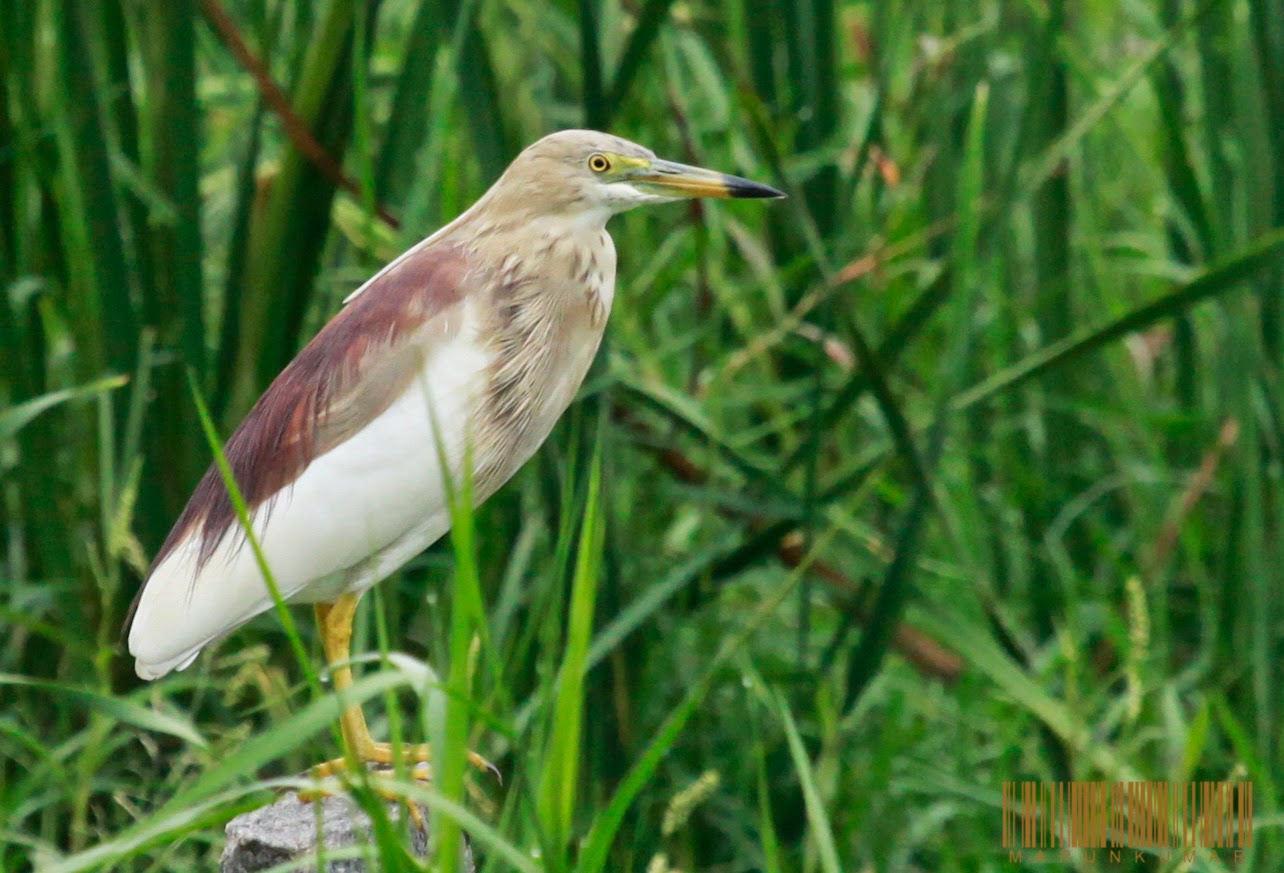
07. Indian Pond Heron (Ardeola Grayii) - Adult Non-breeding Plumage - 42-45 cm
ID by  Richard Grimmett : Whitish wings contrast with dark saddle. Adult breeding has yellowish-buff head and neck and maroon-brown mantle/ scapulars. Head, neck and breast streaked/spotted in non-breeding plumage. 
08. Grey Heron (Ardea Cinerea) - Adult - 90-98 cm 
ID by  Richard Grimmett : A large, mainly grey heron, lacking any brown or rufous in its plumage. In flight, black flight feathers contrast with grey upperwing- and underwing-coverts, and shows a prominent white leading edge to wing when head-on. Adult has yellow bill, whitish head and neck with black head plumes, and black patches on belly. In breeding season, has whitish scapular plumes and bill and legs become orange or reddish. Immature is duller than adult, with grey crown, reduced black 'crest', greyer neck, less pronounced black patches on sides of belly, and duller bill and legs. Juvenile has dark grey cap with slight crest, dirty grey neck and breast, lacks black patches on belly sides, lacks plumes, and has dark legs. 
09. Purple Heron (Ardea Purpurea) - 78-90 cm
ID by  Richard Grimmett : Rakish, with long, thin neck. In flight, compared with Grey Heron, bulge of recoiled neck is very pronounced, protruding feet large, underwing-coverts purplish (adult) or buff (juvenile) and lacks white leading edge to wing. Adult has chestnut head and neck with black stripes, grey mantle and upperwing-coverts, and dark chestnut belly and underwing-coverts. Juvenile has black crown, buffish neck, and brownish mantle and upperwing-coverts with rufous-buff fringes
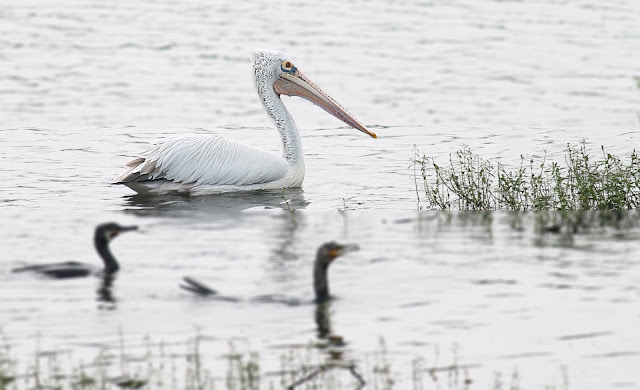
10.Spot-billed Pelican (Pelecanus Philippensis) - Adult Breeding Plumage - 140 cm
ID by  Richard Grimmett : Dingier appearance, rather uniform pinkish bill and pouch (except in breeding condition), and black spotting on upper mandible (except juveniles). Pale circum orbital skin looks cut off from bill (appears to be wearing goggles). Tufted crest/hind neck usually apparent even on young birds. Underwing pattern similar to that of Dalmatian (and quite different from GreatWhite), showing little contrast between wing-coverts and flight feathers and with paler greater coverts producing distinct central panel. Adult breeding has cinnamon-pink rump, underwing-coverts and undertail-coverts; head and neck appear greyish; has purplish skin in front of eye, and pouch is pink to dull purple and blotched with black. Adult non-breeding dirtier greyish-white, with paler pouch and facial skin. Immature has variable grey-brown markings on upperparts. Juvenile has brownish head and neck, brown mantle and upperwing-coverts (fringed with pale buff), and brown flight feathers; spotting on bill initially lacking (and still indistinct at 12 months). 
11. White-breasted Waterhen (Amaurornis Phoenicurus) - Adult - 32 cm
ID by  Richard Grimmett : Adult has grey upperparts and white face, foreneck and breast; undertail coverts rufous-cinnamon. Bill and legs are greenish or yellowish, with swollen reddish base to upper mandible. Juvenile has greyish face, and sides of neck and breast, and browner upperparts; bill and legs are darker. 

12. Ruddy-breasted Crake (Porzana Fusca) - Adult - 22 cm 
ID by  Richard Grimmett : Combination of dull chestnut underparts, unmarked dark olive-brown upperparts, indistinct dark brown and white barring on rear flanks and undertail coverts (much more restricted than in Slaty-legged and Andaman Crakes) and red legs. Juvenile dark olive-brown, with white-barred undertail-coverts and fine greyish-white mottling/barringon rest of underparts. Legs duller and iris is brown (rather than red as in adult).


01 May, 2014

2014 | 121 | 01May14 | Agara Lake

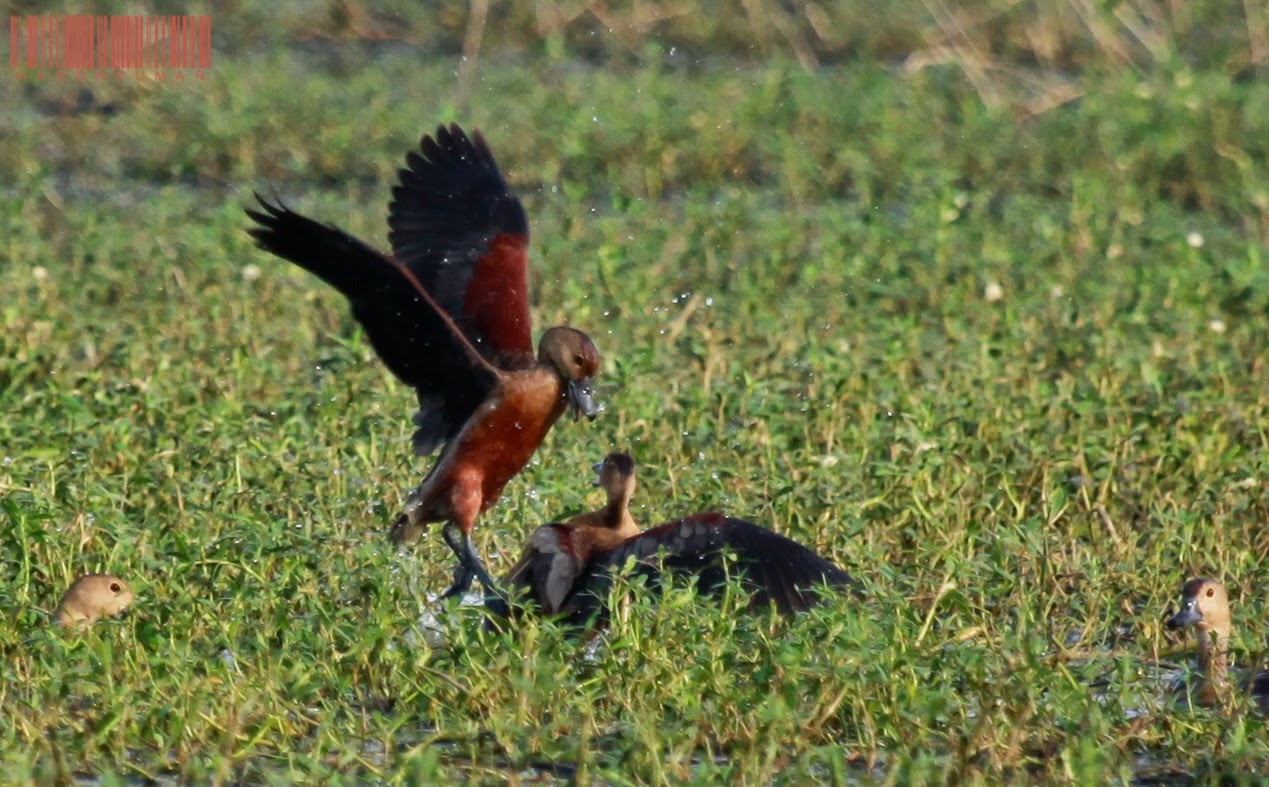
01. Lesser Whistling-duck (Dendrocygna Javanica) 42 cm
ID by  Richard Grimmett : Smaller and more neatly proportioned than Fulvous. Like Fulvous, has rather weak, deep-flappingflight, appears very dark on the upperwing and underwing, and  is very noisy with repeated whistling. From Fulvous by greyish-buff head and neck, dark brown crown, lack of well-defined dark line down hind neck, bright chestnut patch on forewing, and chestnut uppertail-coverts.

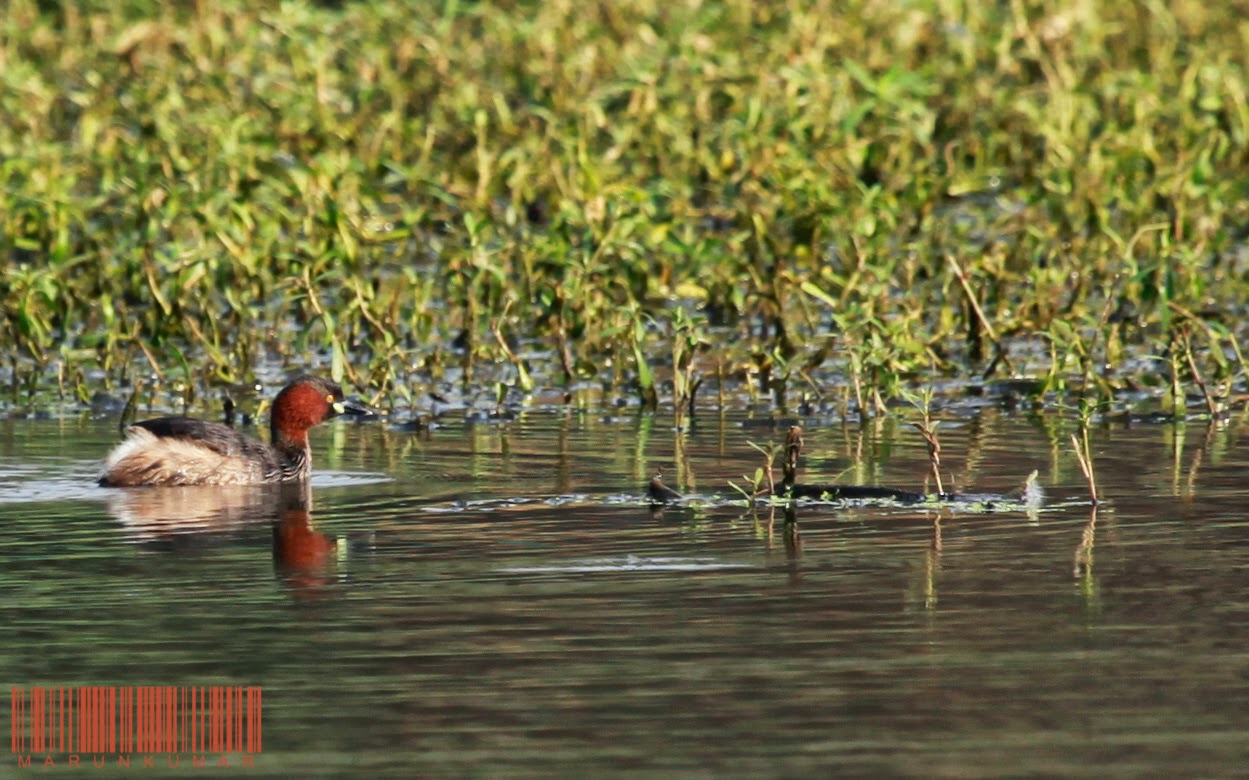
02. Little Grebe (Tachybaptus Ruficollis) - Adult - 25-29 cm
ID by  Richard Grimmett : Small, with square-ended tail, and short undertail-coverts. Often shows faint whitish edges and tip to tail and fringe to tertials. Supercilium usually reasonably distinct and square-ended behind the eye, and can be bordered above by a diffuse dark line. Typically shorter- and finer-billed than Sykes's, with more prominent supercilium, and upperparts are warmer brown; it usually appears more Phylloscopus-like, owing to shorter bill, and more frequently feeds on the ground. Possibly confusable with Common Chiffchaff, but lacks any greenish or olive tones, and has pale base to lower mandible and pale legs.

03. Little Grebe (Tachybaptus Ruficollis) - Juvenile - 25-29 cm

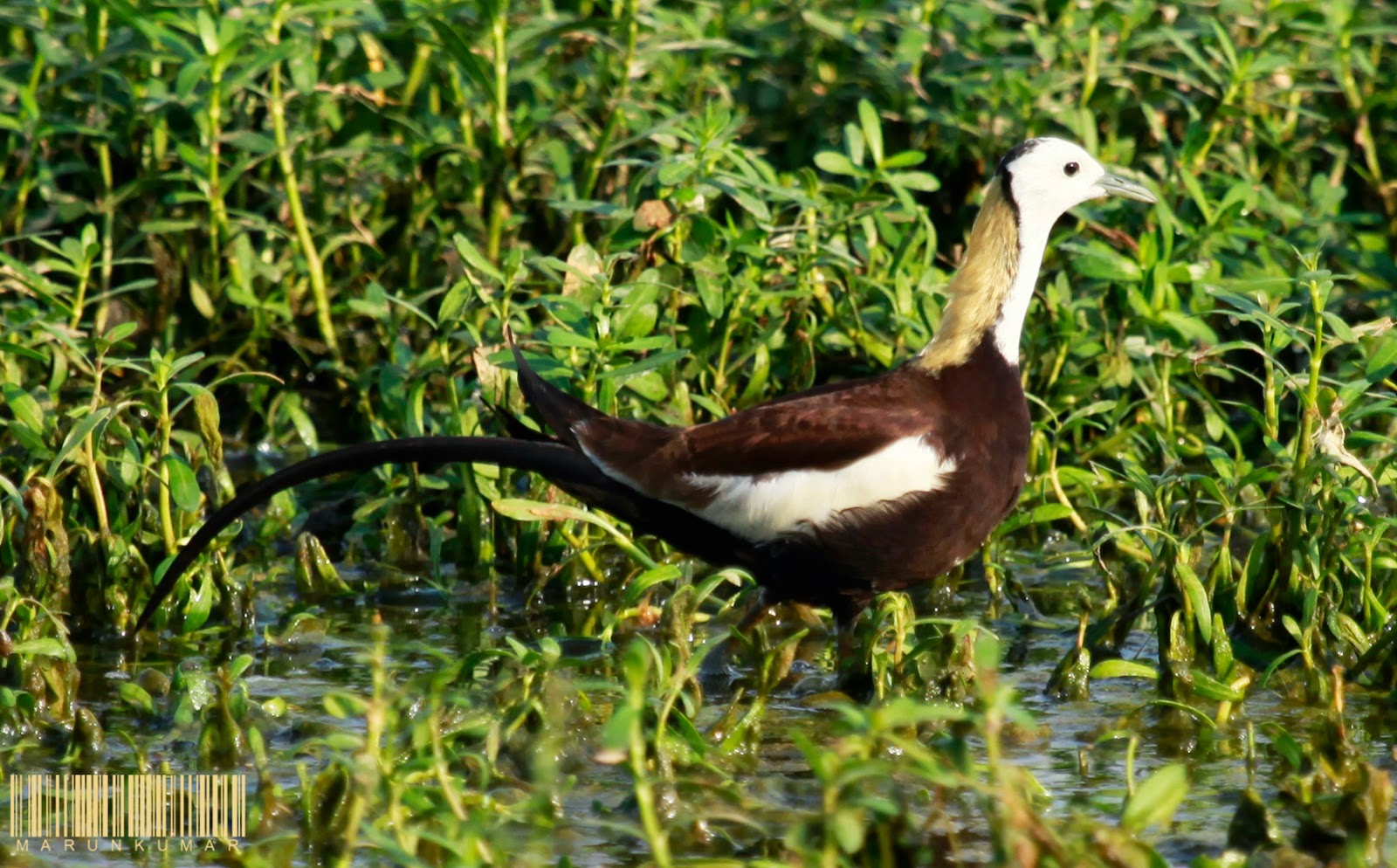
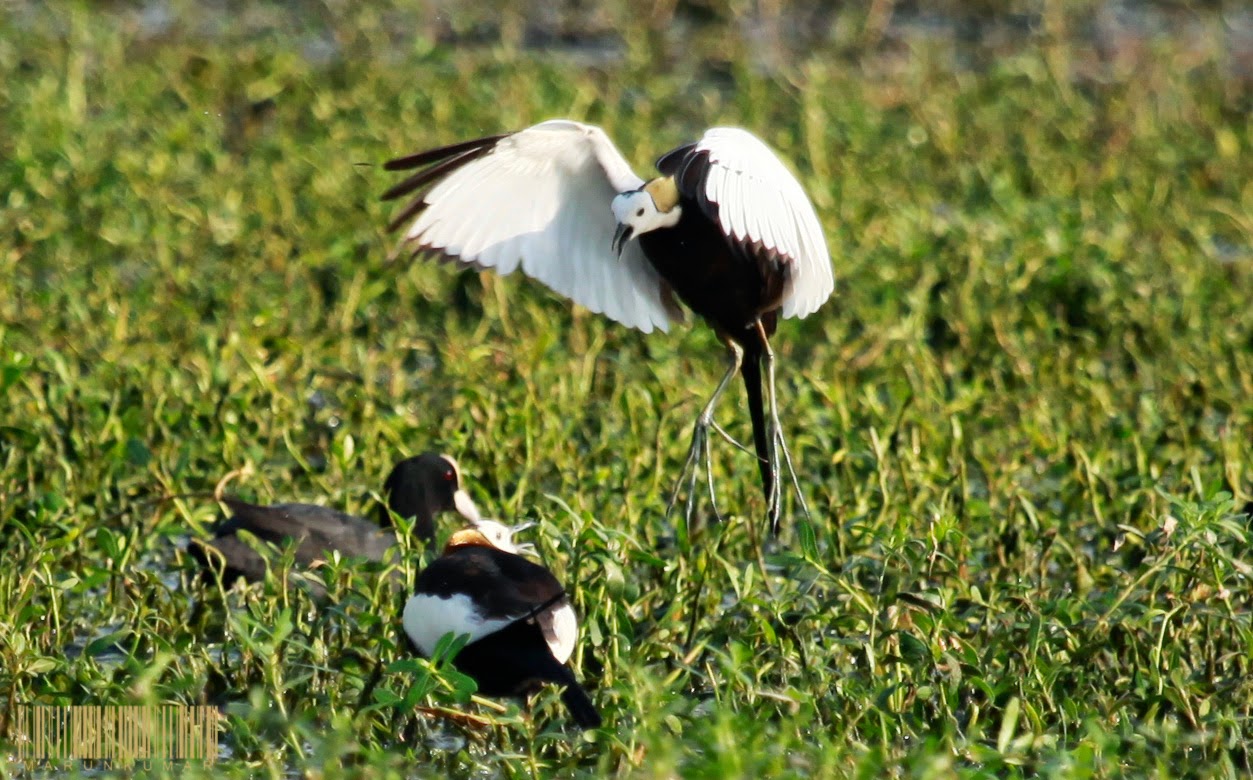
04. Pheasant-tailed Jacana (Hydrophasianus Chirurgus) - Adult - 31 cm
ID by  Richard Grimmett : Extensive white on upperwing, and white underwing. Yellowish patch on sides of neck. Adult breeding has brown underparts and long, curved tail. Adult non-breeding and juvenile lack elongated tail and have white underparts, with dark line down side of neck and dark breast-band. Juvenile has buff fringes to upperparts, and barring across breast.

05. Pheasant-tailed Jacana (Hydrophasianus Chirurgus) - Adult - 31 cm
ID by  Richard Grimmett : Extensive white on upperwing, and white underwing. Yellowish patch on sides of neck. Adult breeding has brown underparts and long, curved tail. Adult non-breeding and juvenile lack elongated tail and have white underparts, with dark line down side of neck and dark breast-band. Juvenile has buff fringes to upperparts, and barring across breast.

06. Purple Heron (Ardea purpurea) - Adult - 78-90 cm
ID by  Richard Grimmett : Rakish, with long, thin neck. In flight, compared with Grey Heron, bulge of recoiled neck is very pronounced, protruding feet large, underwing-coverts purplish (adult) or buff (juvenile) and lacks white leading edge to wing. Adult has chestnut head and neck with black stripes, grey mantle and upperwing-coverts, and dark chestnut belly and underwing-coverts. Juvenile has black crown, buffish neck, and brownish mantle and upperwing-coverts with rufous-buff fringes.
07. Purple Swamphen (Porphyrio Porphyria) - Adult - 45-50 cm
ID by  Richard Grimmett : Large size, purplish-blue coloration with variable greyish head, and huge red bill and frontal shield. Female smaller than male. Juvenile is duller than adult, with greyer neck and underparts, more olive-brown above, duller red bill (which is blackish at first), and duller legs and feet.
08. Purple Swamphen (Porphyrio Porphyria) -Adult - 45-50 cm
ID by  Richard Grimmett : Large size, purplish-blue coloration with variable greyish head, and huge red bill and frontal shield. Female smaller than male. Juvenile is duller than adult, with greyer neck and underparts, more olive-brown above, duller red bill (which is blackish at first), and duller legs and feet.

27 October, 2013

2013 | 300 | 27Oct13 | Kaigondarahalli Lake

Map/ Route/ Location


1. Spot-Billed Pelican
2. Juvenile Brahminy Kite 
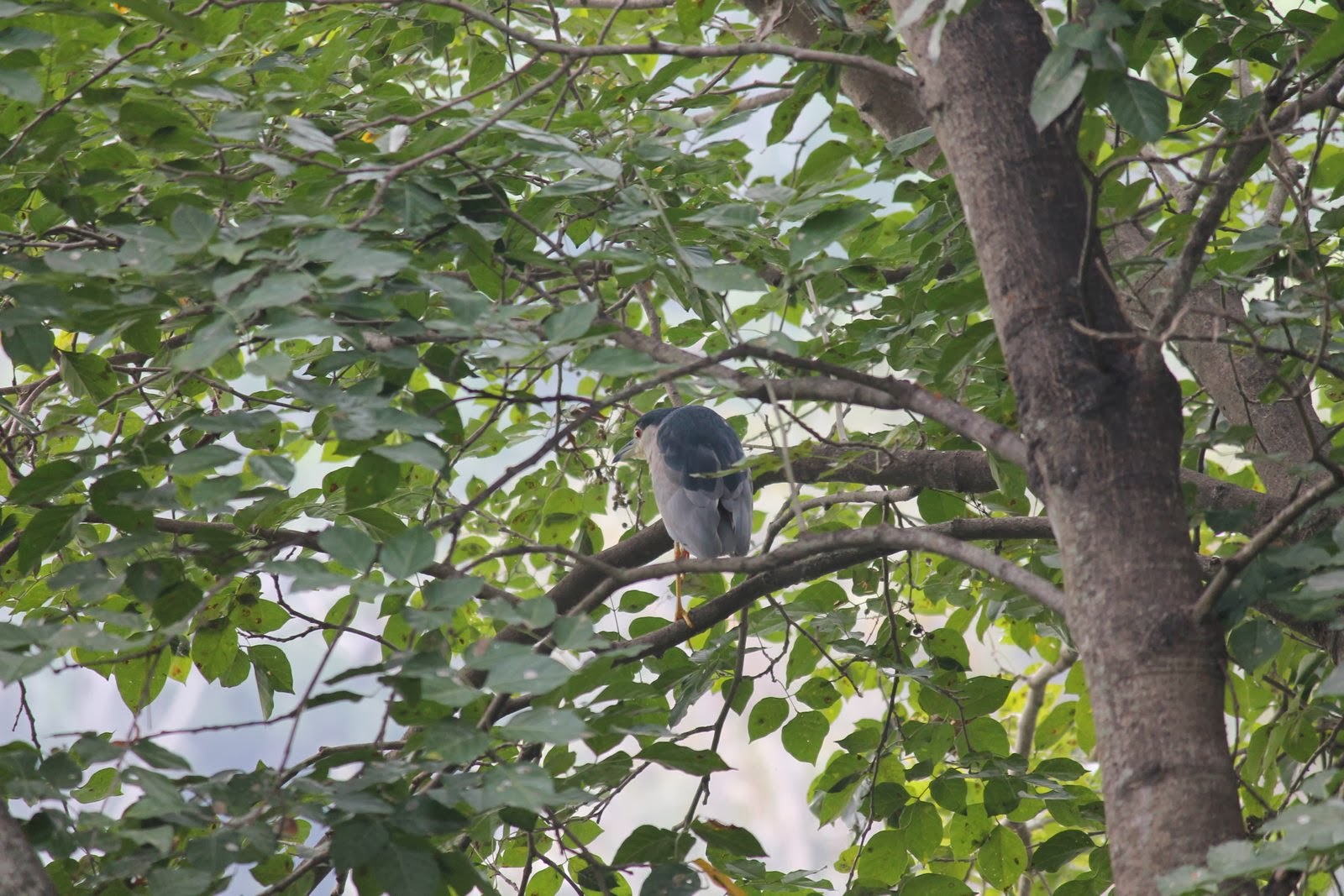
3. Night Heron
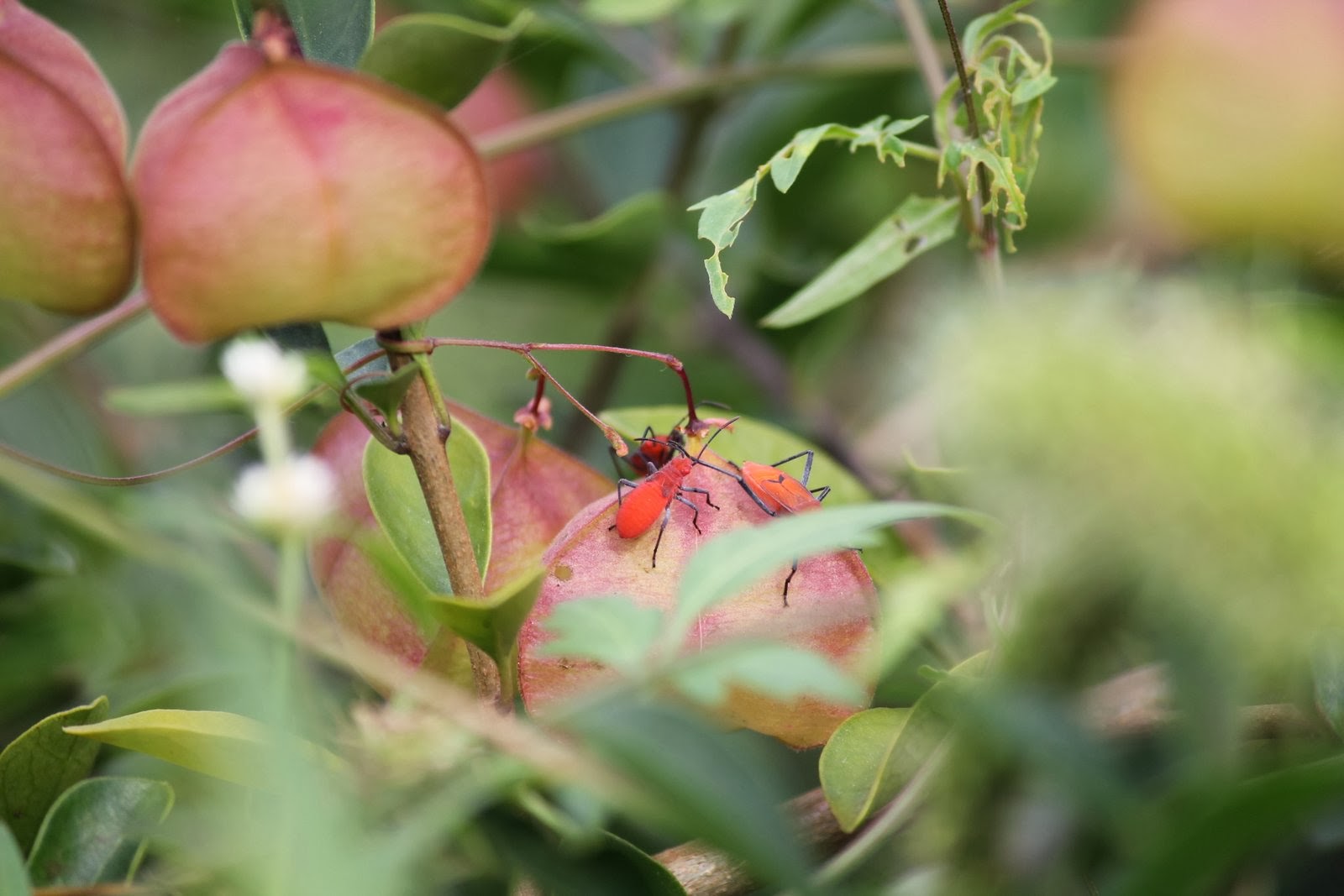
4. Spit Bug
5. Pond Heron
6. Spot Billed Duck
   
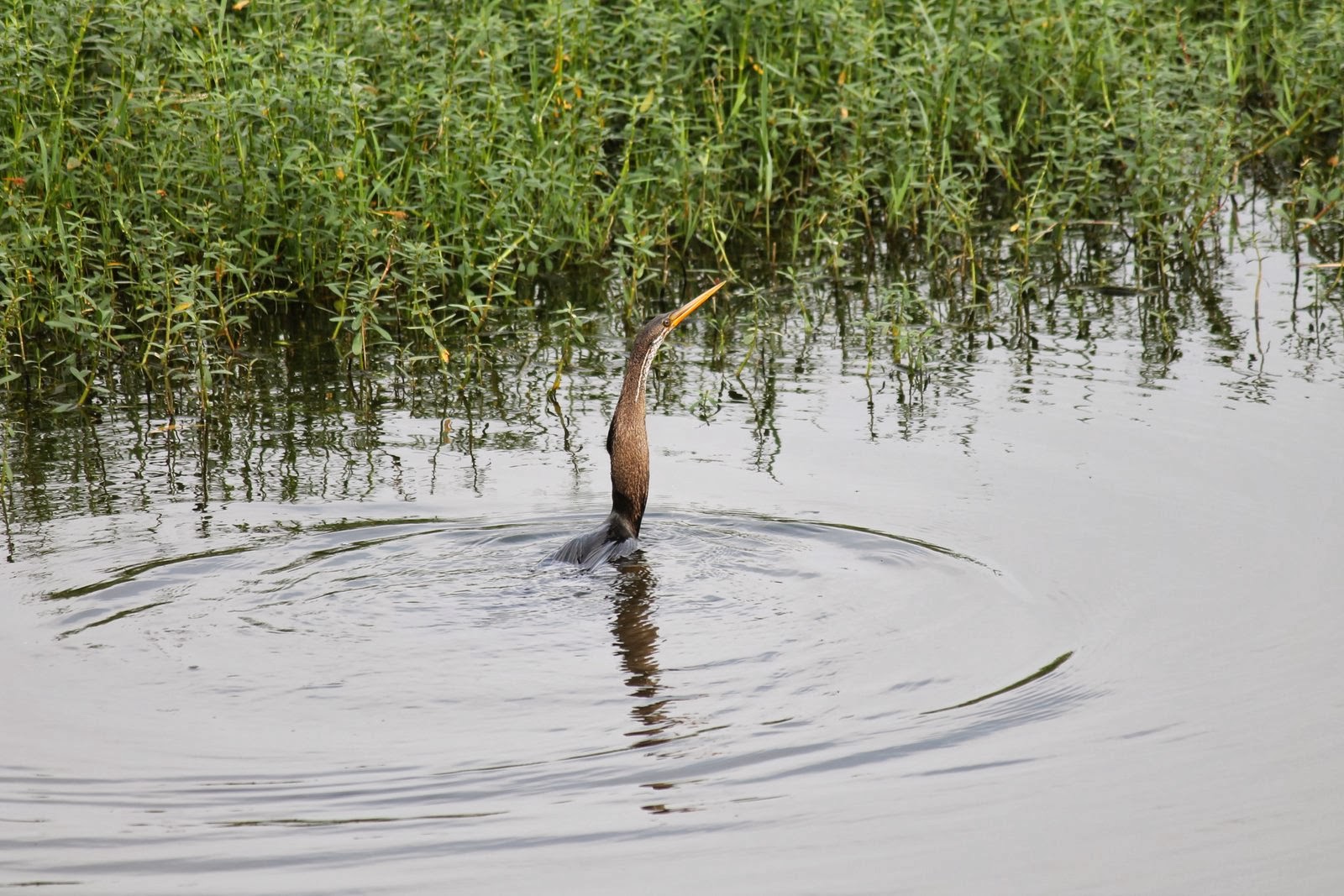
7. Darter

Darter
From Wikipedia, the free encyclopedia
01 The darters or snakebirds are mainly tropical waterbirds
02 There are four living species, three of which are very common and widespread while the fourth is rarer and classified as near-threatened by the IUCN.
03 The term "snakebird" is usually refers to their long thin neck, which has a snake-like appearance when they swim with their bodies submerged, or when mated pairs twist it during their bonding displays.
04 It alludes to their manner of procuring food, as they impale fishes with their thin, pointed beak.
05 They measure about 80 to 100 cm (2.6 to 3.3 ft) in length, with a wingspan around 120 cm (3.9 ft), and weigh some 1,050 to 1,350 grams (37 to 48 oz).
06 The males have black and dark brown plumage, a short erectile crest on the nape and a larger bill than the female.
07 The females have a much paler plumage, especially on the neck and underparts, and are a bit larger overall.
08 Both have grey stippling on long scapulars and upper wing coverts.
09 The sharply pointed bill has serrated edges and no external nostrils.
10 The darters have completely webbed feet, and their legs are short and set far back on the body.
11 There is no eclipse plumage, but the bare parts vary in color around the year.
12 During breeding, however, their small gular sac changes from pink or yellow to black, and the bare facial skin, otherwise yellow or yellow-green, turns turquoise.
13 The iris changes in color between yellow, red or brown seasonally.
14 The young hatch naked, but soon grow white or tan down.
15 Darter vocalizations include a clicking or rattling when flying or perching.
16 In the nesting colonies, adults communicate with croaks, grunts or rattles.
17 During breeding, adults sometimes give a caw or sighing or hissing calls.
18 Nestlings communicate with sqealing or squawking calls.
19 Darters swim largely submerged.
20 The long neck is conspicuous, and the source of the name "snakebirds".
21 Darters are mostly tropical in distribution, ranging into subtropical and barely into warm temperate regions.
22 They typically inhabit fresh water lakes, rivers, marshes, swamps
23 Most are sedentary and do not migrate; the populations in the coolest parts of the range may migrate however.
24 Their preferred mode of flight is soaring and gliding; in flapping flight they are rather cumbersome.
25 On dry land, darters walk with a high-stepped gait, wings often spread for balance, just like pelicans do.
26 They tend to gather in flocks – sometimes up to about 100 birds – and frequently associate with storks, herons or ibises, but are highly territorial on the nest:
27 despite being a colonial nester, breeding pairs – especially males – will stab at any other bird that ventures within reach of their long neck and bill.
28 Darters feed mainly on mid-sized fish; far more rarely, they eat other aquatic vertebrates and large invertebrates of comparable size.
29 These birds are foot-propelled divers that quietly stalk and ambush their prey; then they use their sharply pointed bill to impale the food animal.
30 They do not dive deep but make use of their low buoyancy made possible by wettable plumage, small air sacs and denser bones.
31 On the underside of the cervical vertebrae 5-7 is a keel, which allows for muscles to attach to form a hinge-like mechanism that can project the neck, head and bill forward like a throwing spear.
32 After they have stabbed the prey, they return to the surface where they toss their food into the air and catch it again, so that they can swallow it head-first.
33 Like cormorants, they have a vestigial preen gland and their plumage gets wet during diving.
34 To dry their feathers after diving, darters move to a safe location and spread their wings.
35 Predators of darters are mainly large carnivorous birds, including House Crow, Marsh harriers, Pallas's Fish Eagle.
36 Predation by Crocodylus crocodiles has also been noted. But many would-be predators know better than to try to catch a darter.
37 The long neck and pointed bill in combination with the "darting" mechanism make the birds dangerous even to larger carnivorous mammals, and they will actually move towards an intruder to attack rather than defending passively or fleeing.
38 They usually breed in colonies, occasionally mixed with cormorants or herons.
39 The darters pair bond monogamously at least for a breeding season.
40 Males display to attract females by raising (but not stretching) their wings to wave them in an alternating fashion, bowing and snapping the bill, or giving twigs to potential mates.
41 To strengthen the pair bond, partners rub their bills or wave, point upwards or bow their necks in unison.
42 Breeding all year round.
43 The nests are made of twigs and lined with leaves; they are built in trees or reeds, usually near water.
44 Typically, the male gathers nesting material and brings it to the female, which does most of the actual construction work.
45 Nest construction takes only a few days (about 3 at most), and the pairs copulate at the nest site.
46 The clutch size is two to six eggs (usually about 4) which have a pale green color.
47 The eggs are laid within 24–48 hours and incubated for 25 to 30 days, starting after the first has been laid; they hatch asynchronously.
48 To provide warmth to the eggs, the parents will cover them with their large webbed feet, because like their relatives they lack a brood patch.
49 The last young to hatch will usually starve in years with little food available.
50 Bi-parental care is given and the young are considered altricial.
51 They are fed by regurgitation of partly digested food when young, switching to entire food items as they grow older.
52 After fledging, the young are fed for about two more weeks while they learn to hunt for themselves.
53 These birds reach sexual maturity by about 2 years, and generally live to around 9 years. (Max about 16 years).
54 Darter eggs are edible and considered delicious by some; they are locally collected by humans as food.

7. Darter
8. Cormorant
9. Purple Heron
10. Eurasian Coot

Eurasian Coot - நாமக்கோà®´ி
From Wikipedia, the free encyclopedia
01 Is a member of the rail and crake bird family, the Rallidae.
02 The Coot breeds on freshwater lakes and ponds.
03 Breeds in Europe, Asia, Australia, and Africa.
04 The species has recently expanded its range into New Zealand.
05 The Coot is 13–17 in long and weighs 585–1,100 g, and is largely black except for the white facial shield
06 As a swimming species, the Coot has partial webbing on its long strong toes.
07 The juvenile is paler than the adult, has a whitish breast, and lacks the facial shield;
08 The adult black plumage develops when about 3–4 months old, but the white shield is only fully developed at about one year old.
09 This is a noisy bird with a wide repertoire of crackling, explosive, or trumpeting calls, often given at night.
10 Can be seen swimming on open water or walking across waterside grasslands.
11 It is an aggressive species, and strongly territorial during the breeding season, and both parents are involved in territorial defence.
12 It is reluctant to fly and when taking off runs across the water surface with much splashing.
13 But on migration, usually at night, it can cover surprisingly large distances.
14 It bobs its head as it swims, and makes short dives from a little jump.
15 This species builds a nest of dead reeds or grasses, but also pieces of paper or plastic near the water's edge or on underwater obstacles protruding from the water, laying up to 10 eggs, sometimes 2 or 3 times per season.
16 Usually only a few young survive.
17 They are frequent prey for birds such as herons and gulls.
18 Coots can be very brutal to their own young under pressure such as the lack of food.
19 They will bite young that are begging for food and repeatedly do this until it stops begging and starves to death.
20 If the begging continues, they may bite so hard that the chick is killed.
21 The Coot is an omnivore, and will take a variety of small live prey including the eggs of other water birds, as well as algae, vegetation, seeds and fruit.

11. Bug
12. Gang of Cormorant
12. Purple Swamphen
13. Purple Heron

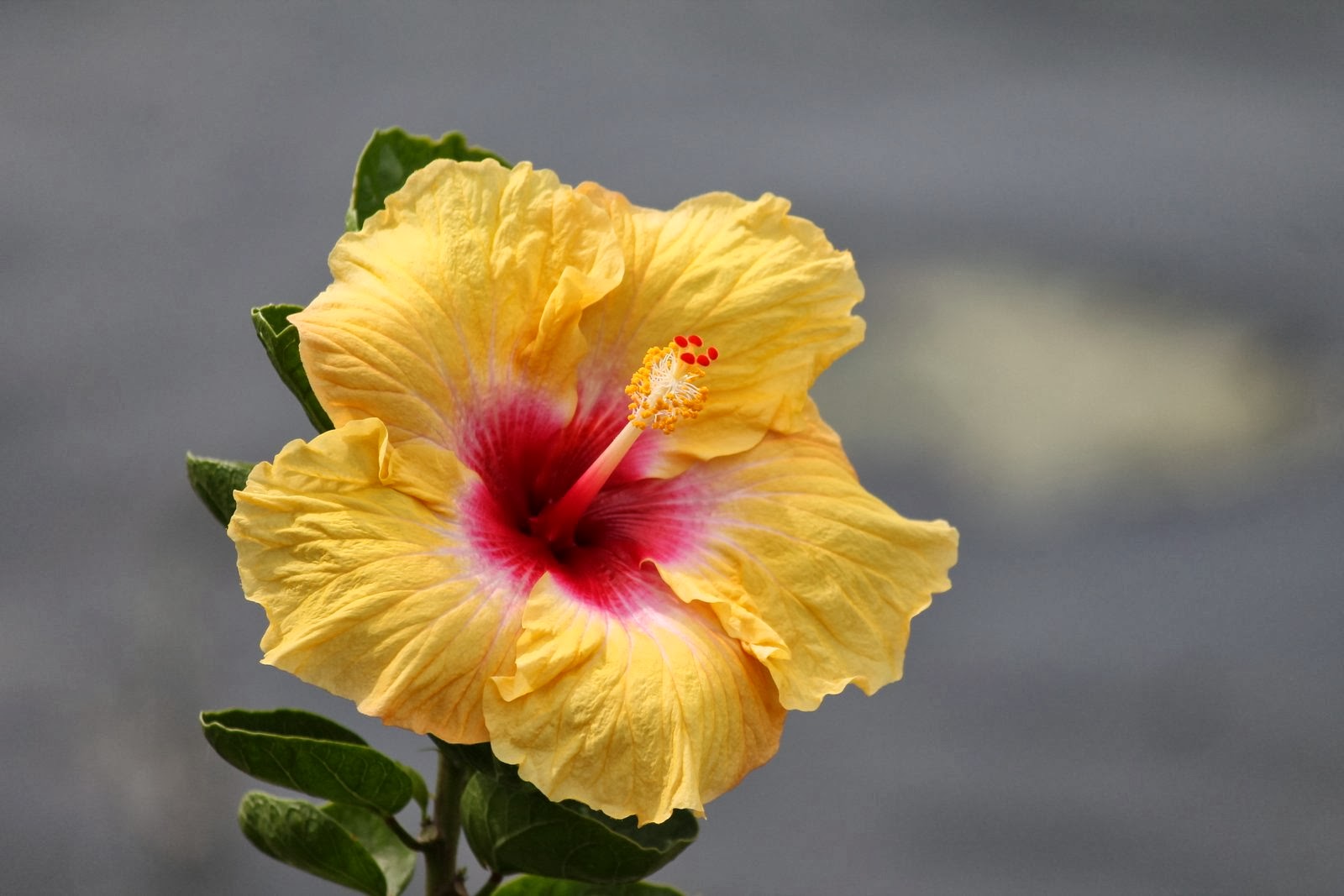
14. Hibiscus
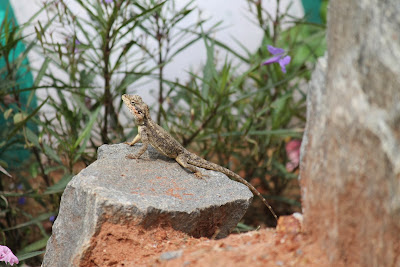
15. Rock Agama