Showing posts with label Indian Pond Heron. Show all posts

30 September, 2014

2014 | 271 | 28Sep14 | Hoskote Lake

01.  Barn Swallow (Hirundo rustica) - Adult - 18 cm
ID by  Richard Grimmett : Adult has bright red forehead and throat, blue-black breast-band and upperparts, and long tail-streamers. Underparts vary from white to rufous. Immature has duller orange forehead and throat, breastband is browner and less well defined, upperparts are duller, and has shorter tail-streamers.
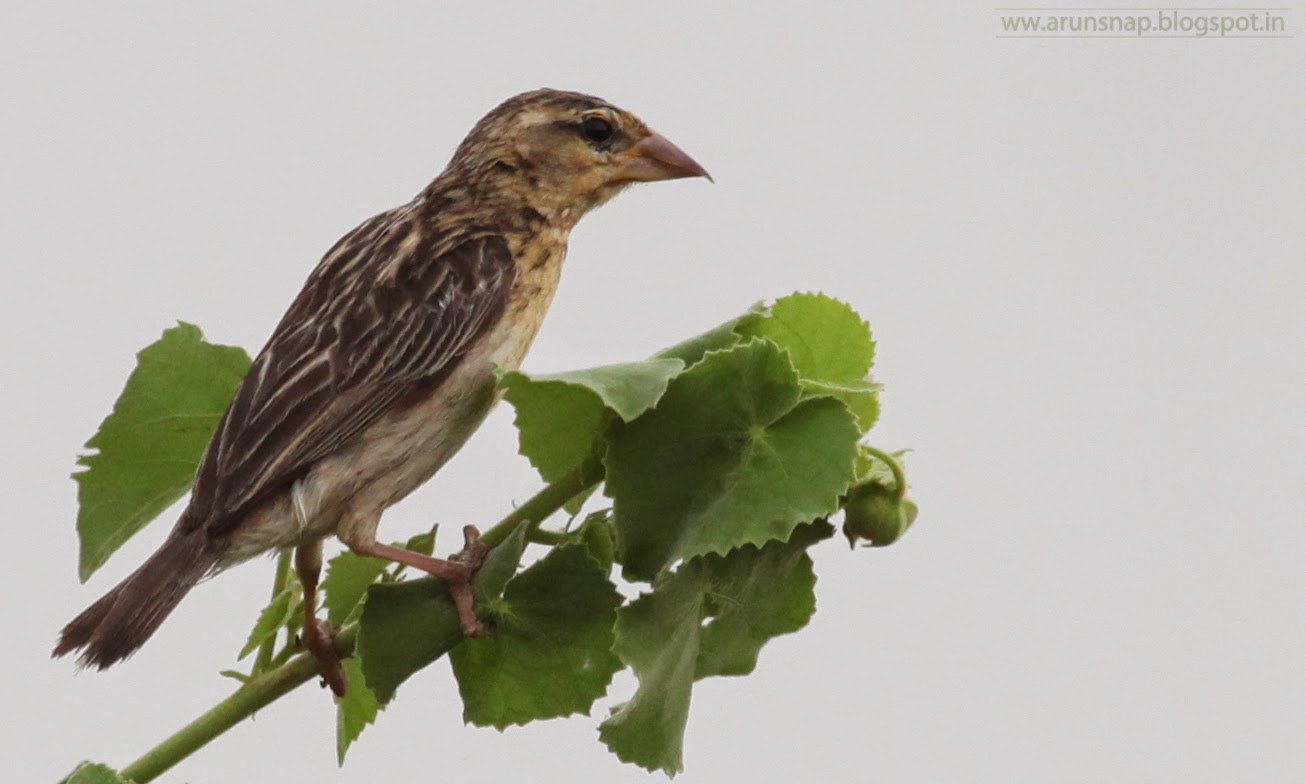
02. Baya Weaver (Ploceus philippinus) - Female/ Juv ? - 15 cm
ID by  Richard Grimmett : Breeding male of nominate has yellow crown, dark brown ear-coverts and throat, unstreaked yellow breast, and yellow streaking on mantle and scapulars. Non-breeding male, female and juvenile usually have unstreaked buffish underparts; streaking can be as prominent as on poorly marked Streaked, but has less distinct and buffish supercilium, lacks yellow neck patch, and lacks pronounced dark moustachial and malar stripes. Non-breeding male,female and juvenile burmanicus more rufousbuff on supercilium and underparts. 

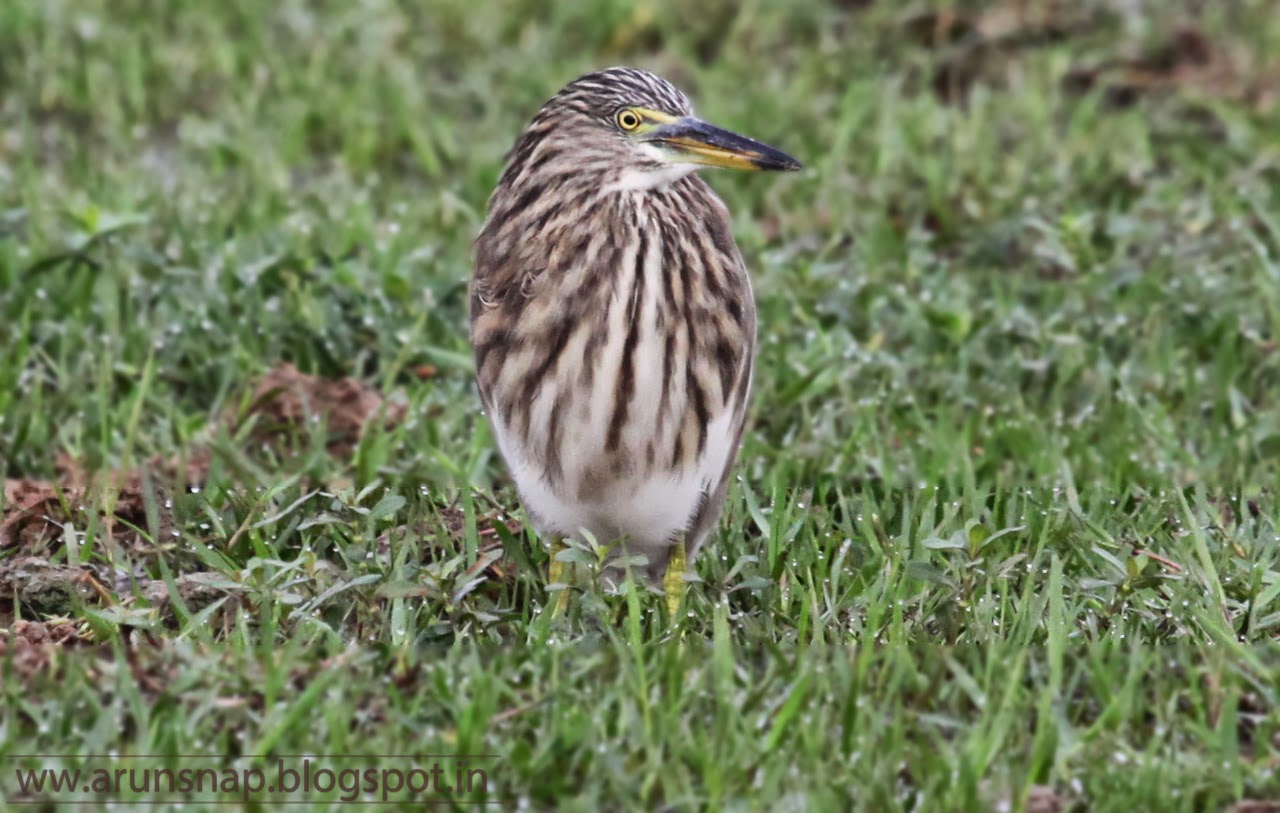
03.  Indian Pond Heron (Ardeola grayii) - Non-Breeding Adult - 42-45 cm
ID by  Richard Grimmett : Whitishwings contrast with dark saddle. Adult breeding has yellowish-buff head and neck and
maroon-brown mantle/ scapulars. Head, neck and breast streaked/spotted in non-breeding plumage.
04.  Wood Sandpiper (Tringa glareola) - Juvenile ?? 18-21 cm
ID by  Richard Grimmett : From Green Sandpiper by longer, yellowish legs and slimmer appearance, heavily speckled upperparts, and prominent supercilium behind eye; in flight by call, slimmer body and narrower wings, toes projecting clearly beyond tail, paler underwing contrasting less with white underparts, and paler brown upperparts contrasting less with smaller white rump. Adult breeding has heavily streaked breast and barred flanks; upperparts barred and spotted pale grey-brown and white. Adult non-breeding has more uniform grey-brown upperparts, spotted whitish, and breast brownish and lightly streaked. Juvenile has warm brown upperparts speckled warm buff, and lightly streaked buff breast.
05. Purple Heron (Ardea purpurea) - Adult - 78-90 cm
ID by  Richard Grimmett : Rakish, with long, thin neck. In flight, compared with Grey Heron, bulge of recoiled neck is very pronounced, protruding feet large, underwing-coverts purplish (adult) or buff (juvenile) and lacks white leading edge to wing. Adult has chestnut head and neck with black stripes, grey mantle and upperwing-coverts, and dark chestnut belly and underwing-coverts. Juvenile has black crown, buffish neck, and brownish mantle and upperwing-coverts with rufous-buff fringes.
06.  Brahminy Kite (Haliastur indus) - Adult
ID by  Richard Grimmett : Small size and kite-like flight. Wings usually angled at carpals. Tail rounded. Adult mainly chestnut, with white head, neck and breast. Juvenile mainly brown, with pale streaking on head, mantle and breast, large pale patch at base of primaries on underwing, and pale brown and unmarked underside to tail.
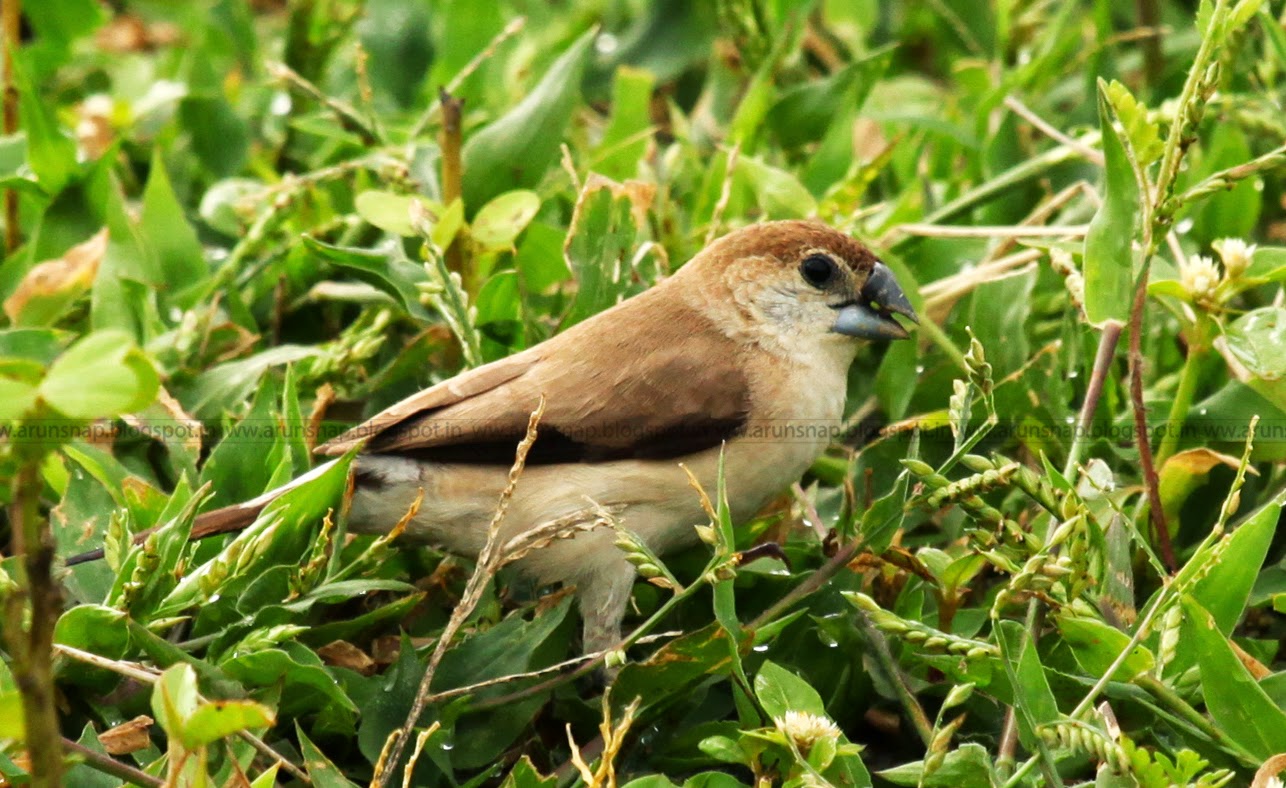
07.  Indian Silverbill or White-throated Munia
(Lonchura malabarica)  - Male
ID by  Richard Grimmett : Male has fawn brown upperparts, whitish face and underparts with barred flanks, long and pointed black tail, and white rump and uppertail-coverts. Female is duller with plainer face, and flanks are less barred. Juvenile lacks barring on flanks, has dark mottling on rump, and tail is shorter and more rounded.
ID by  Wikipedia : The adult Indian Silverbill is 11–11.5 cm long and has a conical silver-grey bill, buff-brown upperparts, white underparts, buffy flanks and dark wings. The tail is black and the wings are dark contrasting with a white rump. The sexes are similar.

08. Little Egret (Egretta garzetta) - Breeding Adult - 55-65 cm
ID by  Richard Grimmett : Slim and graceful. Has black bill, black legs with yellow feet, and greyish or yellowish lores. In breeding plumage has two elongated nape plumes, and mantle plumes, and lores and feet become reddish during courtship. Bill in non-breeding and immature can be paler and pinkish or greyish at base, or dull yellowish on some; legs can be yellowish or greenish. 
09. Caspian Tern (Hydroprogne caspia) - Breeding Adult - 38-46 cm
ID by  Richard Grimmett : Large size and broad-winged/short-tailed appearance. Huge red bill and black underside to primaries. Adult breeding has complete black cap. Adult non-breeding has black-streaked crown and black mask; bill is duller, with more black at tip. First-winter and first-summer are similar to adult non-breeding, but show faint dark lesser-covert and secondary bars and dark-tipped tail (but upperwing appears much plainer than in Lesser and Great Crested Terns). Juvenile has narrow dark subterminal bars to scapulars and wing-coverts; forehead and crown are more heavily marked, almost forming dark cap. 

04 May, 2014

2014 | 124_04May14 | Mysore Kukkarahalli Lake

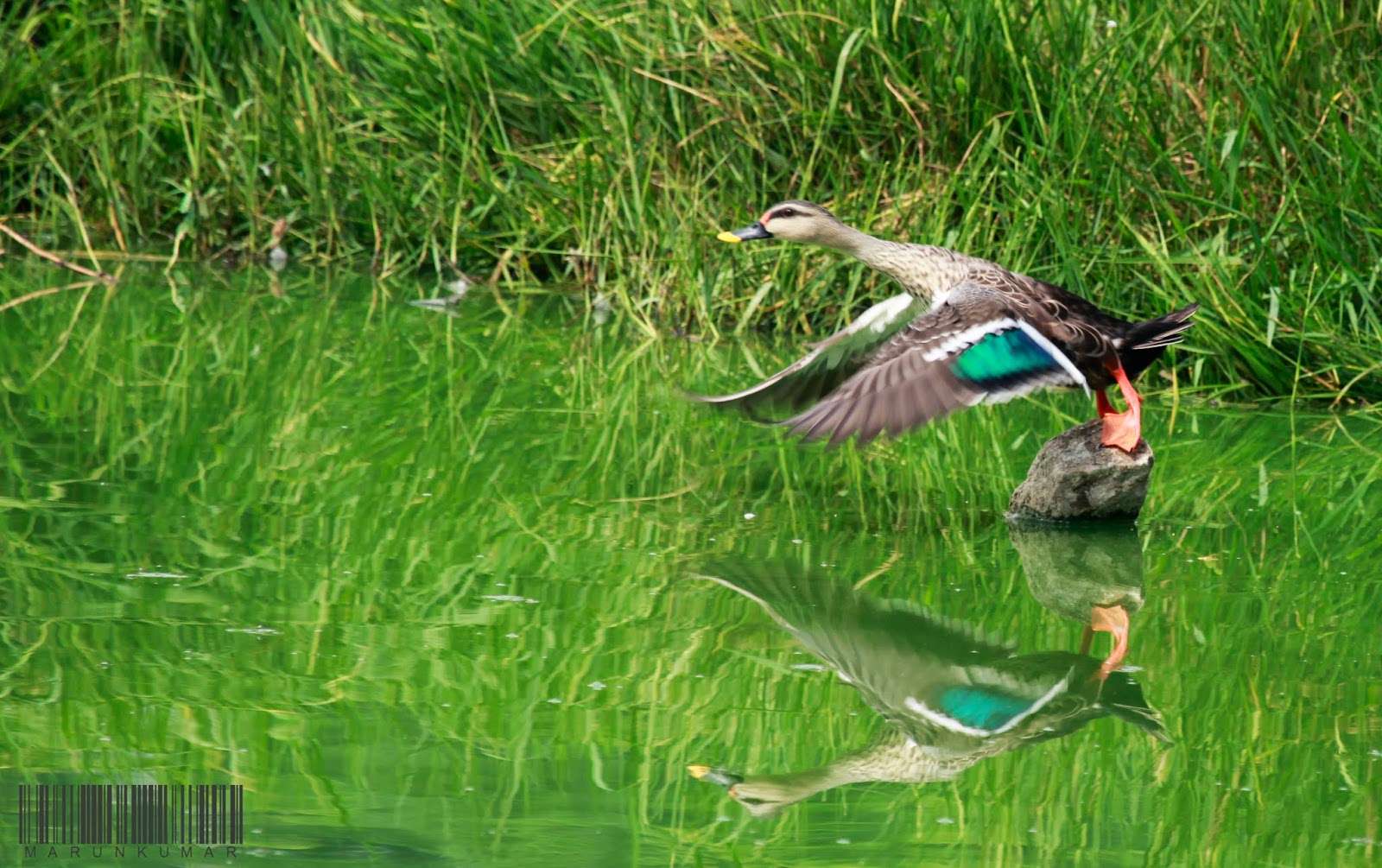
01. Indian Spot-billed Duck (Anas poecilorhyncha) - Male - 58-63 cm
ID by  Richard Grimmett : Has yellow-tipped black bill, greyish-white head and neck with black crown and eye-stripe, blackish spotting on breast, white scalloping on flanks, and largely white tertials. In flight, wings appear dark except for white on tertials and white underwing-coverts. Male has prominent red loral spot and is more strongly marked than female and juvenile (the red loral spot is less conspicuous on female and lacking on juvenile).
02. Indian Spot-billed Duck (Anas poecilorhyncha) - Male - 58-63 cm
ID by  Richard Grimmett : Has yellow-tipped black bill, greyish-white head and neck with black crown and eye-stripe, blackish spotting on breast, white scalloping on flanks, and largely white tertials. In flight, wings appear dark except for white on tertials and white underwing-coverts. Male has prominent red loral spot and is more strongly marked than female and juvenile (the red loral spot is less conspicuous on female and lacking on juvenile).
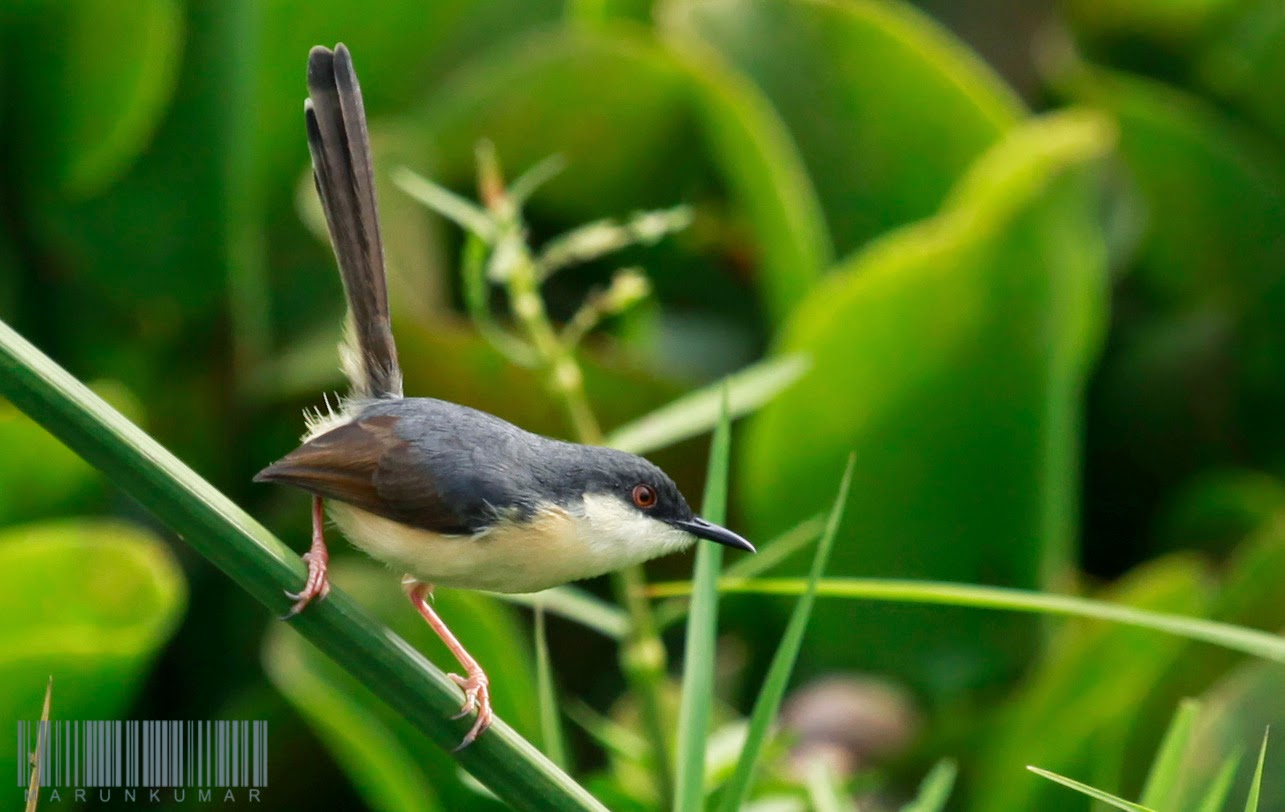
03. Ashy Prinia (Prinia Socialis) - Male in Breeding plumage - 13 cm
ID by  Richard Grimmett : Has white supercilium (sometimes lacking), slate-grey crown and ear-coverts, red eye, slate-grey (breeding) or rufousbrown (non-breeding) mantle, orange-buff wash on underparts, and prominent black subterminal marks (and whitish tips) to tail feathers. Juvenile has greenish upperparts and buffish-yellow underparts.
04. Bronze-winged Jacana (Metopidius indicus) - Adult - 28-31 cm
ID by  Richard Grimmett : Dark upperwing and underwing. Adult has white supercilium, bronze-green upperparts, and blackish underparts. Juvenile has orange-buff wash on breast, short white supercilium, and yellowish bill.
05. Common Moorhen (Gallinula chloropus) - Adult Breeding Plumage - 32-35 cm
ID by  Richard Grimmett : White lateral undertail-coverts, with black central stripe, and usually shows white line along flanks. Breeding adult has blackish head and neck, slate-grey underparts, and dark olive-brown upperparts; red bill with yellow tip and red frontal shield. Non-breeding adult has duller bill and legs. Juvenile has dull green bill, and is mainly brown with whitish throat, grey wash to breast and flanks, and variable whitish patch on belly. Immature resembles non-breeding adult, but has duller body plumage, with grey of underparts washed with brown and buff, whitish throat, and less prominent pale border to the flanks. 
06. Tawny-bellied Babbler (Dumetia hyperythra albogularis) - Adult - 13 cm
ID by  Richard Grimmett : Forehead and forecrown are rufous-buff, sides of head and underparts are orange-buff, mantle is olive-brown, and wings and tail are brown,the tail with faint barring. Eye is pale and bill is pale pinkish brown. Juvenile has brighter, more rufous-brown upperparts, lacking rufous-brown forehead; has only traces of white on throat, and duller underparts.
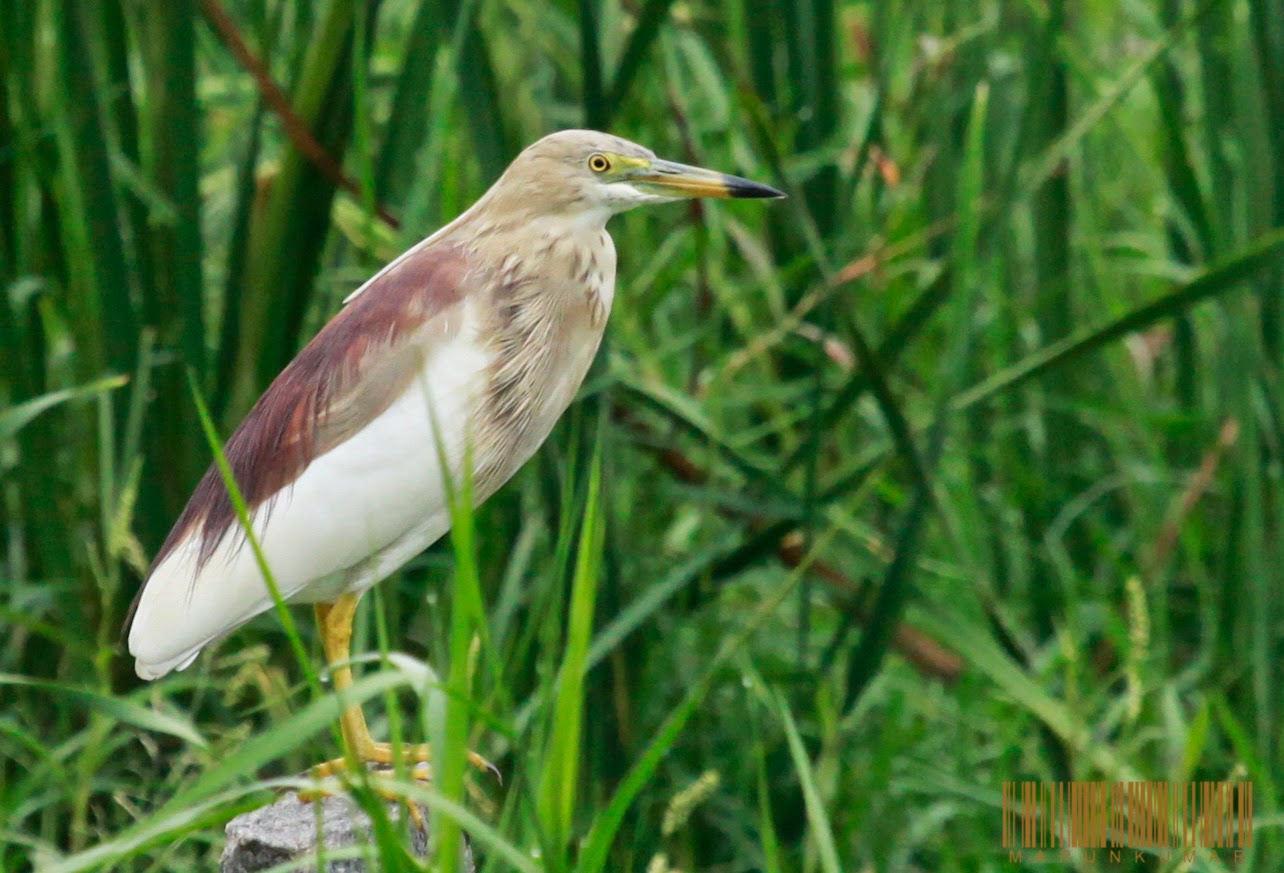
07. Indian Pond Heron (Ardeola Grayii) - Adult Non-breeding Plumage - 42-45 cm
ID by  Richard Grimmett : Whitish wings contrast with dark saddle. Adult breeding has yellowish-buff head and neck and maroon-brown mantle/ scapulars. Head, neck and breast streaked/spotted in non-breeding plumage. 
08. Grey Heron (Ardea Cinerea) - Adult - 90-98 cm 
ID by  Richard Grimmett : A large, mainly grey heron, lacking any brown or rufous in its plumage. In flight, black flight feathers contrast with grey upperwing- and underwing-coverts, and shows a prominent white leading edge to wing when head-on. Adult has yellow bill, whitish head and neck with black head plumes, and black patches on belly. In breeding season, has whitish scapular plumes and bill and legs become orange or reddish. Immature is duller than adult, with grey crown, reduced black 'crest', greyer neck, less pronounced black patches on sides of belly, and duller bill and legs. Juvenile has dark grey cap with slight crest, dirty grey neck and breast, lacks black patches on belly sides, lacks plumes, and has dark legs. 
09. Purple Heron (Ardea Purpurea) - 78-90 cm
ID by  Richard Grimmett : Rakish, with long, thin neck. In flight, compared with Grey Heron, bulge of recoiled neck is very pronounced, protruding feet large, underwing-coverts purplish (adult) or buff (juvenile) and lacks white leading edge to wing. Adult has chestnut head and neck with black stripes, grey mantle and upperwing-coverts, and dark chestnut belly and underwing-coverts. Juvenile has black crown, buffish neck, and brownish mantle and upperwing-coverts with rufous-buff fringes
10.Spot-billed Pelican (Pelecanus Philippensis) - Adult Breeding Plumage - 140 cm
ID by  Richard Grimmett : Dingier appearance, rather uniform pinkish bill and pouch (except in breeding condition), and black spotting on upper mandible (except juveniles). Pale circum orbital skin looks cut off from bill (appears to be wearing goggles). Tufted crest/hind neck usually apparent even on young birds. Underwing pattern similar to that of Dalmatian (and quite different from GreatWhite), showing little contrast between wing-coverts and flight feathers and with paler greater coverts producing distinct central panel. Adult breeding has cinnamon-pink rump, underwing-coverts and undertail-coverts; head and neck appear greyish; has purplish skin in front of eye, and pouch is pink to dull purple and blotched with black. Adult non-breeding dirtier greyish-white, with paler pouch and facial skin. Immature has variable grey-brown markings on upperparts. Juvenile has brownish head and neck, brown mantle and upperwing-coverts (fringed with pale buff), and brown flight feathers; spotting on bill initially lacking (and still indistinct at 12 months). 
11. White-breasted Waterhen (Amaurornis Phoenicurus) - Adult - 32 cm
ID by  Richard Grimmett : Adult has grey upperparts and white face, foreneck and breast; undertail coverts rufous-cinnamon. Bill and legs are greenish or yellowish, with swollen reddish base to upper mandible. Juvenile has greyish face, and sides of neck and breast, and browner upperparts; bill and legs are darker. 

12. Ruddy-breasted Crake (Porzana Fusca) - Adult - 22 cm 
ID by  Richard Grimmett : Combination of dull chestnut underparts, unmarked dark olive-brown upperparts, indistinct dark brown and white barring on rear flanks and undertail coverts (much more restricted than in Slaty-legged and Andaman Crakes) and red legs. Juvenile dark olive-brown, with white-barred undertail-coverts and fine greyish-white mottling/barringon rest of underparts. Legs duller and iris is brown (rather than red as in adult).